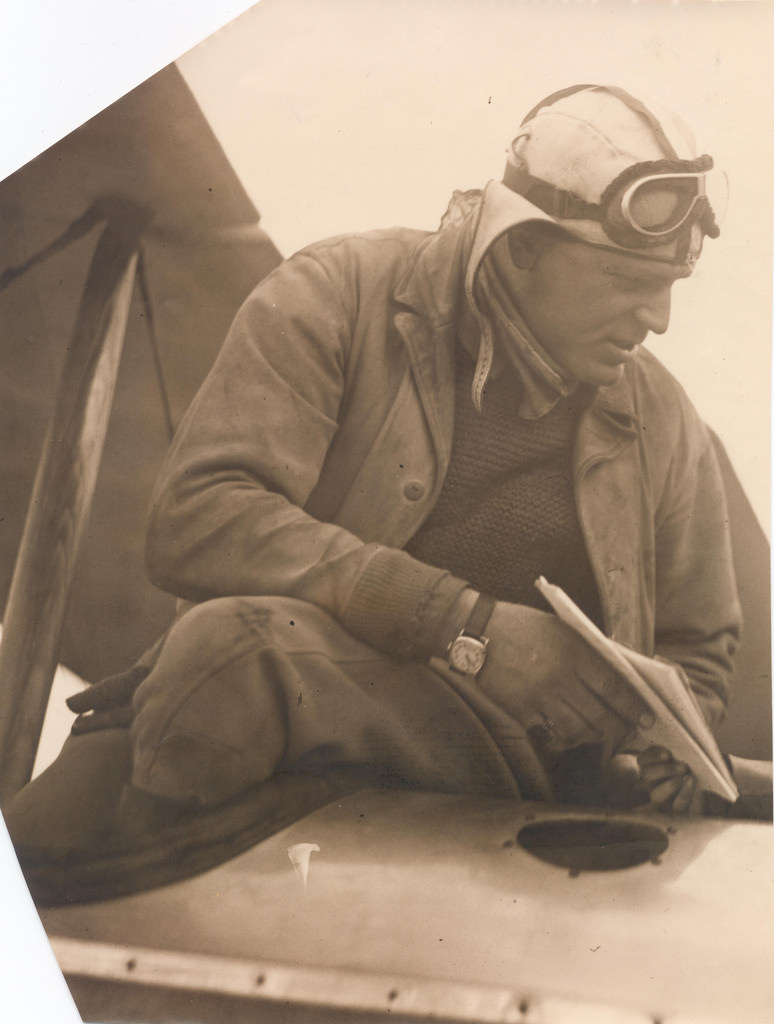
Leaning over the fuselage with a bundle of papers in hand, airmail pilot William Fillmore appears caught in a working moment rather than a posed portrait. His leather flying coat, knit sweater, and snug cap with goggles speak to the practical realities of open or lightly enclosed cockpits, where wind and cold were as much a part of the job as the engine’s roar. The tight framing—focused on his profile and gear—keeps attention on the human side of early aviation.
Airmail flying in the 1920s demanded precision and stamina, and the photograph hints at both through small, telling details: a wristwatch ready for timing, documents ready for checking, and a posture that suggests preflight review. Before modern navigation systems and all-weather infrastructure, pilots relied on routes, schedules, and written instructions that had to be followed under pressure. In that sense, the “Inventions” theme fits naturally here—this was an era when aviation technology, mail logistics, and timekeeping were evolving together.
For readers interested in aviation history, this 1925 image offers an intimate glimpse of the routines that built public trust in airmail service. The aircraft’s surface and a visible opening in the bodywork anchor the scene in the material world of early machines—rivets, panels, and access points rather than sleek composites. It’s a reminder that the romance of flight often rested on careful preparation, rugged clothing, and the quiet concentration of pilots like Fillmore before they ever left the ground.