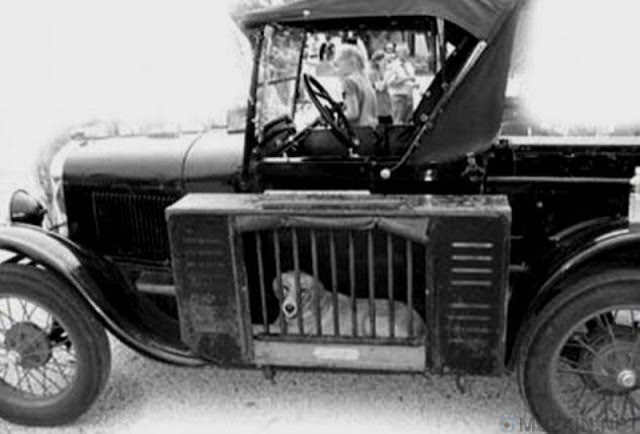
Running boards once did more than keep mud off a motorist’s clothes—they became a clever platform for carrying a family pet on the road. In the photo, an early automobile sits side-on while a boxy, vented kennel is fastened along the running board, its barred opening revealing a calm dog riding inches above the ground. The setup feels both ingenious and precarious, a snapshot of how drivers adapted everyday car features before interiors were designed with animals in mind.
Automobile travel in the 1930s was expanding quickly, and so was the urge to bring dogs along for errands, visits, and longer trips. With limited cabin space and few standardized restraints, inventions like running-board dog carriers offered airflow and a dedicated spot that kept fur and paws out of the passenger area. The cage’s slats, latches, and sturdy frame hint at a do-it-yourself practicality—part accessory, part experiment in the emerging culture of pet-friendly motoring.
For anyone searching the history of dog travel, vintage car accessories, or 1930s automotive innovations, this image speaks to a transitional moment between open-road adventure and modern safety expectations. It also underscores how the relationship between people, pets, and technology shaped small design decisions on early cars. Whether viewed as a charming relic or a cautionary concept, the running-board kennel remains a memorable example of inventive solutions from the early days of driving with dogs.