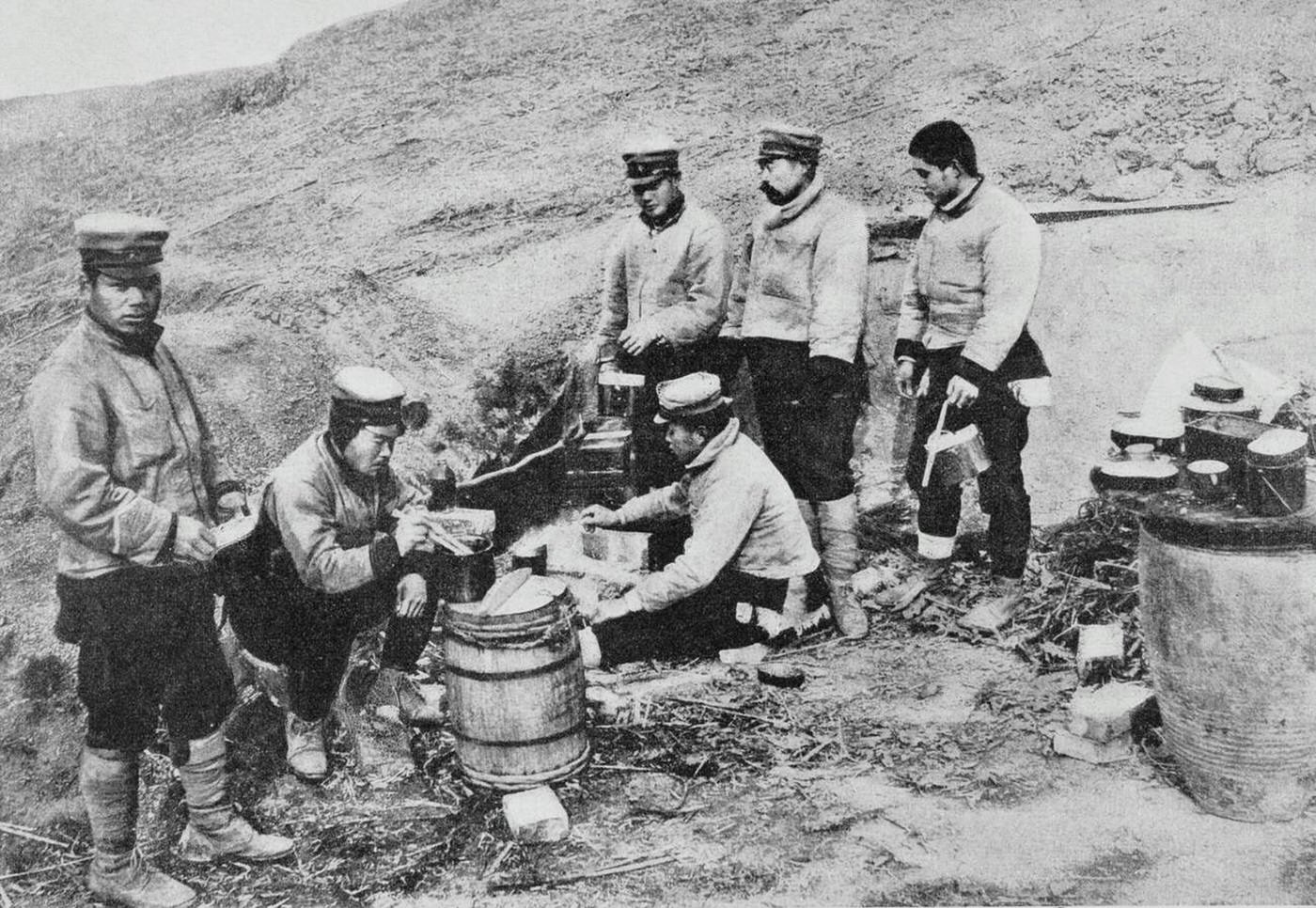
Against a bare earthen slope in Sandepu, a small group of Japanese soldiers gather around a makeshift field kitchen during the Russo-Japanese War of the 1900s. Heavy coats, caps, and sturdy boots suggest cold, exposed conditions, while the men’s attention settles on the practical work of cooking and serving rather than on the battlefield beyond the frame. The scene is plain and workmanlike—an army fed by routine as much as by strategy.
Kettles, pots, and stacked metal containers form the real centerpiece here, arranged on the ground like a compact supply depot. One soldier crouches close to the heat as another steadies a container, and others wait nearby, hands tucked or occupied, signaling the orderly flow of rations. Even without dramatic action, the photograph communicates the logistics of war: fuel, utensils, and time, all managed under field conditions.
Daily meals rarely appear in heroic narratives, yet they underpin endurance, morale, and the tempo of operations. Photos like this offer a valuable window into military life in the Russo-Japanese War, highlighting how armies improvised kitchens and sustained themselves away from permanent camps. For readers interested in Wars & Military history, the image is a reminder that behind every advance and every setback stood men, equipment, and the steady churn of food preparation in the dirt and wind.