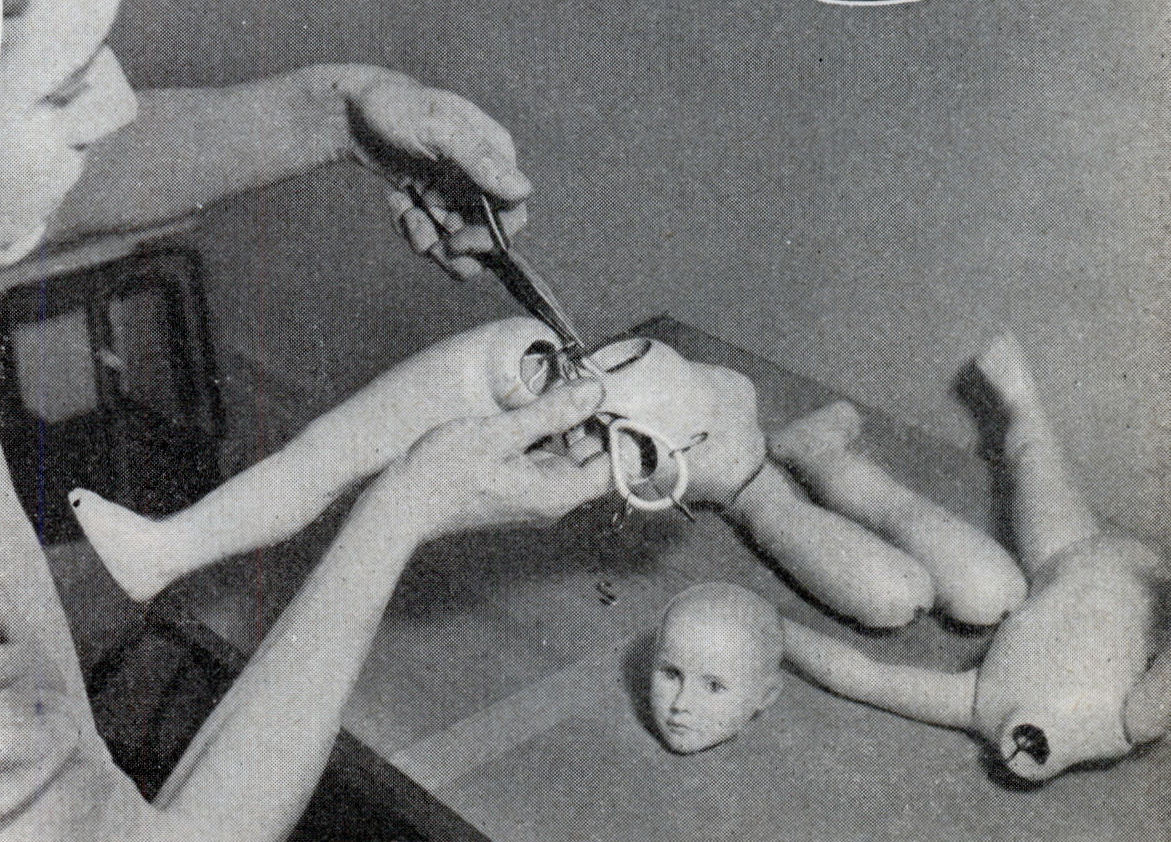
Industrial confidence runs through the stark scene: a workbench, a pair of pliers, and a doll’s disassembled limbs laid out like parts in a small assembly shop. The maker’s hands are caught mid-task, tightening a metal ring at the joint, while a detached head rests nearby—an unsettling reminder that “toys” were often built with the same practical mindset as household hardware.
The title’s promise—an “unbreakable composition material” body with “hard rubber” hands—points to a moment when manufacturers advertised new blends of strength, affordability, and realism. Composition, a molded mixture used to replace more fragile materials, and rubber components reflect the era’s fascination with modern substances, durability claims, and improved mass production. Seen up close, the photo becomes a quiet lesson in how childhood objects were engineered, repaired, and marketed in the language of progress.
For collectors, designers, and anyone interested in material culture, this historical image opens a window onto the hidden labor behind vintage dolls and early plastics-era manufacturing. It also carries an artistic charge: the parted limbs and tools turn the tabletop into a stage where craftsmanship and eeriness meet, revealing why such photographs still linger in memory. If you’re searching for stories of antique doll construction, composition dolls, rubber parts, and the history of toy making, this post offers a richly textured starting point.