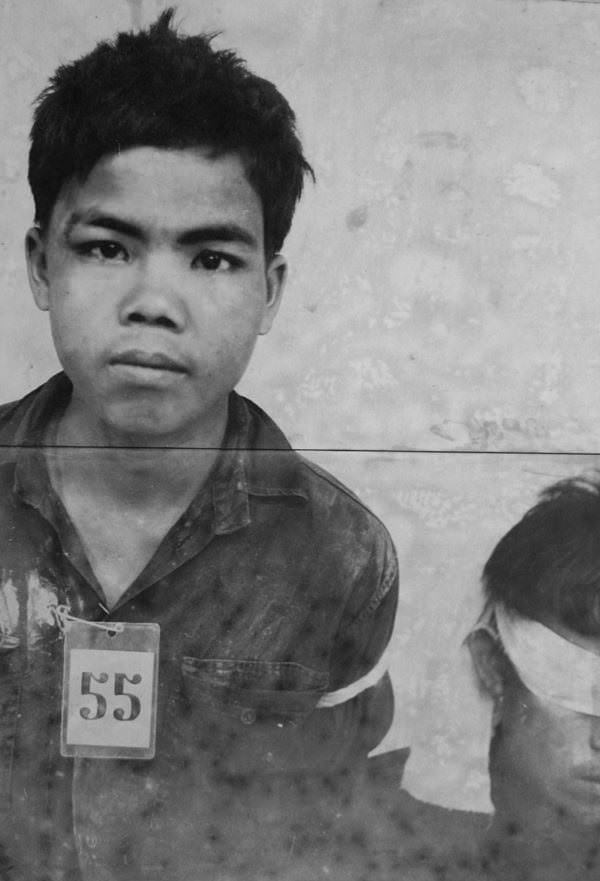
A teenage boy stares straight into the lens, his expression set and wary, with a numbered tag marked “55” hanging from his chest like an official verdict. The stark, plain backdrop offers no comfort or context—only the sense of an institutional space where people become records. Smudges, scratches, and the faint wear on the print echo the roughness of the moment, turning a simple portrait into a piece of civil war–era human evidence.
Off to the side, his brother is only partly visible, head lowered beneath a broad bandage that covers his eyes and brow. The framing feels accidental yet intimate, as if the camera caught the pair in the middle of processing—counted, examined, and reduced to a file. Together they suggest the way conflict spills into family life, binding siblings not just by blood, but by shared captivity and injury.
Within the theme of “Civil Wars,” this photograph reads like a quiet indictment of what internal conflict does to the young: it ages faces, erases childhood, and leaves marks that outlast the fighting. For readers searching for historical prison photos, teen prisoners in wartime, or the lived experience behind civil war archives, the image offers a powerful entry point. It invites us to look beyond uniforms and battle maps and consider the cost measured in brothers standing side by side, one numbered, one wounded, both caught in history’s machinery.