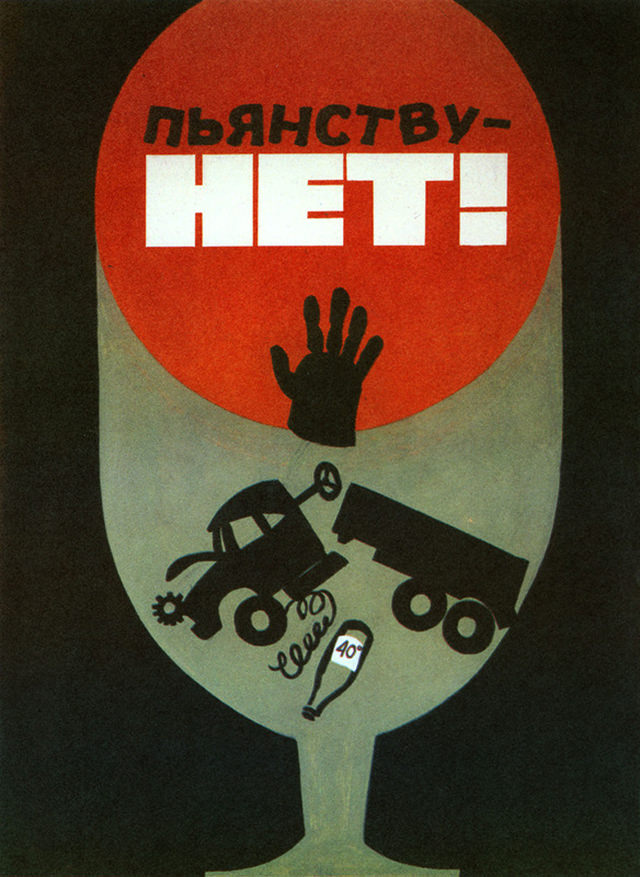
A bold red circle dominates the design, carrying the Russian slogan “пьянству — НЕТ!” (“No to drunkenness”) like a warning sign you can’t ignore. Set against deep black, the graphic simplicity feels closer to a street poster than a gallery piece, yet it still reads as carefully composed artwork. The title, “Stop drunkenness,” frames the message as public education and moral appeal in a single glance.
Inside the silhouette of a huge drinking glass, the story turns darker: a raised hand signals “stop,” while broken machinery and a truck suggest accidents, damage, and lost productivity. A bottle marked “40°” sits at the center of the wreckage, making alcohol the unmistakable culprit. The stark shapes and limited palette are classic propaganda tools—easy to read from a distance, hard to forget once seen.
For anyone searching for historical anti-alcohol posters, Soviet-era graphic art, or public health campaigns in visual culture, this image is a striking example of how design served social policy. It captures an era when temperance messaging leaned on industrial symbols and cautionary imagery rather than personal portraits. As a piece of historical artwork, it invites viewers to consider how societies have tried to “solve” drinking—through persuasion, shame, and the power of the poster.