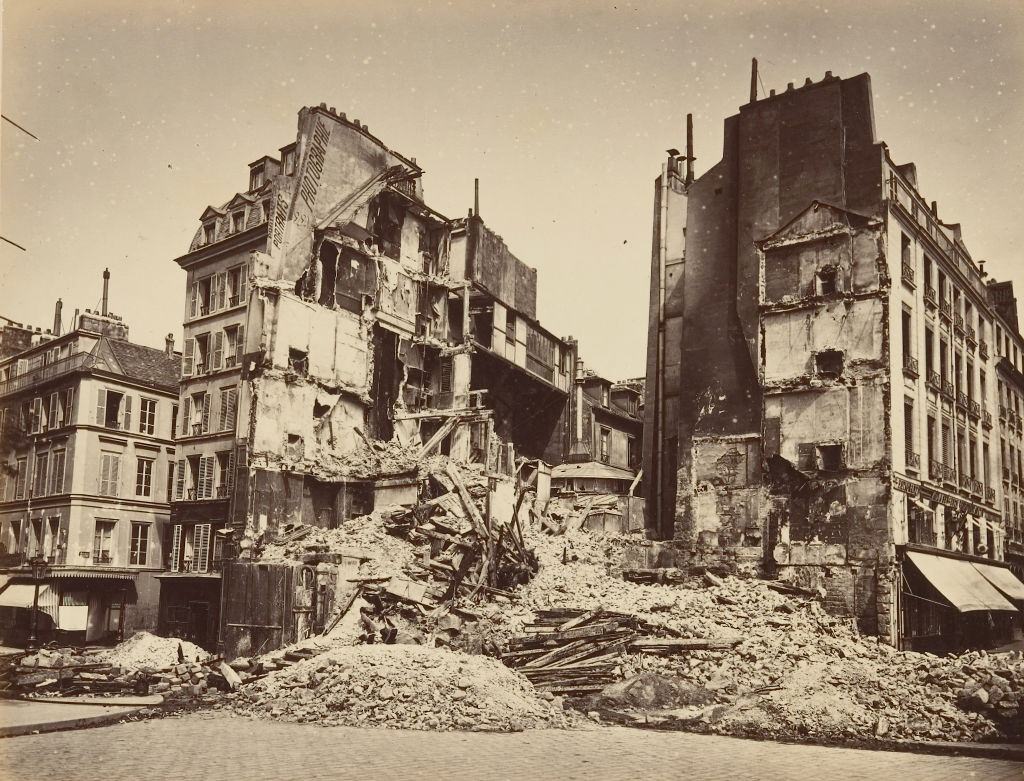
Ruined façades loom over a carpet of broken stone and charred timber at the Place de la Bastille, a stark view of Paris after the fires and fighting of 1871. Entire rooms have been opened to the street like a torn stage set, with floors collapsed into jagged heaps and chimneys standing like thin sentinels against a pale sky. The scene’s quiet is almost louder than any battle, turning a famous square into an exposed wound of masonry and ash.
Along the edges, surviving buildings still keep their regular window lines and shopfront shapes, emphasizing how unevenly destruction can strike during civil wars. On the left, intact shutters and rooflines sit uncomfortably close to structures that have been gutted from top to bottom, their interiors blackened and their walls scraped raw. The street itself appears cleared just enough to pass, while the center remains a mound of rubble that suggests hurried collapse and smoldering aftermath rather than orderly demolition.
For readers searching for “Place de la Bastille 1871” or “Paris ruins after the Commune,” this historical photo offers a grounded look at what urban conflict leaves behind: not only shattered architecture, but also the disruption of everyday city life. Nothing here relies on heroic poses or grand monuments; the evidence is in the fractures, the soot, and the exposed beams. It’s a reminder that the story of Paris is written as much in reconstruction as in revolution, and that the scars of 1871 were once plainly visible in the heart of the city.