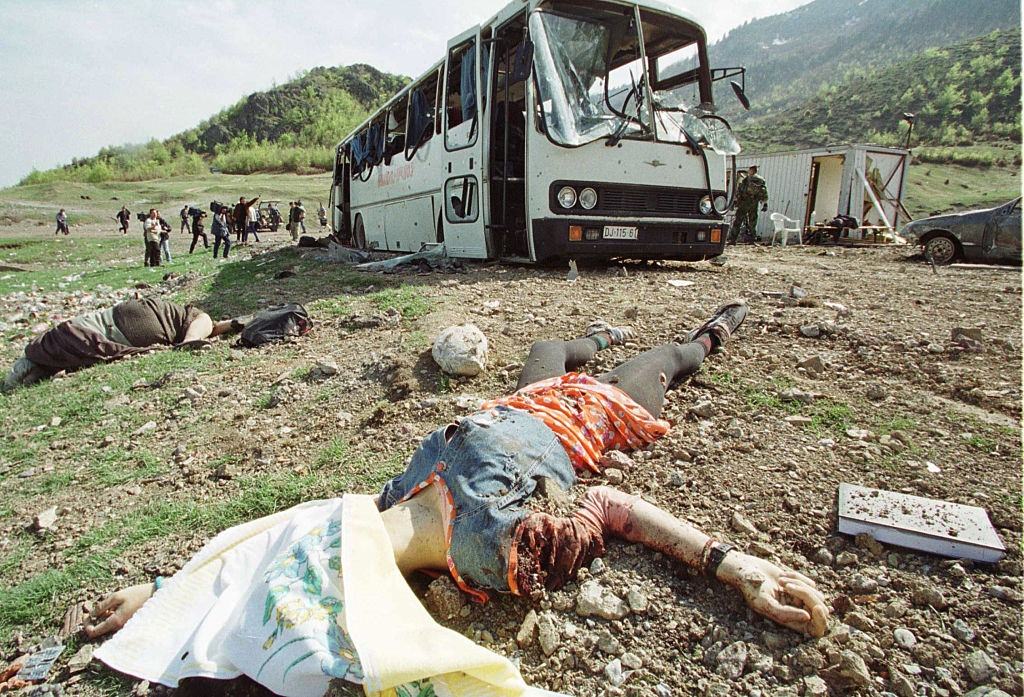
In the raw light of an open valley, a shattered bus sits at an angle, its windows blown out and its front end scarred, reduced to a hollow shell on a dirt-strewn roadside. The ground in the foreground is littered with debris—scraps, stones, and torn belongings—while the surrounding hills loom quietly behind the violence that has passed through. The title, “Bodies in front of the shell of the bus,” leaves no room for distance: this is a scene of civil war where ordinary travel collided with sudden, irreversible catastrophe.
Near the wreck, figures gather in the middle distance, some clustered as if assessing the damage, others standing apart, their postures suggesting shock and urgency rather than order. A small structure and a parked vehicle at the edge of the frame hint at a checkpoint or temporary post, emphasizing how conflict often settles into everyday landscapes. The bus itself—once a symbol of movement and routine—becomes a grim landmark, its broken frame marking the line where safety ended.
For readers searching for historical war photography, civil war aftermath images, or documentation of attacks on civilian transport, this photograph offers a stark record of what these conflicts do to public life. It speaks to the vulnerability of roads, buses, and the people who depend on them, turning a familiar mode of travel into a site of mass suffering. More than a document of destruction, it is a reminder that the front lines of civil wars are frequently drawn across the paths of civilians, with consequences that outlast the moment the shooting stops.