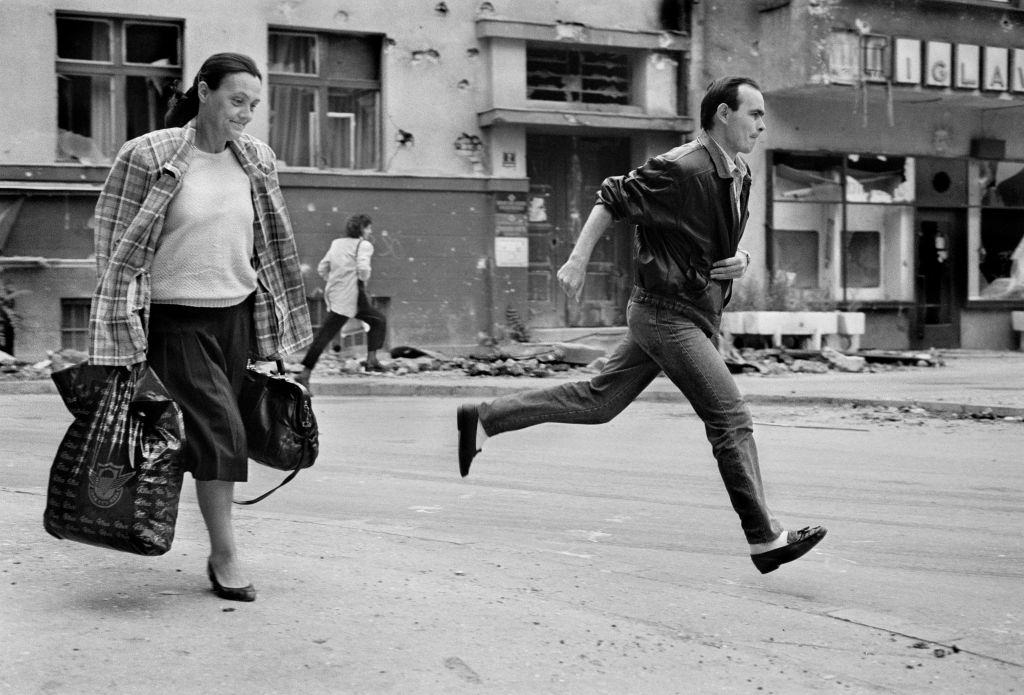
Mid-stride and exposed, a man lunges across an open stretch of road while other pedestrians hurry along the edges, each movement measured against the threat implied by the name “Sniper Alley.” In the foreground a woman keeps walking with shopping bags in hand, her posture steady even as the street around her demands speed and caution. Behind them, the façades are scarred and pocked, windows damaged, and rubble gathers at the curb—ordinary urban textures transformed by the siege of Sarajevo into a landscape of risk.
Every detail speaks to civilian life continuing under siege: coats and everyday shoes, a quick glance forward, the instinct to keep momentum until cover is reached. The wide roadway becomes a no-man’s-land, and the blurred urgency of a runner contrasts with the slower, deliberate steps of those who cannot—or will not—break into a sprint. It’s a stark reminder that in civil wars the front line often runs straight through routines as basic as crossing the street.
For readers searching the history of the Bosnian War and the 1994 siege of Sarajevo, this photograph offers a compressed narrative of survival and adaptation. “Sniper Alley” endures in memory not just as a place, but as a symbol of how modern urban conflict targets movement, visibility, and the simple act of being outside. The scene invites a closer look at the daily calculations civilians made—when to run, what to carry, and how to keep going while a city’s streets turned into corridors of danger.