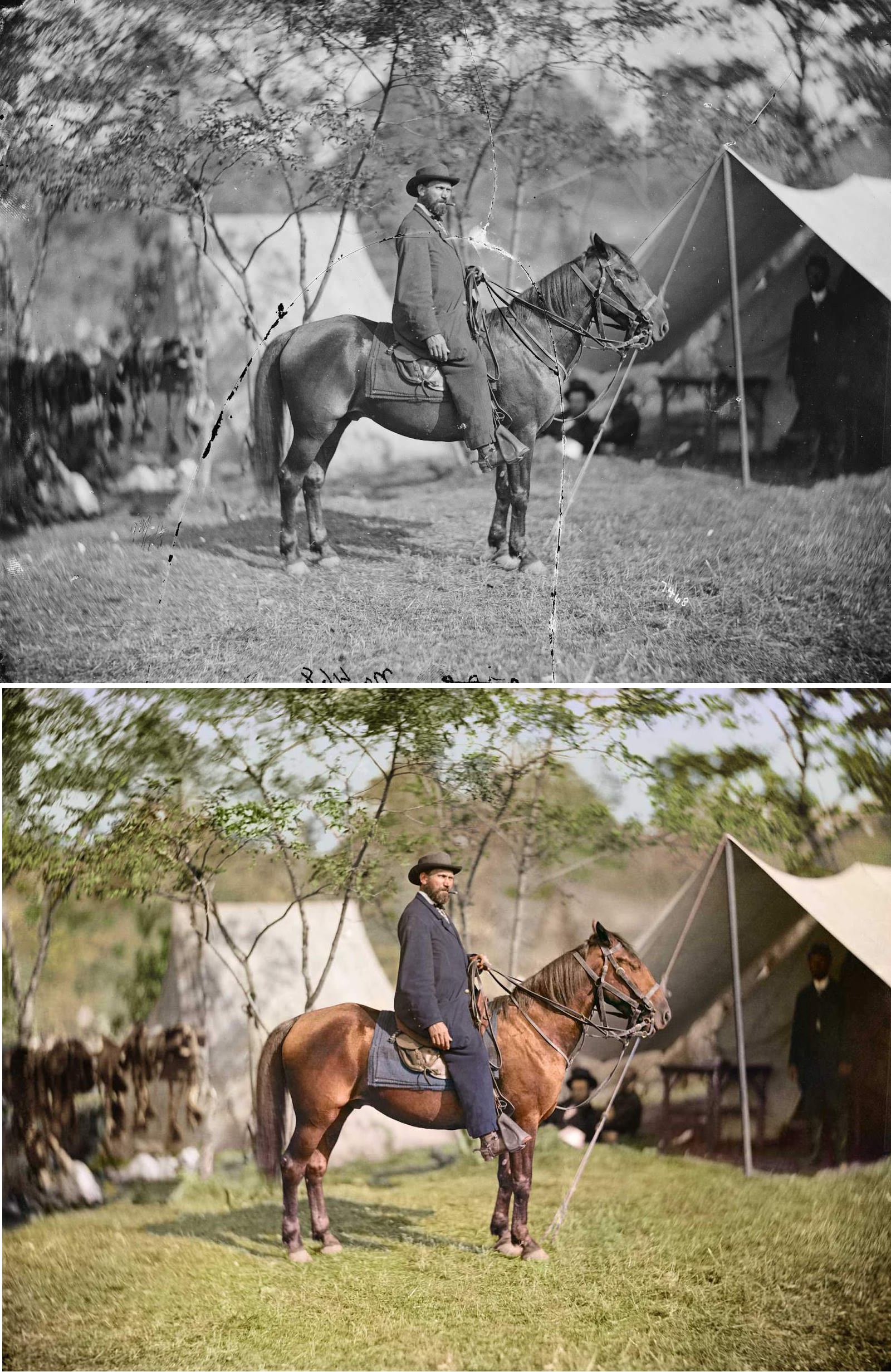
Allan Pinkerton sits upright in the saddle, reins gathered neatly in one hand, his dark coat and brimmed hat giving him the reserved air of a man meant to observe rather than be observed. The horse stands calmly on a patch of grass beneath thin trees, while canvas tents angle up behind them—an unmistakable reminder of an army on the move. Even in a posed moment, the scene carries the quiet tension of a Civil War camp where routine and danger lived side by side.
Antietam, Maryland, in October 1862 forms the setting named in the title, and the photograph’s tented background evokes the logistical sprawl that followed major fighting. A few figures linger at the edge of the frame near the shelter, half in shadow, suggesting the constant presence of aides, orderlies, and watchers in a headquarters environment. The open ground, simple camp architecture, and practical tack on the horse all anchor the image in the everyday realities of wartime field life.
Under the alias “E. J. Allen,” Pinkerton’s role with the Secret Service adds an espionage thread to this otherwise straightforward portrait, hinting at intelligence work carried out amid muddy lanes and makeshift bivouacs. For readers exploring Civil Wars history, the photo offers a rare blend of biography and atmosphere—part personal likeness, part documentary glimpse into how information, security, and authority traveled on horseback. It’s a compelling visual entry point for anyone searching for Allan Pinkerton, Union intelligence, or Antietam-era camp scenes in original photography.