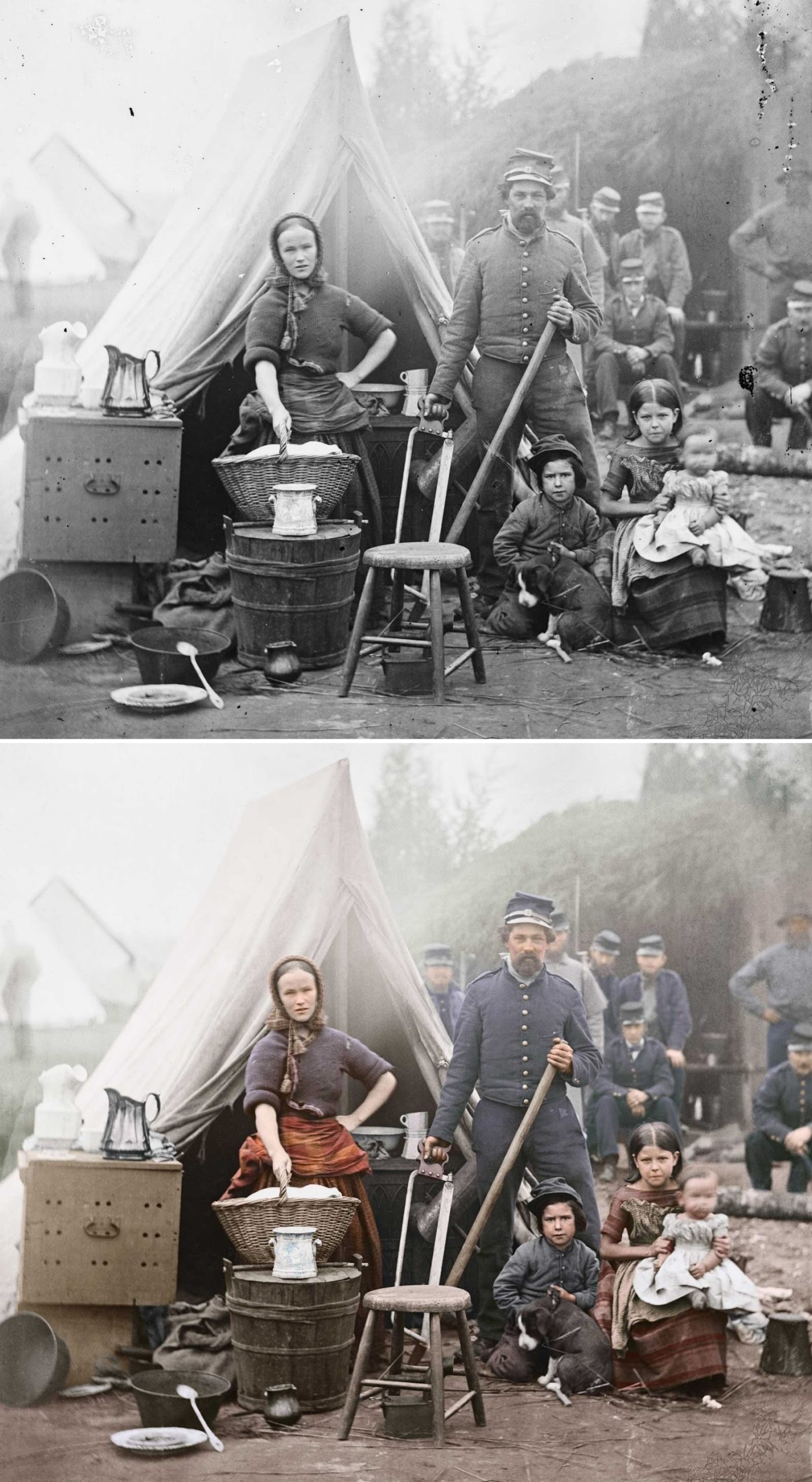
Camp life near Fort Slocum in Washington, District of Columbia comes into focus through a crowded little domestic scene set at the mouth of a canvas tent. A uniformed man stands with tools in hand, while a woman and several children gather close, framed by kettles, a wash basket, buckets, and a small stool—everyday objects that turn military space into something briefly resembling a household. Behind them, other soldiers linger in soft focus, reminding the viewer that this was a working encampment, not a private yard.
The title’s reference to the 31st Pennsylvania Infantry at Queen’s farm points to the early Civil War moment when the capital’s defenses swelled with new regiments and temporary camps. The photograph emphasizes routines that rarely make it into battle narratives: laundering, cooking, storing water, and keeping order in a muddy, crowded environment. Even the tent’s open flap feels like an invitation to consider how thin the boundary was between duty and daily survival in 1861 Washington, DC.
Details like stacked containers, cooking ware, and the arrangement of people around the tent entrance offer rich texture for anyone researching Civil War home front life within army camps or the lived experience of Union troops stationed around the District. The presence of children alongside uniforms underlines how war’s logistics depended on families and labor as well as weapons and drill. For readers interested in Washington, DC history, Fort Slocum, or the social world of Civil War encampments, this image provides a vivid, SEO-friendly window into “tent life” as it was actually lived.