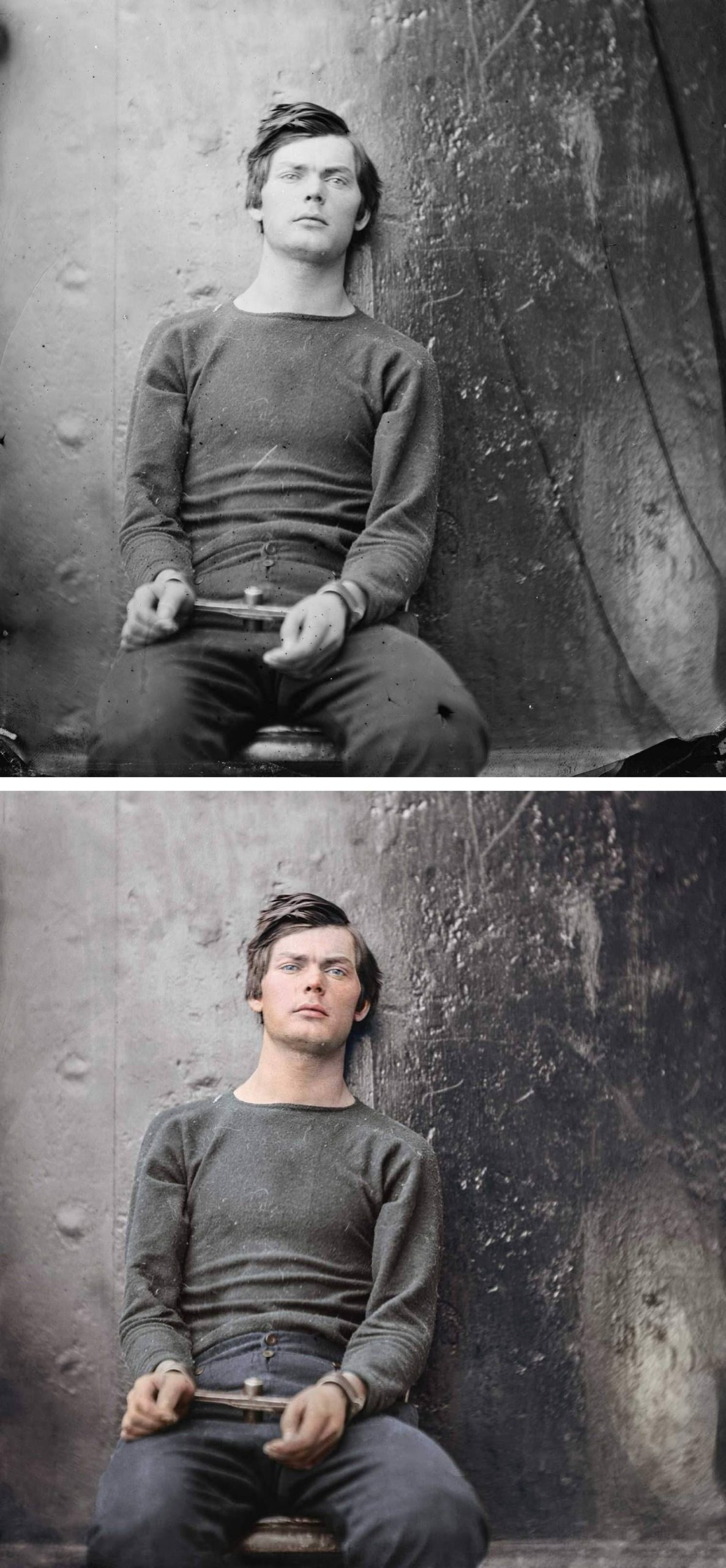
Leaning back against a rough, riveted wall, Lewis Payne stares past the camera with an unnerving calm, his posture slack yet controlled. The plain work shirt and the hard industrial backdrop strip away any sense of ceremony, leaving only the stark reality of confinement. Even without dramatic props, the image carries a heavy weight—one man held in the aftermath of a national catastrophe.
Taken at the Washington Navy Yard during the months following President Abraham Lincoln’s assassination, this portrait places the viewer close to a key figure in the wider conspiracy. Payne’s restrained hands and the rigid line of the setting evoke the military custody and heightened security that surrounded the case. The photograph’s directness feels almost modern, as if it were meant to serve both as record and warning.
For Civil War history readers, the power of this scene lies in its tension between ordinariness and consequence: a young face framed by iron and shadow, captured while the country argued over justice, vengeance, and the meaning of reunion. As a historical photo, it also reflects the era’s growing reliance on photography to document criminal suspects and preserve evidence for public memory. The result is a haunting, SEO-relevant window into the Lincoln assassination conspiracy and the grim machinery of wartime Washington.