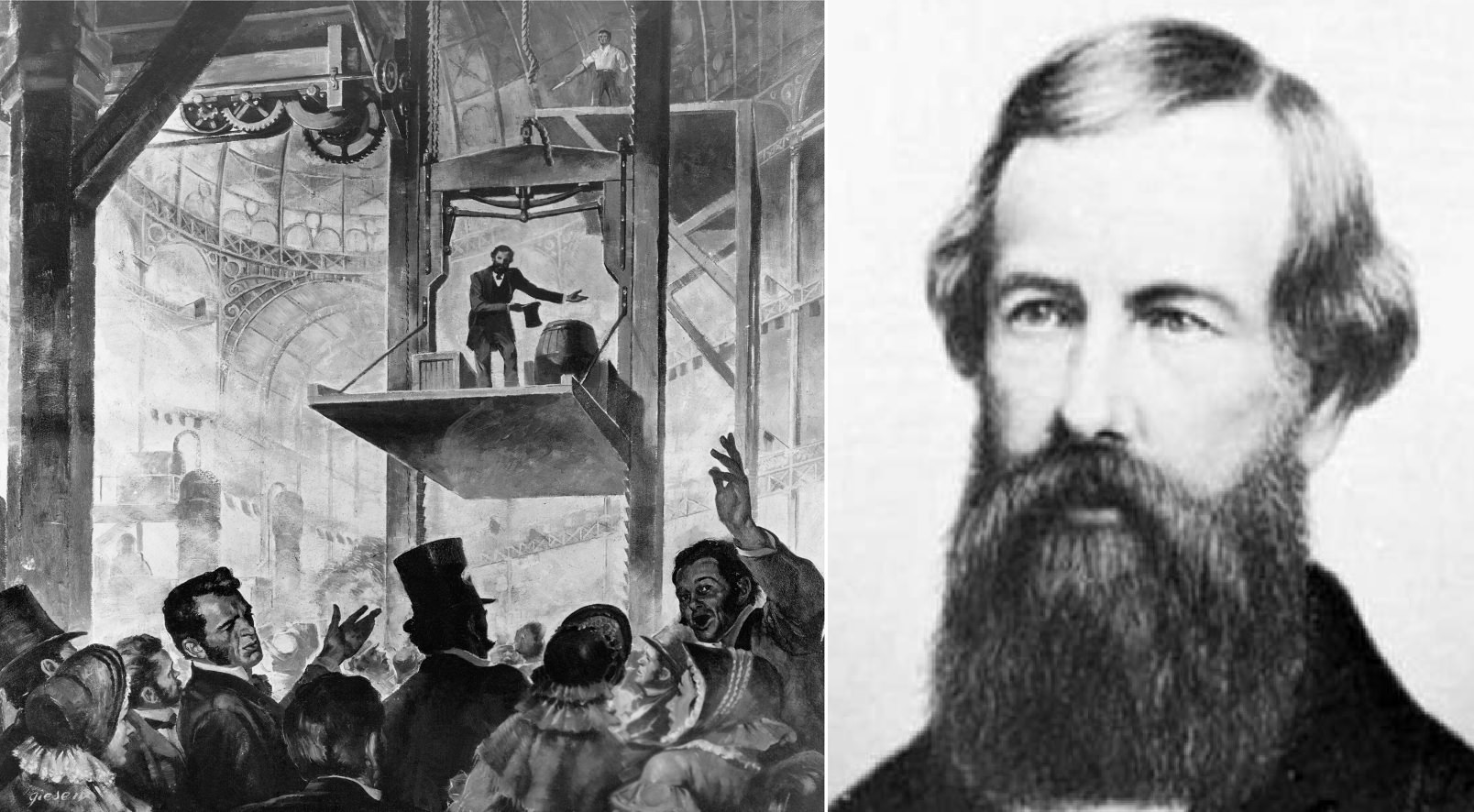
Inside a vast exhibition hall of ironwork and spectacle, a crowded audience cranes its neck toward a raised platform as a man stands calmly on an elevator carriage suspended above them. Gears, beams, and hoisting equipment frame the scene, emphasizing that this is as much a public demonstration as it is a piece of machinery. The moment hints at the tension of early vertical transport—curiosity mixed with fear—when trusting a lift meant trusting the unseen strength of its mechanism.
At the center of the story is Elisha Graves Otis, whose name became synonymous with making elevators safer and therefore practical for everyday buildings. The illustration captures the drama that helped convince skeptics: an elevated platform, a confident presenter, and the unmistakable theatre of innovation aimed at proving a safety device could prevent a deadly fall. On the right, the accompanying portrait reinforces the human side of invention, pairing engineering with the face of the man credited with changing how people moved through multi-story spaces.
Long before skyscrapers defined modern skylines, breakthroughs like the Otis elevator laid the groundwork for dense urban architecture and the rise of vertical cities. This historical image works beautifully in an “Inventions” collection because it shows technology at the instant it wins public trust, not just after it becomes ordinary. For readers interested in the history of elevators, industrial-era engineering, and the origins of safe passenger lifts, the scene offers a vivid window into the 1850s world where height began to feel accessible.