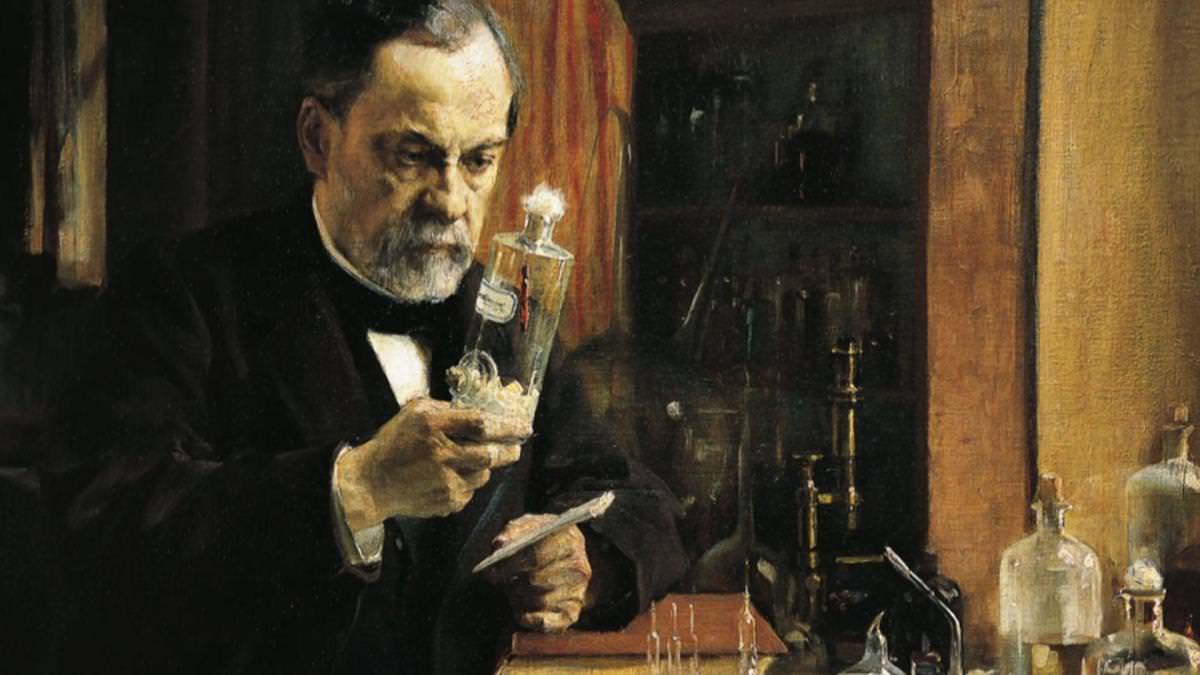
Bent over a cluttered laboratory bench, Louis Pasteur studies a clear glass vessel as if it holds a secret the naked eye can barely grasp. The subdued light, the dark suit, and the careful grip on the flask evoke the seriousness of nineteenth‑century experimental science, where observation and patience mattered as much as brilliance. Around him, bottles, tubes, and instruments form the quiet backdrop of a working lab rather than a staged portrait.
Pasteurization, associated with 1865 in the title, speaks to a practical breakthrough: using controlled heat to slow spoilage and reduce harmful microbes in everyday liquids. The scene’s focus on glassware and precise handling hints at the world of fermentation research—wine, beer, and milk—where tiny organisms could mean the difference between a safe product and a ruined one. For readers exploring the history of inventions, this moment connects laboratory method to industrial practice and, ultimately, to public health.
Few processes feel more ordinary today than pasteurization, yet its story begins with concentrated attention to minute changes inside a flask. The image invites a closer look at how science moved from theory to technique, turning careful experiments into a safeguard adopted far beyond the lab. As a historical photograph for a WordPress post, it offers a strong visual gateway into Louis Pasteur’s legacy and the enduring impact of pasteurization on modern food safety.