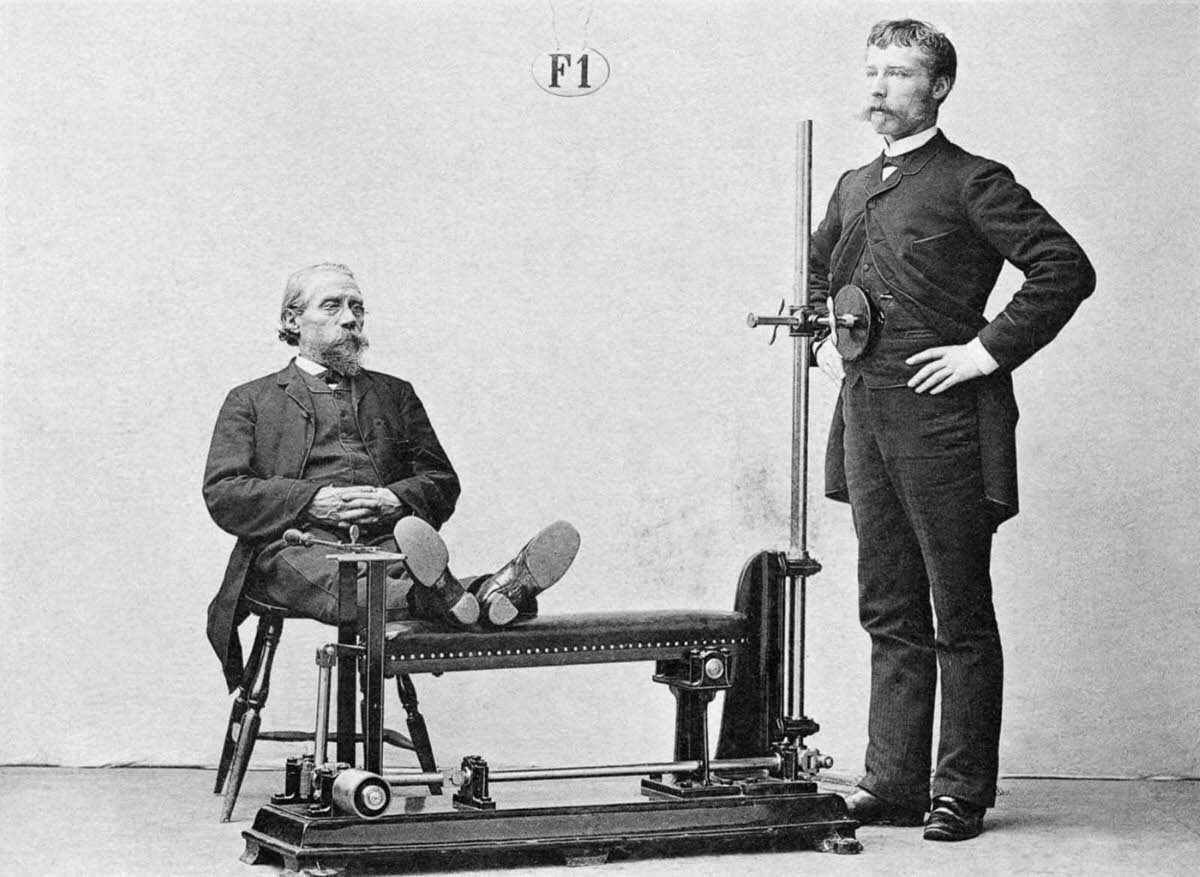
A bearded gentleman sits stiffly on a chair with his legs stretched onto a long padded platform, while another man in a dark suit stands beside a tall metal frame like a proud demonstrator. Bolted to the base are belts, pulleys, and small rotating parts that hint at motion even in a still photograph, and the label “F1” above them makes the scene feel like a page lifted from a medical catalog or patent display. The whole setup reads as an early attempt to mechanize “relief,” turning the treatment room into a workshop of gears and levers.
At a time when nerves, “weakness,” and sluggish digestion were often blamed on modern living, vibrating massage machines were marketed as practical wonders that could nudge the body back into balance. Devices like this promised stimulation without strenuous exercise, offering a hands-off solution that sounded scientific, hygienic, and up-to-date. The pose of the operator—confident, almost saleslike—suggests the blend of medicine and marketing that powered many health inventions in the late 19th and early 20th centuries.
What makes the image so compelling today is how familiar the idea still feels, even if the apparatus looks theatrical: a mechanized shortcut to calm the mind and move the bowels. The photo invites readers to explore the history of vibration therapy, constipation remedies, and the era’s fascination with electrically assisted wellness and mechanical massage. Seen through a modern lens, it’s a striking reminder that “miracle” health technology has always come with equal parts innovation, optimism, and showmanship.