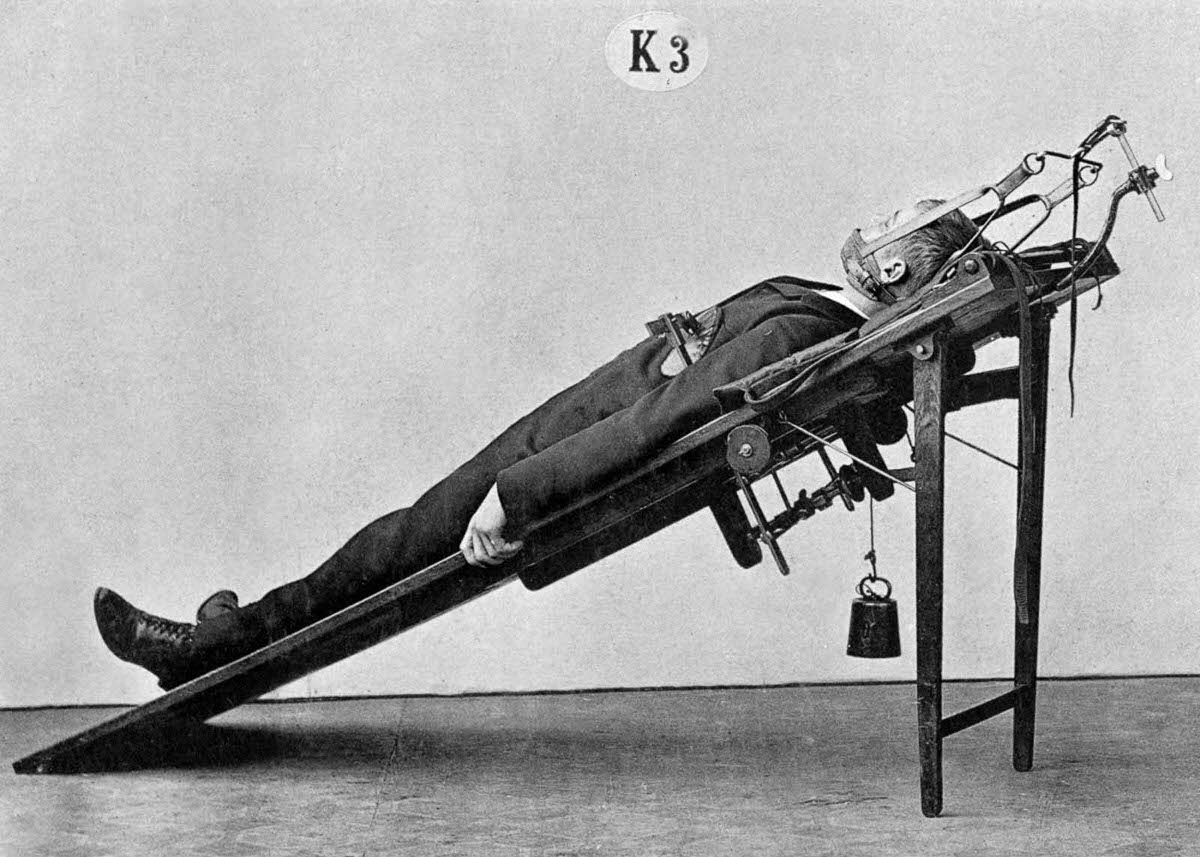
At first glance, the strapped-down patient and the angled wooden frame look like something dreamed up for gothic horror rather than healthcare. A head harness keeps the subject in place while a network of rods, pulleys, and a hanging weight adds steady traction, turning the human torso into a problem to be “corrected” by mechanics. Even the clinical label above the scene feels like a catalog entry for an invention that’s equal parts medicine and menace.
Yet the goal was not torture but realignment—an early attempt to use controlled force to reshape posture and the ribcage. Devices like this reflect an era when orthopedics and physical therapy leaned heavily on braces, traction tables, and adjustable contraptions meant to coax bones and soft tissues into better positions. The photograph captures that old faith in engineering solutions for the body: tighten, pull, counterbalance, and let time and pressure do the rest.
For anyone fascinated by unusual medical inventions, this image offers a window into how “modern” treatment once looked in practice—stark, improvised, and surprisingly theatrical. The minimal backdrop and rigid pose focus attention on the apparatus itself, as if the machine were the true subject and the person merely its test case. It’s a vivid reminder that the history of health is also the history of devices, and that yesterday’s cutting-edge therapy can resemble today’s nightmare prop at first sight.