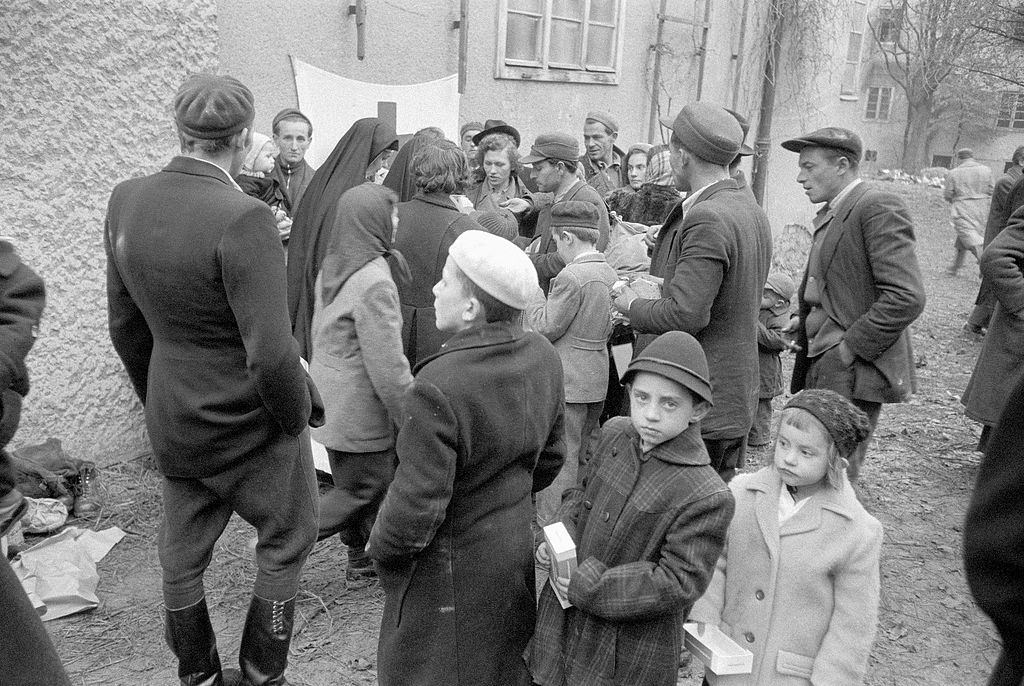
Crowds press close in a makeshift courtyard, coats buttoned against the cold and hats pulled low as Hungarian refugees gather in a camp in 1956. Adults cluster around a simple distribution point, hands extended for papers or rations, while children hover at the edge with small boxes clutched to their chests. The rough walls and bare ground hint at temporary shelter, the kind assembled in haste when borders and lives have suddenly shifted.
From the faces turned toward the center of the scene, you can sense the anxious choreography of displacement: waiting, listening, hoping a name is called or a document is stamped. A nun’s dark habit stands out among civilian jackets and caps, suggesting the presence of relief workers and faith-based aid amid the emergency. The camp’s routine—queues, parcels, hurried conversations—becomes a fragile substitute for the everyday order that conflict has torn apart.
As a historical photo tied to the Hungarian refugee crisis of 1956, the image captures the human scale of civil wars and political upheaval without needing dramatic battlefield imagery. Children meeting the camera’s gaze remind us that exile is experienced not only in policy and headlines, but in the ordinary moments of standing in line, accepting help, and learning to wait. For readers searching the history of Hungarian refugees, refugee camps, and Cold War-era displacement, this scene offers a stark, intimate window into survival between departure and resettlement.