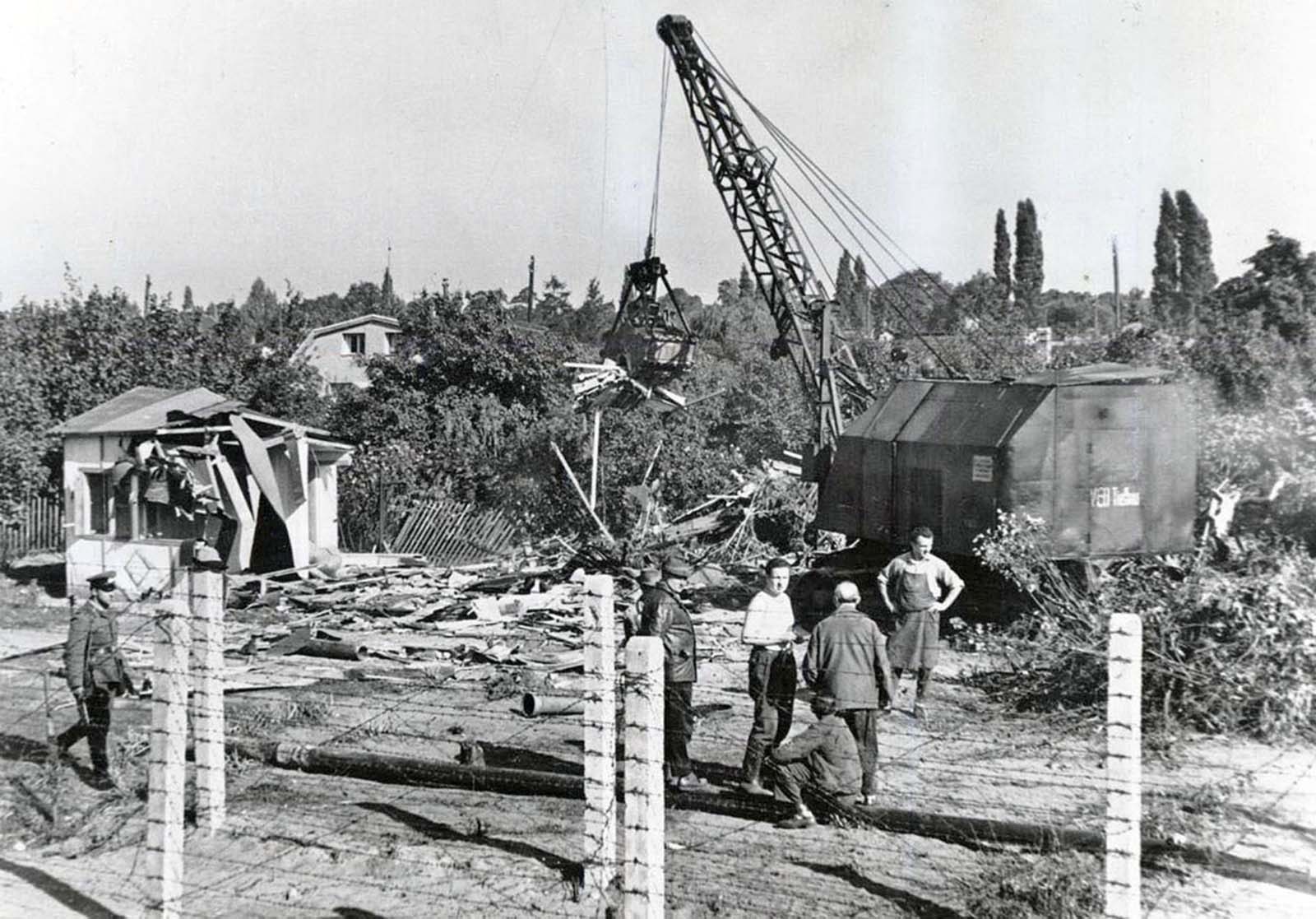
Along a quiet, leafy edge of Berlin in October 1961, a power shovel bites into the remains of small cottages and single-family houses that once sat near an ordinary neighborhood boundary. Splintered timbers and scattered debris spread across the ground while the machine’s boom rises over shrubs and garden plots, turning domestic space into a cleared strip. In the foreground, a line of posts and wire underscores the purpose of the demolition: not renovation, but separation.
Men stand watching amid the rubble—some in work clothes, one appearing to be in uniform—capturing the uneasy mix of labor, authority, and disbelief that marked the early days of the Berlin Wall. The scene is starkly practical: remove the buildings, open the view, deny cover, and reshape the landscape to fit a new border regime. What had been porches, fences, and outbuildings becomes a no-man’s-land in the making, a physical reminder that politics could reach directly into kitchens and backyards.
For readers exploring Cold War history, East Berlin, and the construction of the Berlin Wall, this photograph offers a ground-level look at how a divided city was enforced block by block. It also echoes the post’s “Civil Wars” theme in a broader sense—conflict expressed not only through armies, but through state power applied to everyday life and property. The destruction here is measured in boards and bricks, yet its impact is measured in displacement, fear, and the hardening of an East–West frontier that would define Berlin for decades.