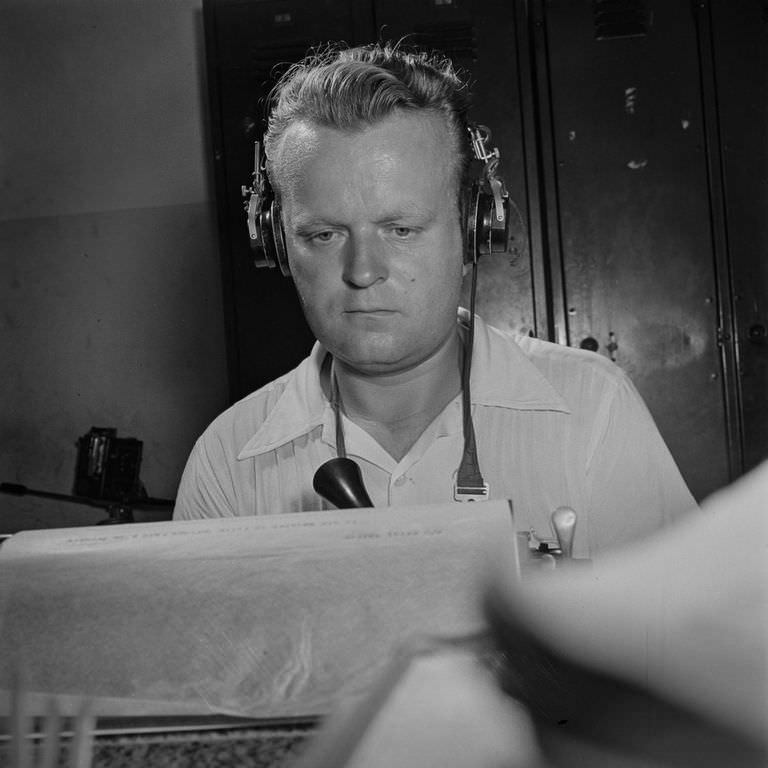
A radio operator sits in concentrated silence, headphones clamped tight as he leans toward a desk crowded with equipment. The foreground blurs into the suggestion of paper and controls, while his face stays sharply intent—listening for faint signals that may drift in and out with atmospheric conditions. Behind him, utilitarian cabinets and plain walls hint at a workroom built for function, where communication depends on patience and trained ears.
Shortwave radio turned distance into something negotiable, allowing messages to cross borders without cables, carried on bouncing bands of energy. In moments like this, “receiving” was only the beginning: every word had to be caught, checked, and written down accurately, often at speed, often under imperfect reception. The title’s mention of a correspondent in Switzerland evokes an international network of voices and reports, linked by disciplined operators and the fragile reliability of the airwaves.
Seen today, the scene reads like a portrait of mid-century invention in practice—human skill paired with technology to make information travel. The headset, microphone, and paperwork underscore how much of radio history is also labor history: logging transmissions, maintaining records, and keeping lines of contact open when other channels were slow or uncertain. For anyone exploring the evolution of telecommunications, this image offers a grounded glimpse into the everyday mechanics behind global communication.