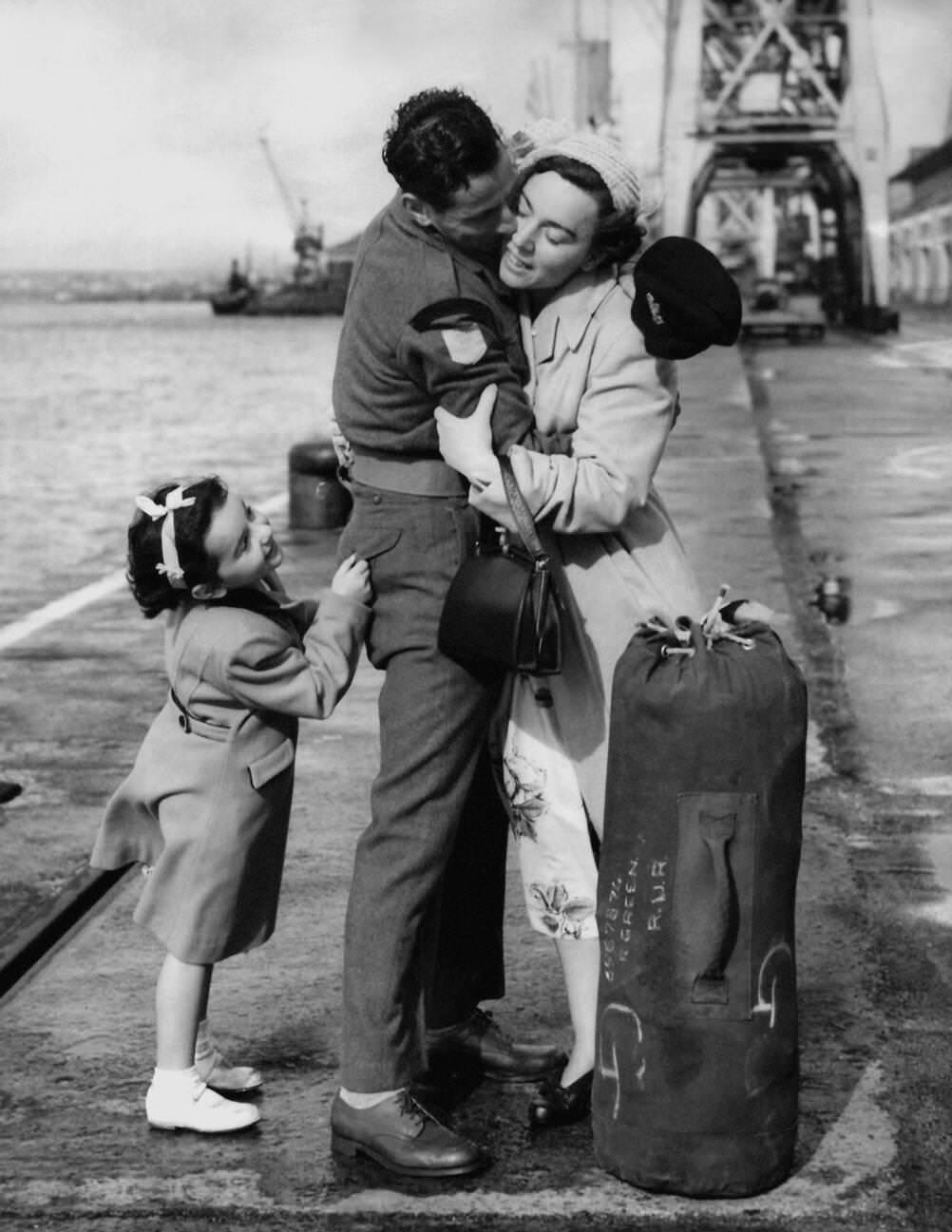
On a wet Southampton dockside in 1953, a British Army serviceman is pulled into a tight embrace as a woman leans in, eyes closed, while a small child clings to his leg. The scene is intimate and unguarded—uniform creases, a beret in hand, and the press of bodies doing what words can’t. Behind them, harbour cranes and shipping fade into a soft industrial blur, reminding us that homecomings often happened in working ports rather than parades.
The title points to a specific moment of the Korean War’s aftermath: prisoner repatriation, when captivity gave way to the long, complicated journey back. In the foreground sits a large kit bag, marked and scuffed, a practical object that quietly carries the weight of service and separation. The photograph’s power lies in its contrasts—military formality against family tenderness, public space against private relief, the hard lines of the waterfront against the softness of reunion.
For readers searching British Army history, Korean War repatriation, or Southampton’s role in post-war returns, this image anchors those themes in human experience. It also broadens the story beyond battlefields, showing how war reaches into households and how peace arrives in fragments: a kiss, a child’s grip, a moment held on the quay before the world moves on. Seen today, it stands as a reminder that the end of a conflict is measured not only in treaties, but in the faces waiting at the water’s edge.