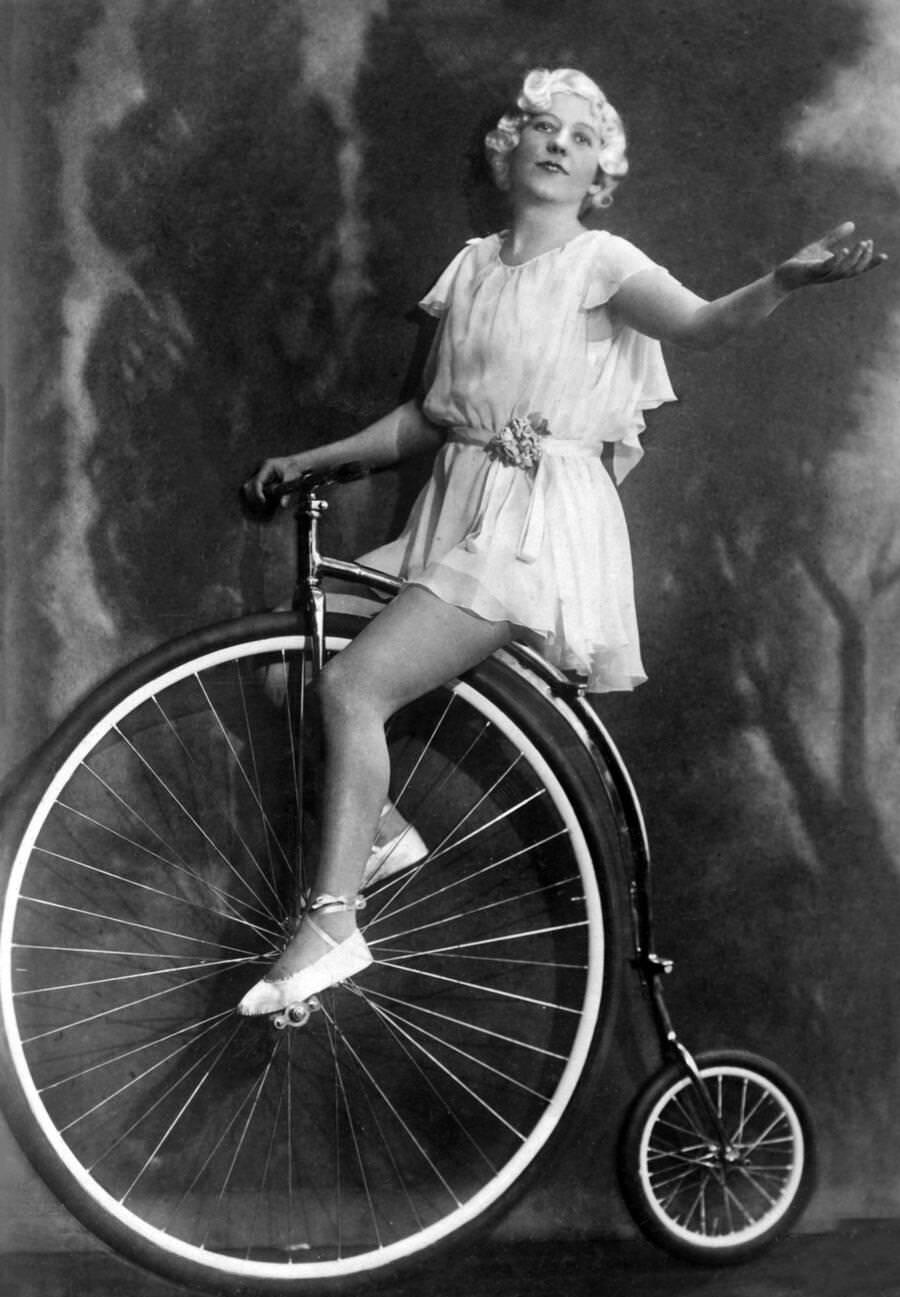
Against a softly painted studio backdrop, a poised young woman balances on an outsized bicycle, her arm extended as if presenting a product to an unseen audience. The theatrical pose, the glossy metalwork, and the dramatic contrast of the huge front wheel with the tiny rear wheel all read like a carefully staged advertisement rather than a casual portrait. Tied to the post title, “Advertising in London, 1932,” the scene suggests how marketers leaned on spectacle and style to make modern goods feel exciting, fashionable, and worth noticing.
Fashion does a great deal of the selling here: a light, fluttering dress, waved hair, and neat shoes turn machinery into elegance, making the bicycle seem less a utilitarian vehicle and more a lifestyle accessory. The scale of the cycle—part nostalgia, part novelty—adds a wink of entertainment that would have stood out in print and shop displays, especially in an era when eye-catching visuals competed for attention. Even without visible brand text, the image communicates aspiration, confidence, and the promise of effortless motion.
London in the early 1930s was a marketplace of posters, magazines, and window displays, and this kind of stylized photography fit neatly into that growing advertising ecosystem. It reflects a moment when “inventions” and consumer products were promoted through personality and performance as much as through technical claims. For readers interested in vintage advertising, British social history, or the visual culture of the interwar years, the photograph offers a vivid glimpse of how selling worked when glamour met engineering.