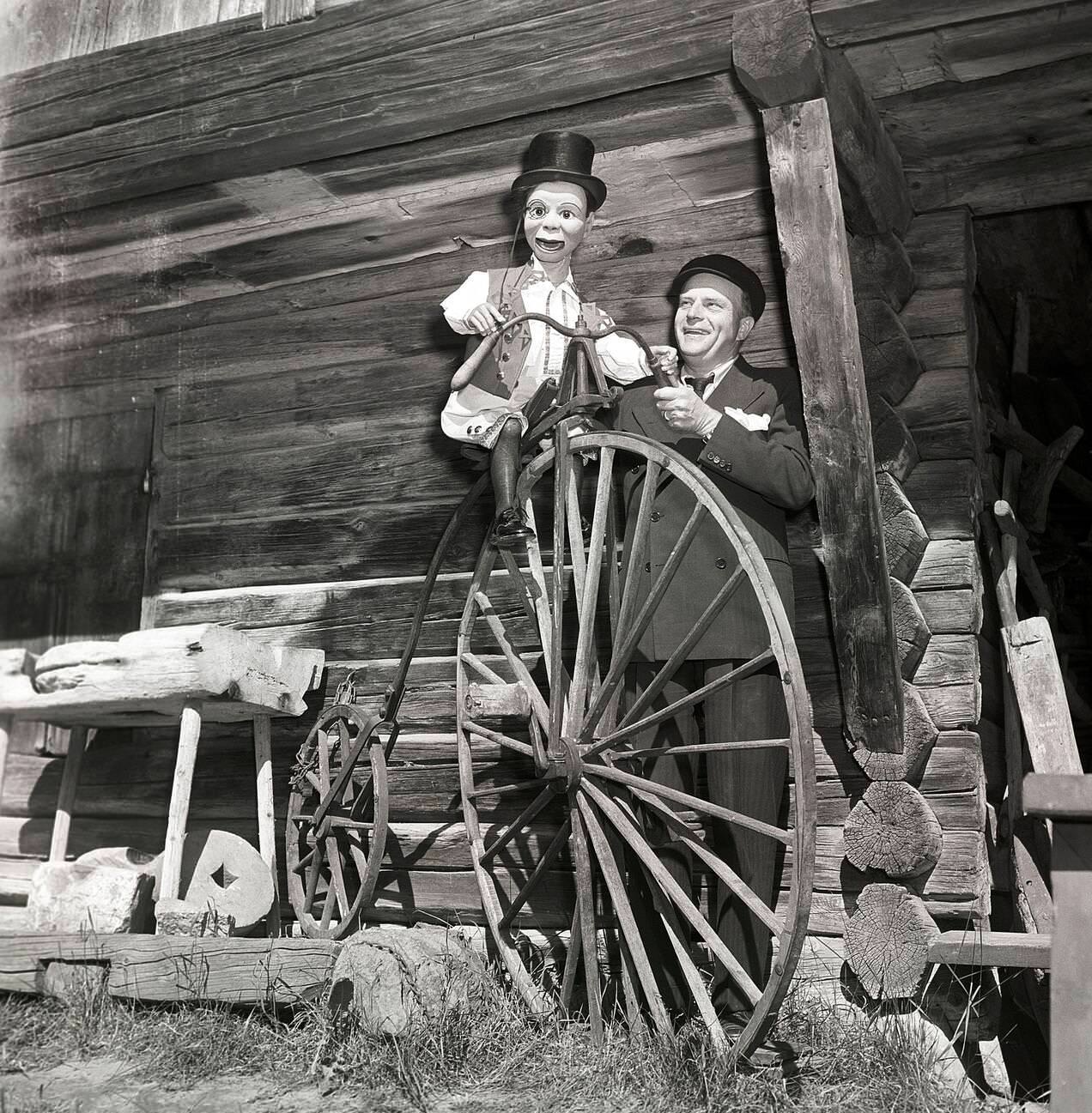
An unlikely commuter solution takes center stage in this evocative press photo: T. Smith perched beside a towering penny-farthing, a bicycle design more associated with the Victorian era than mid-century London. The oversized front wheel dominates the frame, its thin spokes and high seatline turning a practical journey into a spectacle, while the rider’s smart suit and hat underline just how far everyday life had carried this old invention into a modern moment.
May 5, 1958—during the London bus strike—adds the real drama behind the novelty, hinting at a city forced to improvise when routine transport ground to a halt. Strikes often reveal the hidden machinery of urban life, and here the “machinery” is literal: pedals, metal rims, and a precarious riding position revived as a stopgap. The scene reads as both humor and resilience, the kind of story newspapers loved because it made disruption legible through a single memorable figure.
For readers interested in transport history, British social history, or the evolution of bicycles, this image bridges invention and necessity with remarkable clarity. The penny-farthing stands as a reminder that older technologies never fully disappear; they linger in sheds, shops, and memories, ready to be pressed back into service when circumstances demand it. Seen through the lens of the 1958 bus strike, T. Smith’s ride becomes more than a curiosity—it’s a small portrait of adaptation on London’s streets.