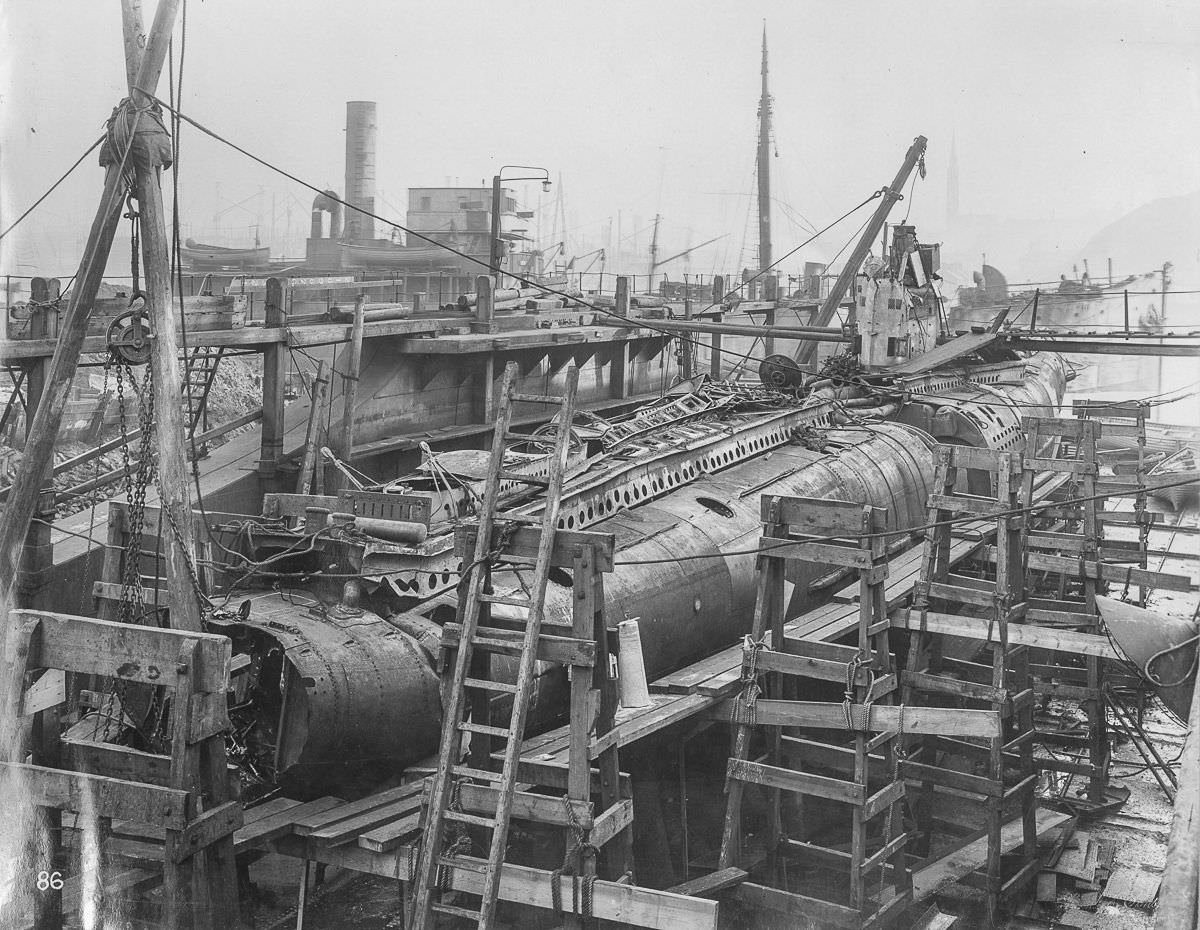
Steel ribs and battered plating lie exposed in a dockside cradle, where U-Boat 110 sits like a captured machine laid open for study. Ladders and rough timber staging surround the hull, turning the scene into a temporary workshop of curiosity and control. In the haze beyond, masts, cranes, and industrial structures crowd the waterfront, reminding the viewer that submarine warfare was born from the same shipyard world that built merchant steamers and naval patrol craft.
What makes the photograph so compelling is its unguarded look at early submarine engineering—riveted seams, circular cutouts along the casing, and the long cylindrical body designed to endure pressure and concealment. The boat’s skin appears scraped and scarred, suggesting hard service and rough handling during recovery, salvage, or inspection. For anyone fascinated by World War I technology, it reads like an accidental blueprint: a rare chance to see how 1918-era inventions were assembled, accessed, and repaired in the open air.
U-Boat 110 has acquired a ghostly reputation precisely because images like this feel like a descent into an underwater lair brought to the surface. The clutter of chains, beams, and platforms frames the submarine as both weapon and artifact, a reminder of how quickly innovation can be driven by conflict. If you’re searching for authentic U-boat history, early submarine design details, or archival naval photography, this post offers a close, atmospheric doorway into that submerged world.