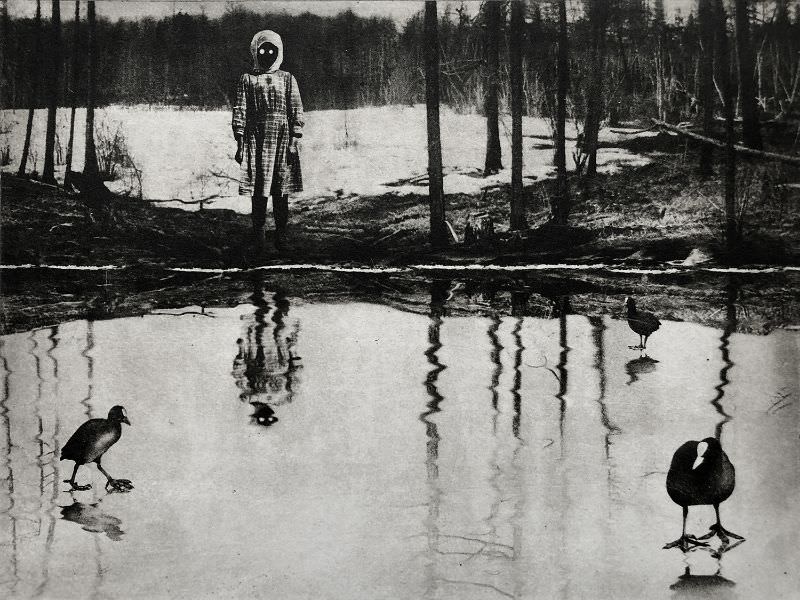
Across a still, half-frozen stretch of water, a solitary figure stands on the far bank in a stark winter landscape. Bare trees rise like thin columns behind them, while the shoreline is patched with snow and dark earth. The person’s patterned coat and rounded face covering create an uncanny focal point, heightened by the way their silhouette repeats in the lake’s mirrorlike surface.
In the foreground, waterfowl step gingerly across the ice, their bodies crisp against the pale reflection and rippling shadows of trunks. That small, ordinary movement—birds testing the surface—pulls the scene back toward everyday life, even as the distant onlooker feels strangely theatrical. The composition plays with distance and scale: wildlife close at hand, a human presence held just out of reach, and a quiet tension suspended between them.
“Exterior No.35: On The Far Bank Across The Lake” reads like a catalogue entry, yet the photograph carries the atmosphere of a story paused mid-sentence. It’s an evocative piece of historical imagery for readers drawn to vintage landscape photography, winter scenes, and the uneasy poetry of reflections. Whether viewed as documentary record or surreal artwork, the frame lingers—cold air, silent trees, and a watchful figure separated by water and time.