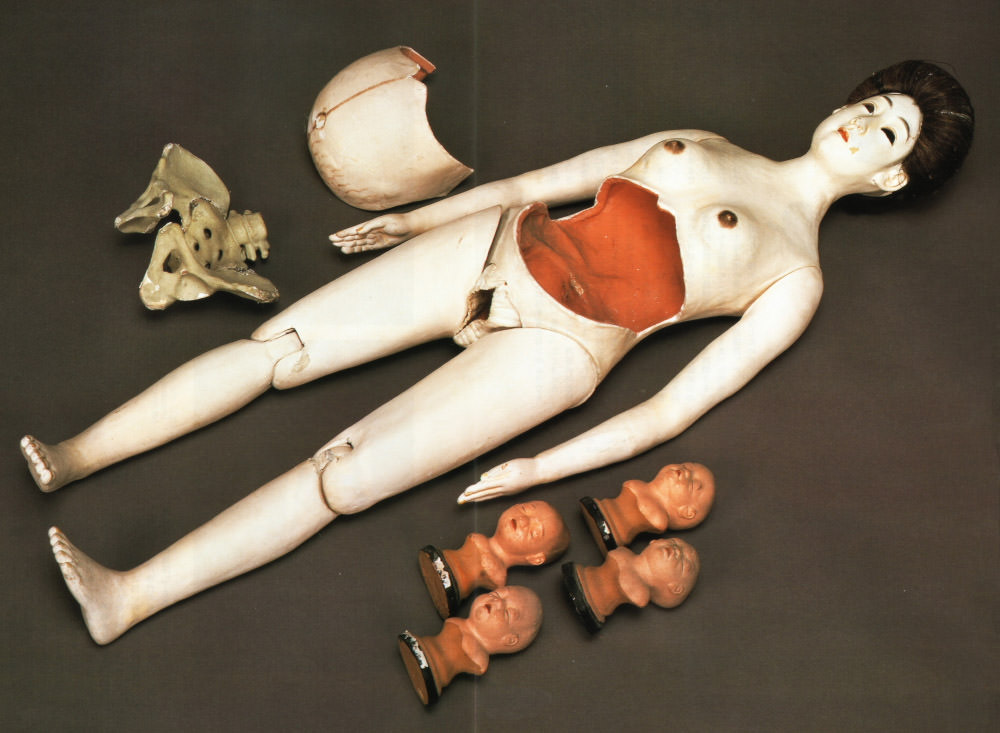
Laid out like an exhibit specimen, a lifelike Japanese doll rests on a dark backdrop with its torso opened to reveal a vivid red interior. Nearby sit detachable parts—an opened belly panel, a pelvis-like piece, and several small infant figures—inviting the viewer to understand the body through objects that can be taken apart and reassembled. The careful painting of the face and hair contrasts with the stark, almost clinical presentation, making the scene feel both theatrical and instructional.
Pregnancy dolls like this occupy a strange crossroads in 19th-century Japanese material culture, blending curiosity, anatomy, and spectacle in ways that suit the post’s theme of Edo-period sideshow attractions and “inventions.” Whether used for popular display, private demonstration, or as an artisanal marvel, the removable womb and multiple babies suggest a fascination with reproduction that could be marketed as wonder, warning, or education. The result is an artifact that feels engineered for storytelling: the body becomes a cabinet of secrets, opened on command.
For readers interested in Japanese history, Edo entertainment, and the evolution of medical models, this photo offers a gripping window into how knowledge and novelty could share the same stage. The object’s design encourages questions about who paid to see such things, what explanations accompanied the reveal, and how craftsmanship helped translate taboo subjects into something viewable. It’s an unsettling yet compelling reminder that the history of popular amusement often runs alongside the history of learning—and sometimes borrows its props.