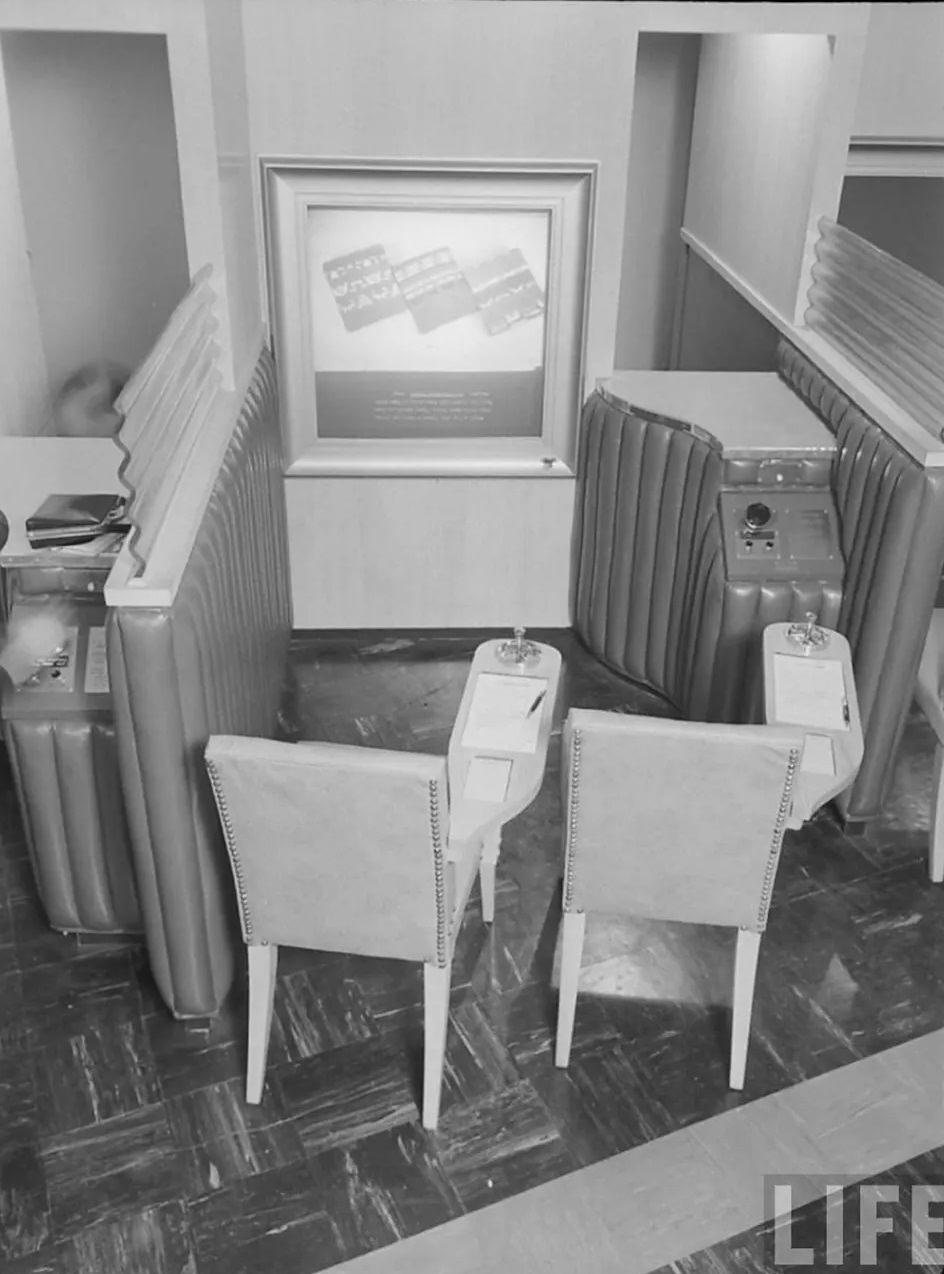
Tucked into a quiet, booth-like corner, this “store” feels more like a lounge than a shop: padded partitions, two simple chairs, and small writing surfaces set up for browsing and ordering. Instead of shelves crowded with goods, the centerpiece is a screen built into the wall, suggesting a catalog you could look through without ever touching the merchandise. Even the pen-and-paper setup hints at the practical reality of early remote purchasing—choices were made at the display, then recorded and sent off for processing.
The scene captures a fascinating pre-Internet approach to online shopping, when companies experimented with electronic ordering long before websites and smartphone apps. Customers could sit down, review products on the screens, and place an order that the company would later ship—an early blend of retail and telecommunications that tried to remove friction from buying. It’s a reminder that the desire for convenience and at-home delivery didn’t begin with modern e-commerce; it simply waited for the technology to catch up.
Look closely and the design choices tell their own story about trust and novelty: the semi-private seating, the uncluttered floor, and the self-contained terminals all aim to make the process feel secure and easy. For historians of inventions and commerce, images like this map out the stepping-stones between mail-order catalogs and today’s digital marketplaces. Long before “add to cart” became a reflex, shoppers were already ordering from screens—and expecting a box to arrive later at their door.