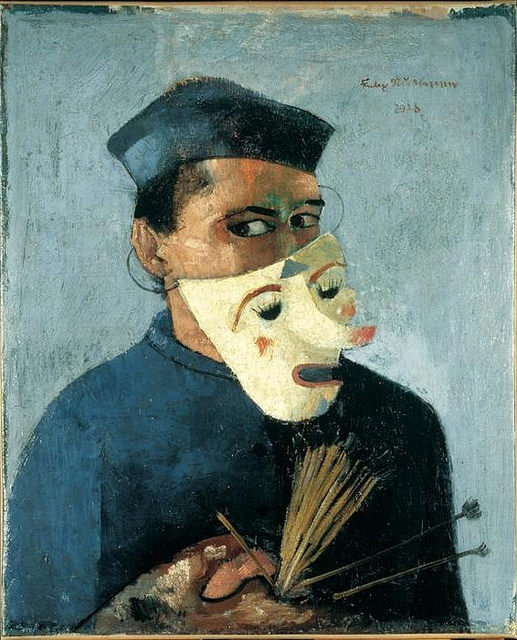
A guarded figure in a dark cap stares out from the canvas while a pale theatrical mask, painted with closed eyes and rouged cheeks, slips across his face like a second skin. The contrast between the living gaze and the false serenity of the mask gives the scene its tension, inviting the viewer to read it as an intimate self-portrait in disguise. Even without needing a caption, the composition signals themes of identity, performance, and the uneasy boundary between what is shown and what is hidden.
In the lower portion, a bundled fan of brushes and a working hand bring the studio into the story, reminding us that the “character” here is also a maker, caught mid-creation. The muted blue-gray background keeps the focus on the psychological drama rather than any detailed setting, while the simplified shapes and layered paint suggest memory at work—selective, compressed, and emotionally charged. For readers searching for Felix Nussbaum artworks, this image offers a compelling gateway into how objects and gestures can carry narrative weight.
A Painter’s Memories follows that thread, exploring how artworks can function like personal documents, preserving feelings that words struggle to hold. The mask becomes more than a prop; it reads as a symbol of protection and distance, a way of facing the world while withholding the self. Whether you arrive here through art history curiosity or a search for stories behind Felix Nussbaum’s paintings, this post invites a slower look at the details that turn a single image into a lived, remembered experience.