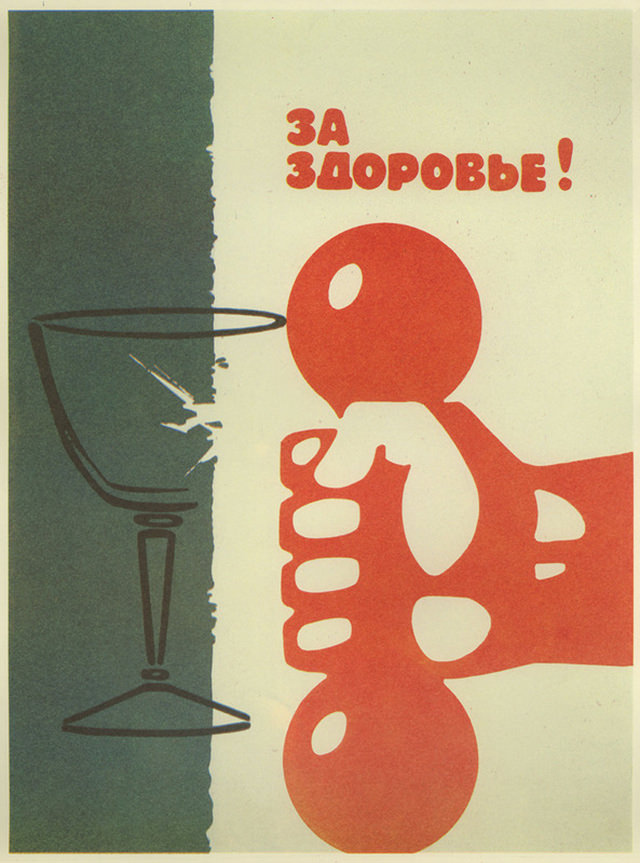
Bold graphic design does the heavy lifting here: a dark, skeletal wine glass sits on the left while a vivid red hand on the right grips a dumbbell-like form, turning an everyday object into a warning. Above, the Cyrillic slogan “За здоровье!” (“To health!”) lands with a sharp irony, playing on the familiar toast while the imagery suggests that alcohol isn’t a harmless indulgence. The restrained palette and strong silhouettes give the artwork the snap of a poster meant to stop passersby in their tracks.
Against the post title, “Alcohol is an active partner in crime,” the composition reads like a courtroom exhibit rendered in minimalist art. The glass is shown as fragile and already compromised, while the clenched fist implies force, control, and escalation—an argument that drinking can act as an accomplice rather than a bystander. By keeping the message universal and the symbols immediate, the artist invites viewers to connect intoxication with consequences: violence, poor judgment, and harm that spreads beyond the drinker.
For collectors and readers interested in propaganda art, temperance messaging, or Soviet-era visual culture, this piece offers a compact lesson in how design can moralize without a single narrative scene. Its clean lines and poster-like typography make it highly shareable and SEO-friendly for searches around alcohol awareness posters, anti-alcohol campaigns, and historical graphic design. Even without a named place or date, the tension between “to health” and the threatening imagery captures a period mood—one that frames alcohol not as a private vice, but as a public danger.