Category: Artworks
Step into the world of timeless artworks that shaped our visual culture. Explore rare paintings, sculptures, and creative masterpieces that reveal the evolution of artistic expression through centuries.From Renaissance genius to modern minimalism, each piece tells a story of imagination, innovation, and beauty that continues to inspire artists and collectors worldwide.
-
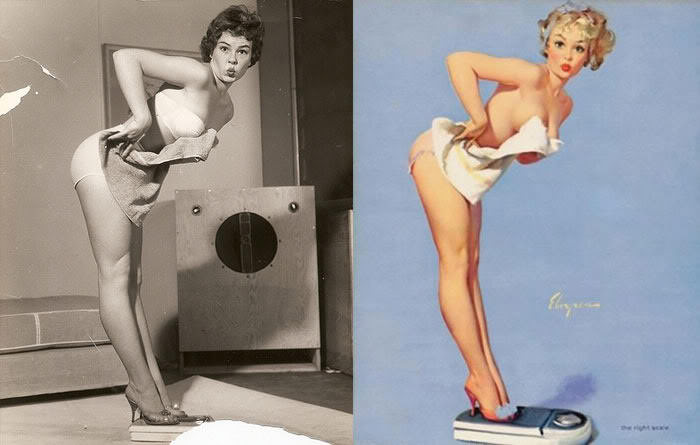
#22 Pin-Up Models Before And After Editing: The Real Women Behind Incredibly Beautiful Paintings #22 Artwor
Side by side, a studio photo of a pin-up model and the finished illustration reveal the quiet machinery behind mid‑century glamour. On the left, she leans forward in a strapless foundation garment, holding a towel at her hips with a playful, surprised expression; the scene feels practical and unvarnished, with plain furnishings and the workaday…
-

#10 Glory to the Fatherland of Heroes!
A cosmonaut’s calm, forward-looking face dominates the composition, framed by a helmet and suit rendered in bold reds that feel almost ceremonial. Behind him, the dark expanse of space glitters with stars, while the blue curve of Earth rises at the edge of the scene, grounding the dream of flight in a recognizable horizon. Along…
-

#26 A. Vinokurov. The distance to even the furthest planet is not that long, folks 1963
Bold Soviet-era graphic design leaps off the page in A. Vinokurov’s 1963 space-themed artwork, where an orange-suited cosmonaut stands against a deep, star-speckled sky. The figure’s raised arm traces the eye toward a bright celestial body, while the sweeping arc of Cyrillic lettering turns the slogan itself into an orbit. Even without lengthy text, the…
-

#42 Glory to the conquerors of the universe!
Bold color and soaring motion dominate this space-age artwork, where a streamlined rocket climbs through bands of fiery orange and violet toward a looming, shadowed planet crowned with a pale rim of light. Streaks like meteor trails or stylized stars slash across the scene, turning the ascent into a triumphal procession rather than a quiet…
-
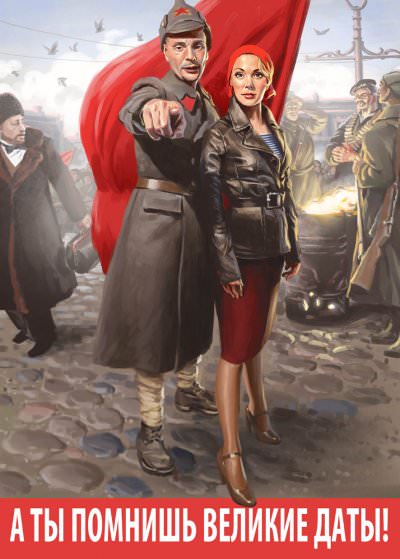
#4 Do you remember great dates?
Bold poster-style artwork asks its question in Russian—“Do you remember great dates?”—and does so with the urgency of a pointing soldier in uniform, framed by a billowing red banner. Beside him stands a fashionably dressed woman in a fitted jacket and skirt, her calm, forward gaze contrasting with the command of the gesture. The composition…
-
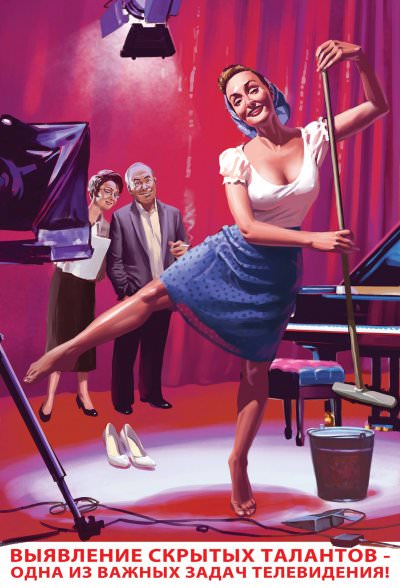
#20 Revealing hidden talents is one of the most important tasks of television!
Under the glare of studio lights, a barefoot performer steals the scene while balancing a mop like a dance partner, one leg lifted with the ease of a practiced entertainer. The set is unmistakably television: a large camera in the foreground, curtains and cables, and a piano waiting nearby, all framing a moment where everyday…
-
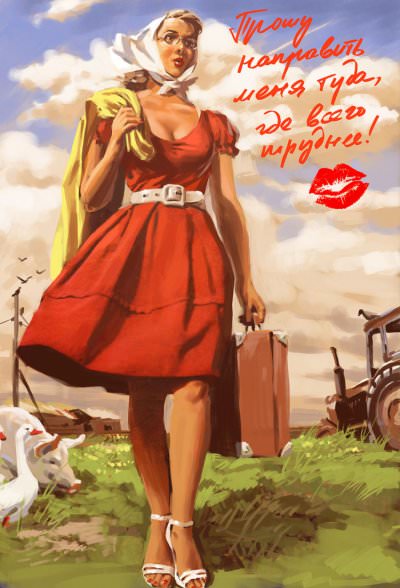
#36 Direction
Bold color and cinematic scale pull you straight into the poster’s message: a woman in a bright red dress strides forward across a rural track, suitcase in hand, headscarf tied against the wind, and a coat slung over her shoulder. The sky is wide with drifting clouds, while geese cluster at the roadside and farm…
-
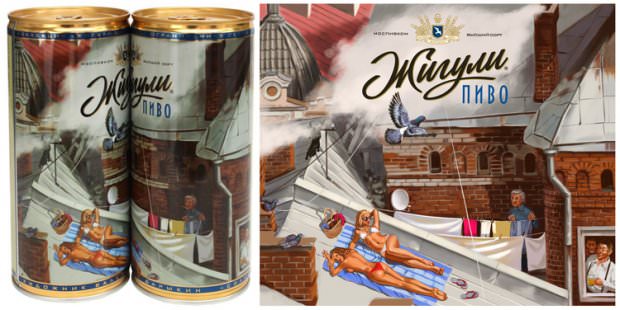
#52 Solar roofs
Sunlight is the quiet protagonist of this post, even though the scene arrives through commercial art rather than a documentary lens. Under the title “Solar roofs,” the composition plays with a rooftop world of angled planes, glinting highlights, and open sky—details that naturally invite modern readers to think about how roofs have long been imagined…
-
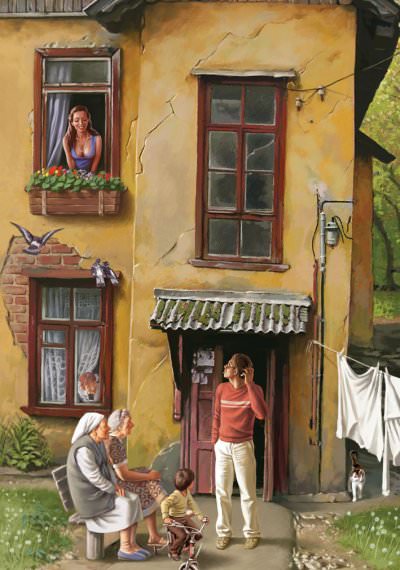
#68 Bad date
“Bad date” sets a quietly comic scene on the worn façade of an old house, where everyday life spills out into the yard. Sun-faded plaster, a patch of exposed brick, and uneven window frames give the building a lived-in character, while flower boxes and lace curtains hint at careful pride beneath the cracks. Up above,…
-
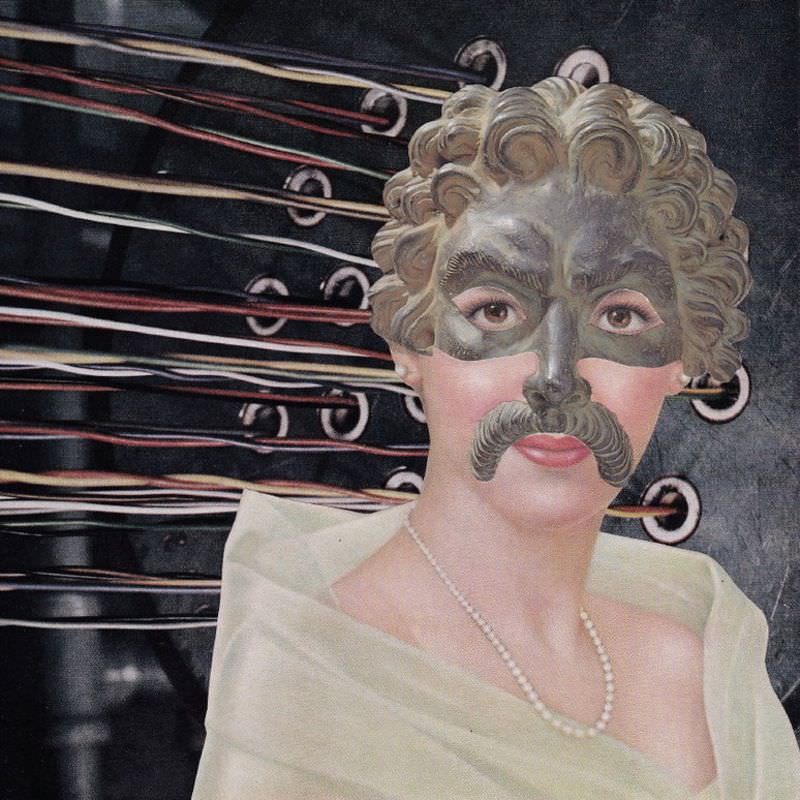
#9 Beauty and the beast
A poised figure meets the viewer’s gaze with a theatrical twist: a dark, animal-like mask and curled moustache are painted over an otherwise elegant face. Soft curls, a pearl necklace, and a pale wrap suggest refinement, yet the playful “beast” overlay turns glamour into sly performance. The result is a striking piece of visual storytelling…