Category: Civil Wars
Explore the human side of civil wars through authentic historical photographs. Witness the struggles, courage, and consequences of divided nations.
These images document key events and personal moments that shaped political and social transformations around the world.
-
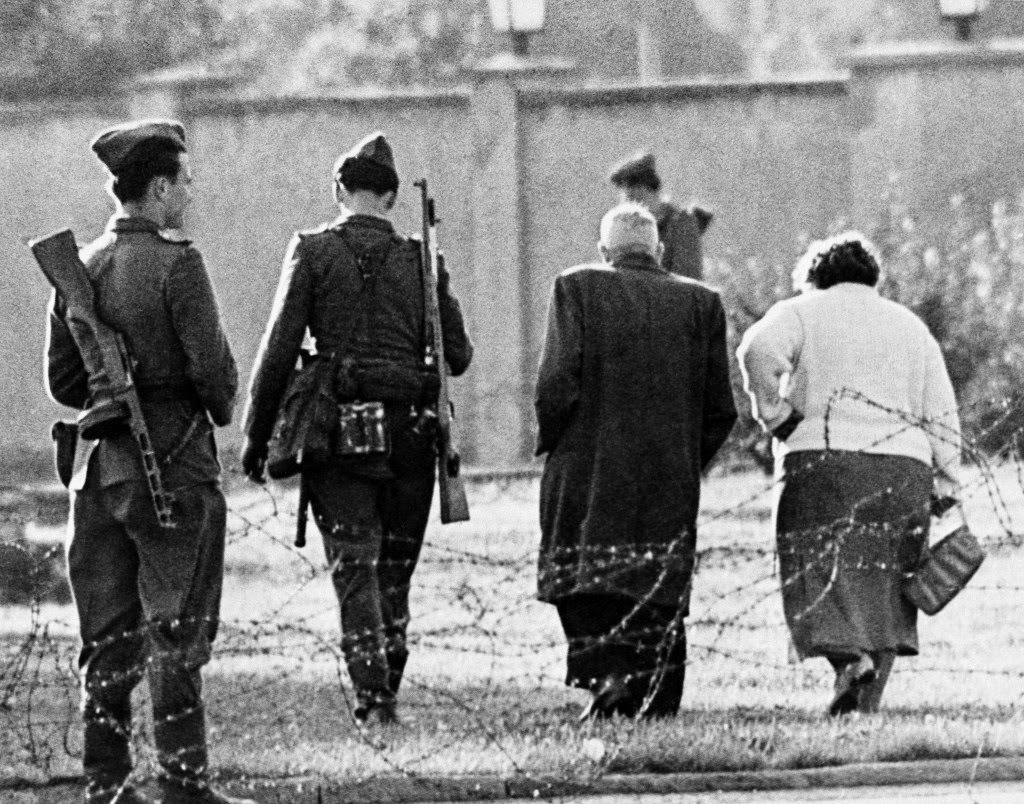
#18 An East German couple is turned away from the border, blocked by East German soldiers and barbed wire, after trying to cross into West Berlin, Aug. 13, 1961.
Barbed wire cuts across the foreground like a jagged signature, marking the sudden hardening of a border that had once been porous. Two East German soldiers, rifles slung and posture controlled, stand close enough to make their authority felt, while an older man in a dark coat and a woman with a handbag are guided…
-
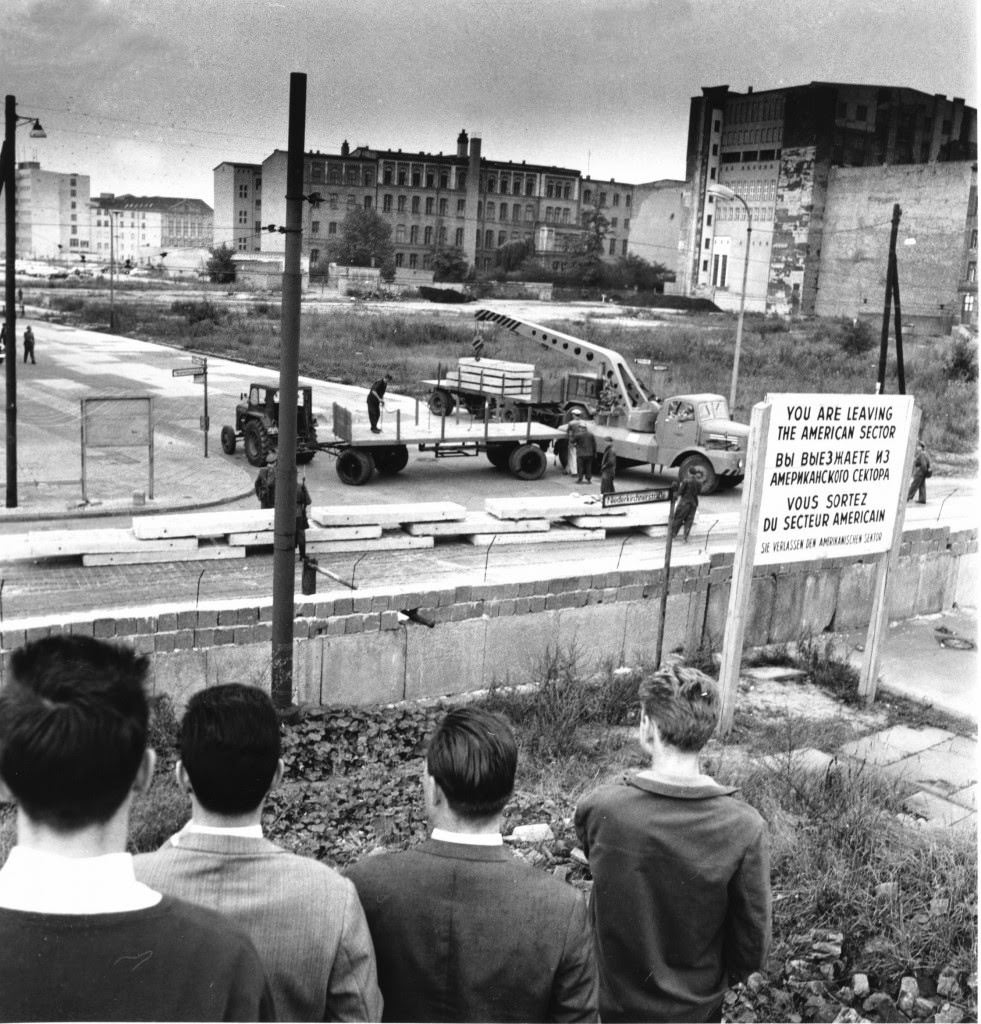
#34 West Berliners, with their backs to camera, watch East Berliners unload prefabricated concrete plates to reinforce the Berlin Wall at Wilhelm St. in Berlin, Germany on Sept. 12, 1961.
Four West Berliners stand with their backs to the lens, watching work crews across the boundary handle stacks of prefabricated concrete plates at Wilhelmstraße in Berlin on September 12, 1961. Beyond a low line of blocks and rough ground, a crane truck and flatbed sit in an open scar of city landscape, framed by damaged…
-
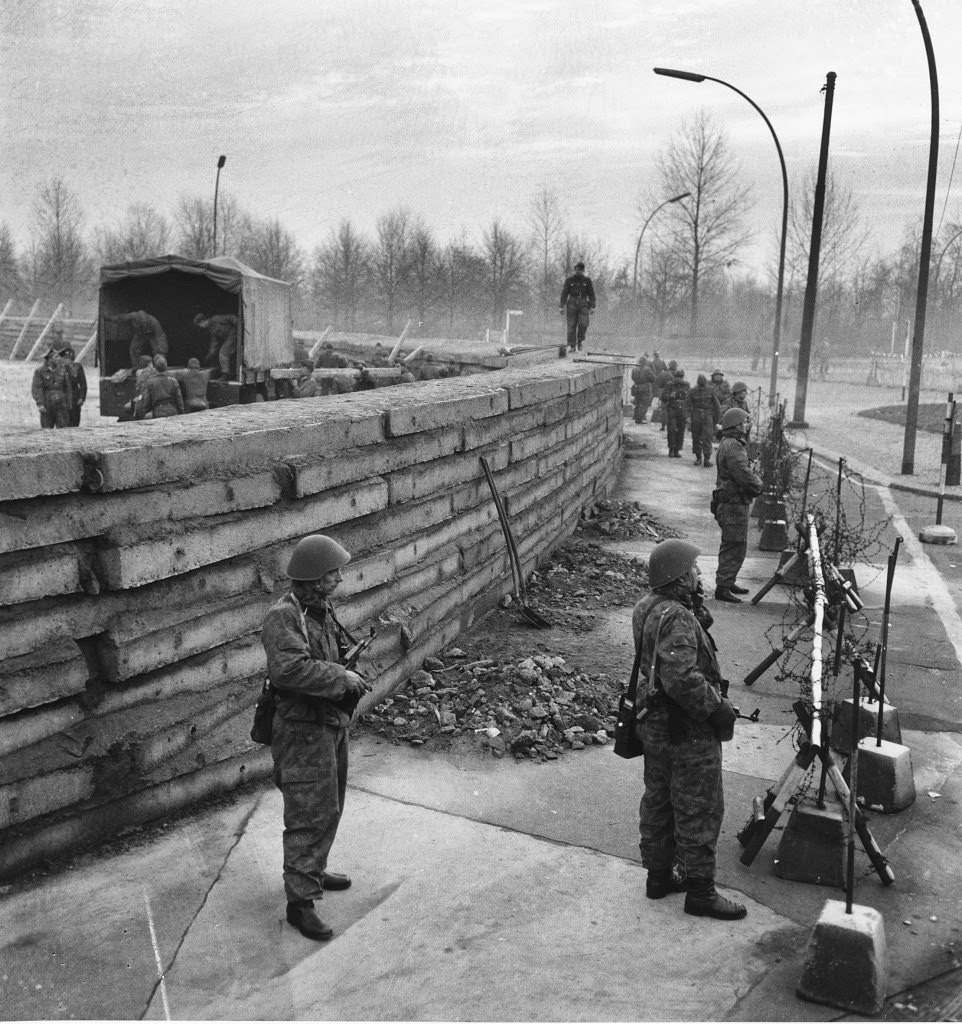
#50 West Berlin police stand guard behind barbed wire along the new 250-yard massive concrete wall at Berlin’s Brandenburg Gate, Germany, on Nov. 23, 1961.
Barbed wire curls along the roadside as West Berlin police hold their positions beside a newly erected stretch of massive concrete near Brandenburg Gate. Helmets and rifles, watchful stances, and the stark geometry of stacked slabs turn a familiar city approach into a militarized corridor. Even the streetlamps and bare winter trees seem to lean…
-
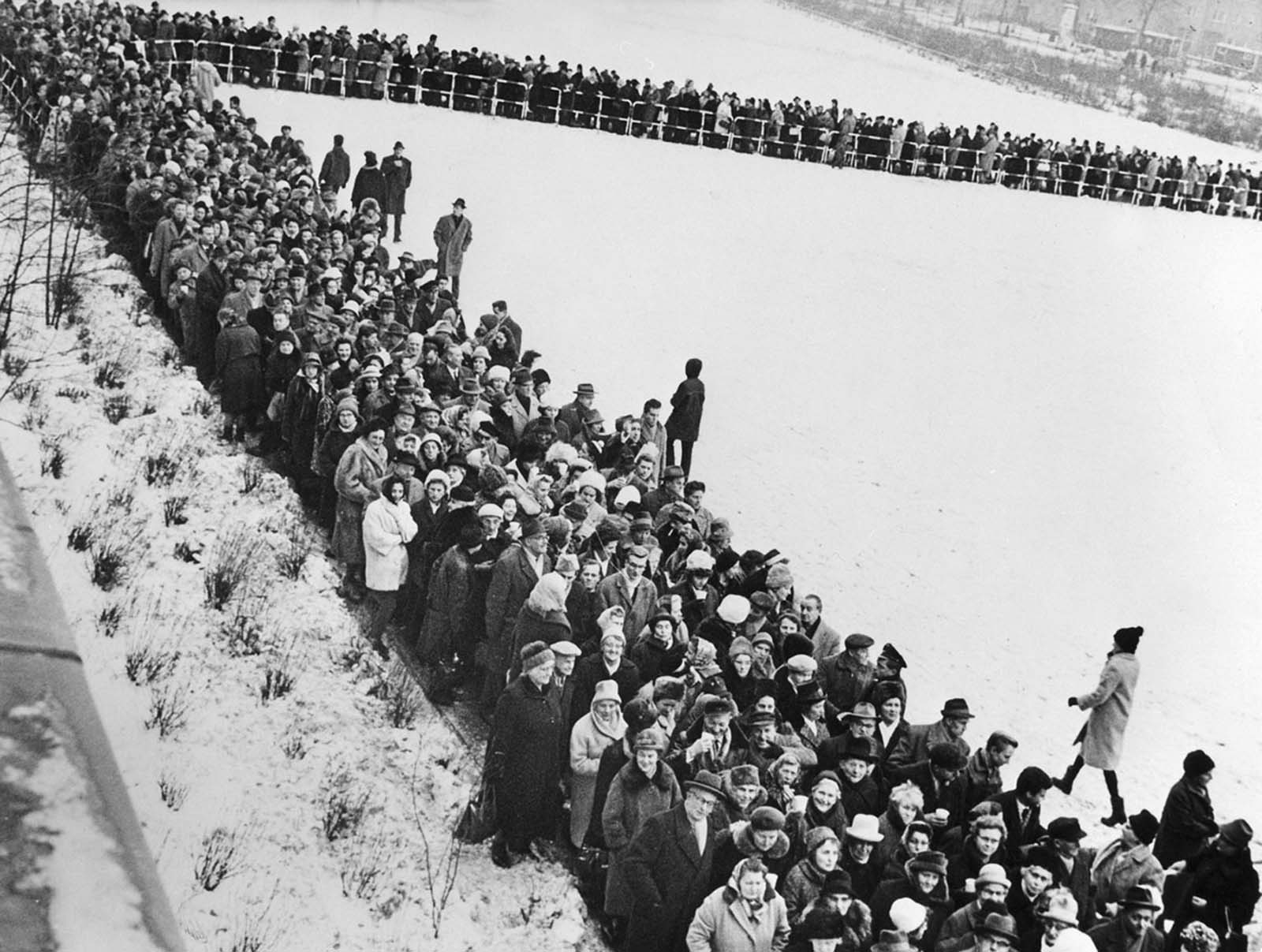
#66 Thousands of people line up at the Schillerstrasse in Charlottenburg, Berlin, to apply for a passage slip to get across the border on December 19, 1963.
Along the snow-edged curve of Schillerstrasse in Charlottenburg, Berlin, a human river forms—thousands packed shoulder to shoulder, their winter coats and hats turning the line into a dense, dark ribbon against the pale ground. The queue bends far into the distance, corralled by simple barriers that try to impose order on a moment charged with…
-

#82 West Berlin children, from left, Peter Friedrich, 5, Katrin Kuhl, 4, and Jurgen Bottcher, 8, build a pretend Berlin Wall in a vacant lot in October 1961.
In a vacant West Berlin lot in October 1961, three children—Peter Friedrich, Katrin Kuhl, and Jurgen Bottcher—stack rough bricks into a makeshift barrier, their small hands turning rubble into a game with ominous echoes. One child balances a block like a mason, another clutches a pale cylinder, and the oldest concentrates on setting pieces in…
-
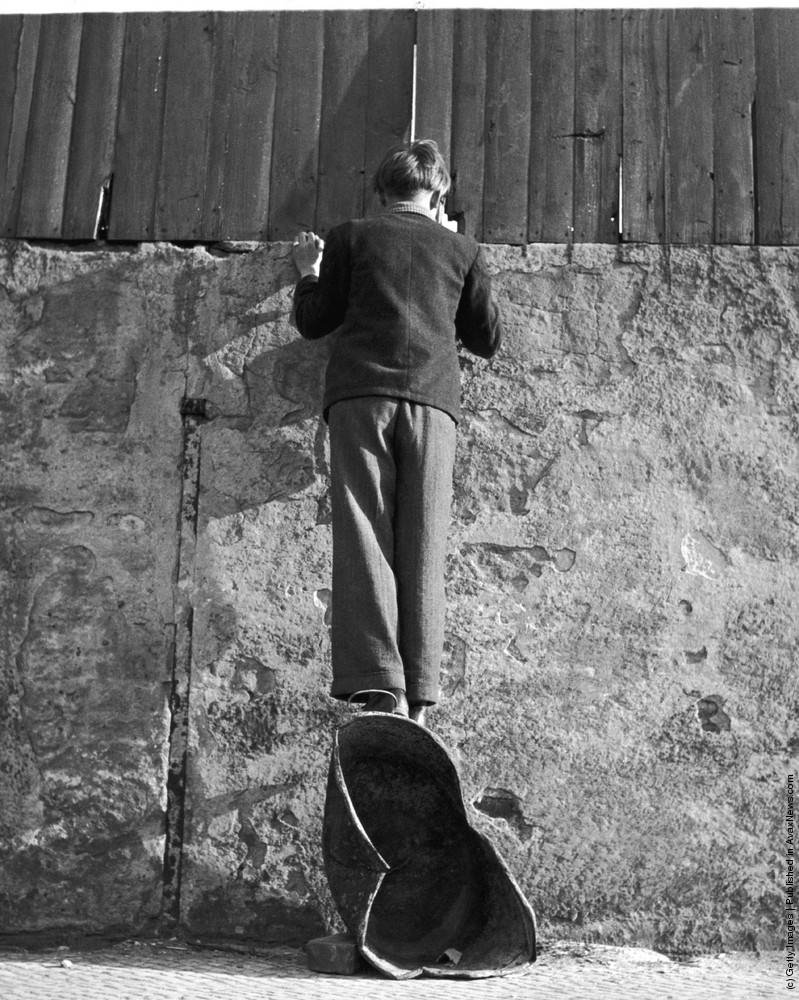
#98 A boy stands on a coal scuttle to peer over the wall of a sports stadium in Berlin, 8th January 1961.
Perched on an upturned coal scuttle, a boy stretches himself tall enough to see beyond a rough wall topped with planks, his hands gripping the edge as if it were the rail of a grandstand. The camera catches him from behind, all angles and balance—small shoes on metal, trousers hanging straight, the back of a…
-
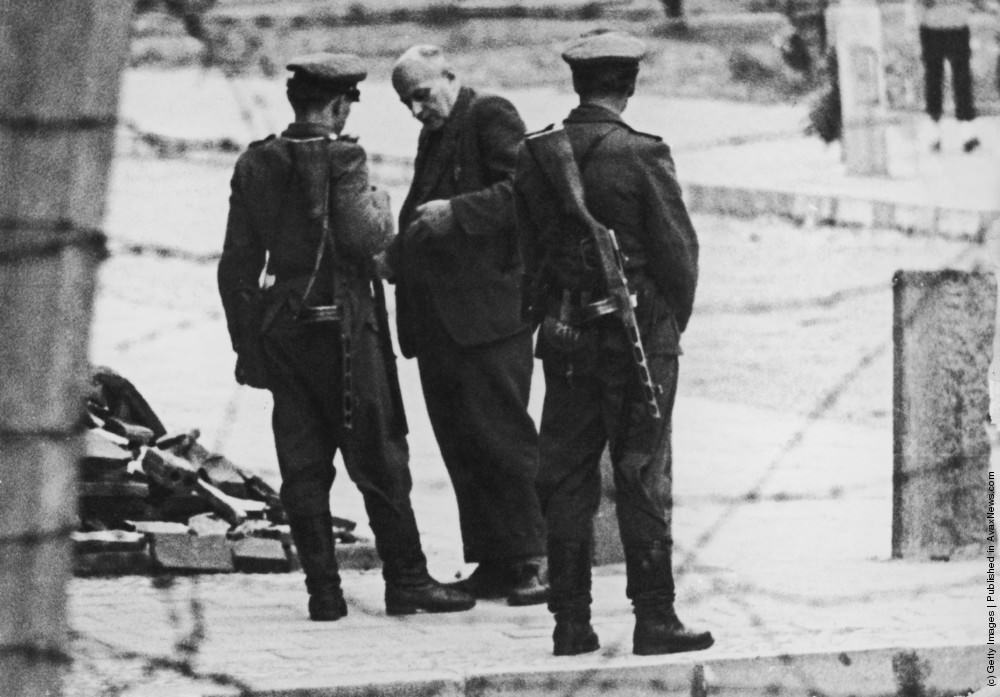
#114 Members of the Volkspolizei, the East German national police, check an elderly man’s papers at the Berlin Wall, 11th September 1961.
On 11th September 1961, the routines of control and suspicion that defined the early Berlin Wall are distilled into a small, tense encounter: Members of the Volkspolizei stand close as an elderly man searches for his papers. Their uniforms and slung weapons dominate the frame, turning an everyday document check into a visible assertion of…
-
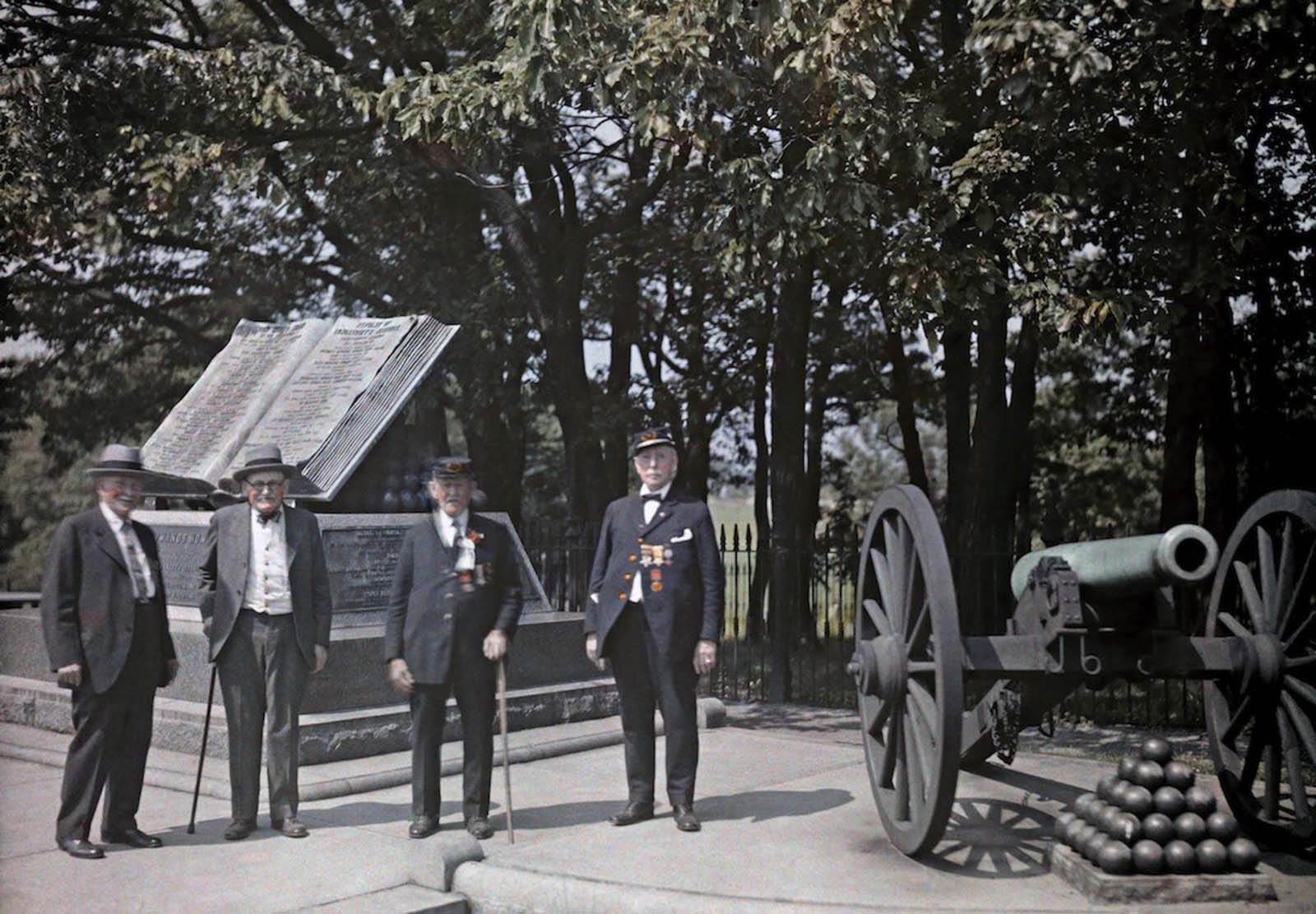
#15 Gettysburg National Military Park, Gettysburg, Pennsylvania — Union Civil War veterans stand in front a monument at Gettysburg. 1931.
Beneath the shade of mature trees at Gettysburg National Military Park in Pennsylvania, a small group of Union Civil War veterans pose with quiet formality beside a monument shaped like an open book. Their dark suits, hats, and canes suggest age and ceremony, while ribbons and medals catch the light—small flashes of color that underline…
-
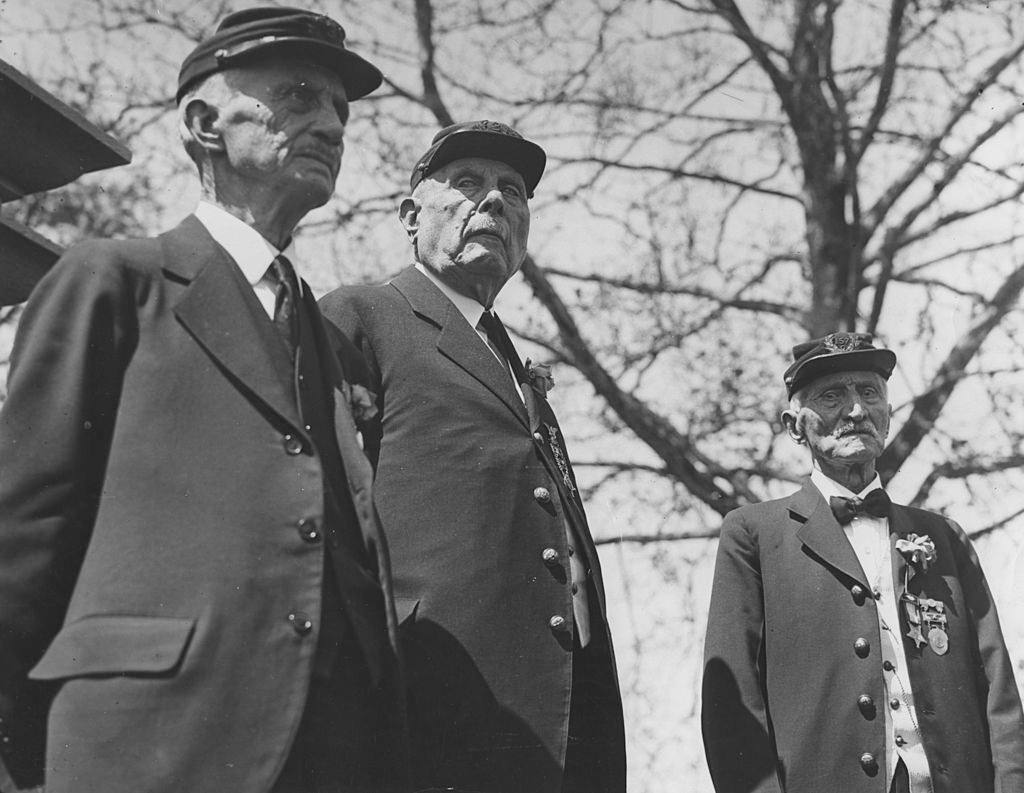
#31 Three Civil War veterans, circa 1900s.
Three elderly men stand outdoors beneath bare-limbed trees, dressed in dark suits and veterans’ caps that mark them as survivors of the American Civil War. Their faces are lined with age, and the low camera angle lends them a quiet monumentality, as if the photographer wanted to place their lived experience on the same level…
-
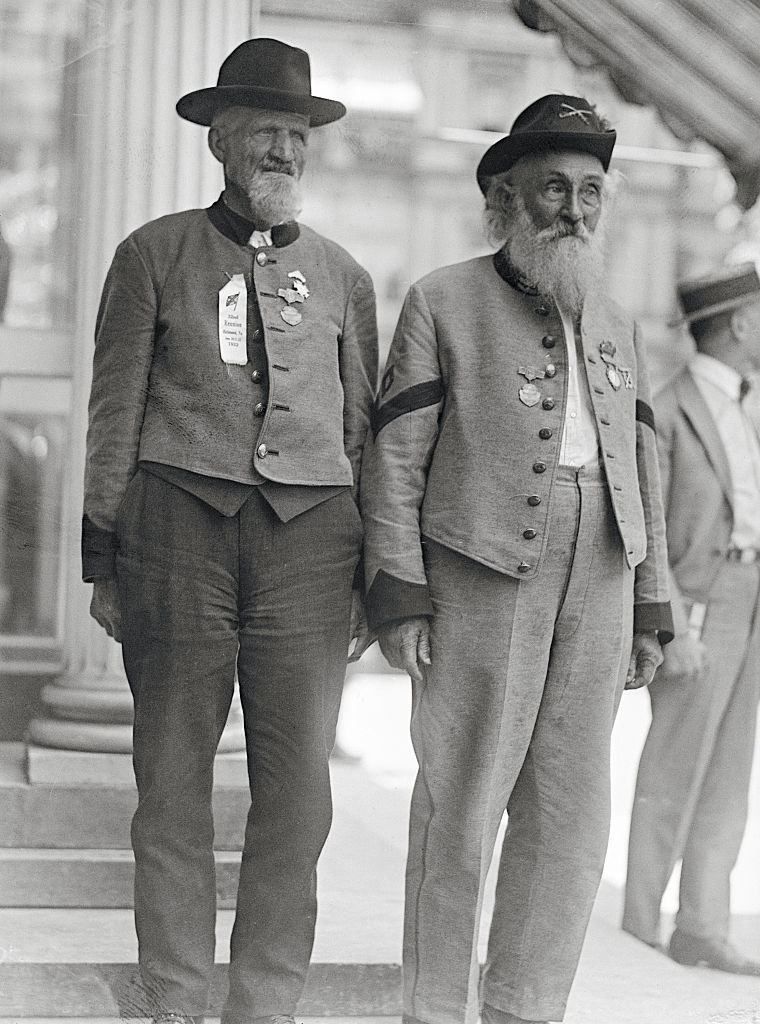
#47 81-year-old J F Griffin, last surviving member of the Louisiana Tigers, of which he was colour bearer, at the 32nd annual reunion of the United Confederate Veterans at Richmond
A pair of elderly veterans stand in uniform at a reunion gathering, their long beards, broad-brimmed hats, and pinned medals lending the scene a solemn formality. One man wears a visible reunion badge and decorations across his chest, while the other’s jacket and cap—marked with a crossed emblem—signal the culture of remembrance that surrounded Confederate…