Category: Civil Wars
Explore the human side of civil wars through authentic historical photographs. Witness the struggles, courage, and consequences of divided nations.
These images document key events and personal moments that shaped political and social transformations around the world.
-
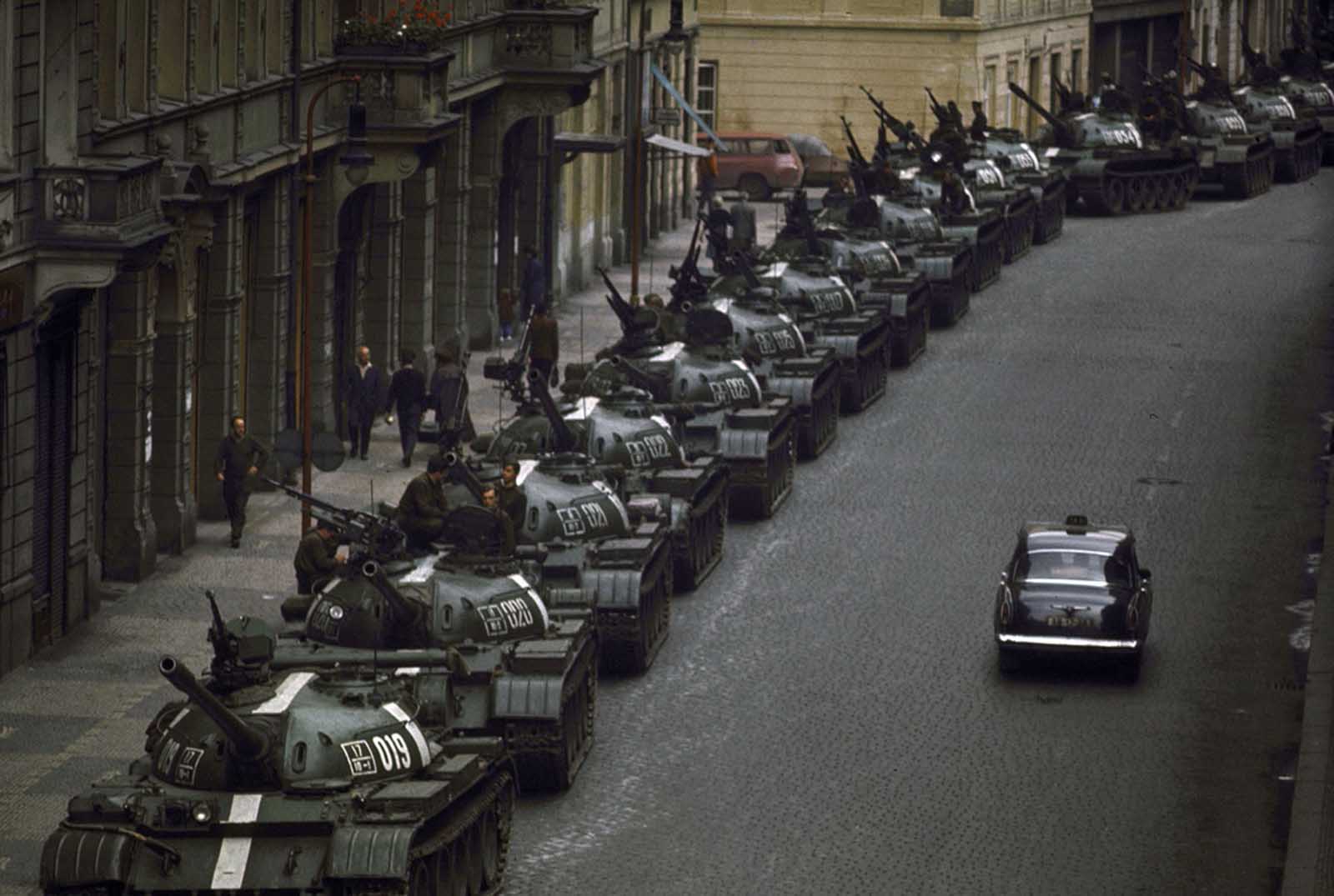
#23 A lone car passes dozens of Soviet tanks during the 1968 invasion of Czechoslovakia.
Along a narrow city street, a single dark car glides forward while a long column of Soviet tanks sits tight to the curb, turret guns angled upward and white identification markings stark against the armor. Soldiers linger atop the vehicles and on the sidewalk, turning the everyday architecture—balconies, shopfronts, and doorways—into a backdrop for occupation.…
-
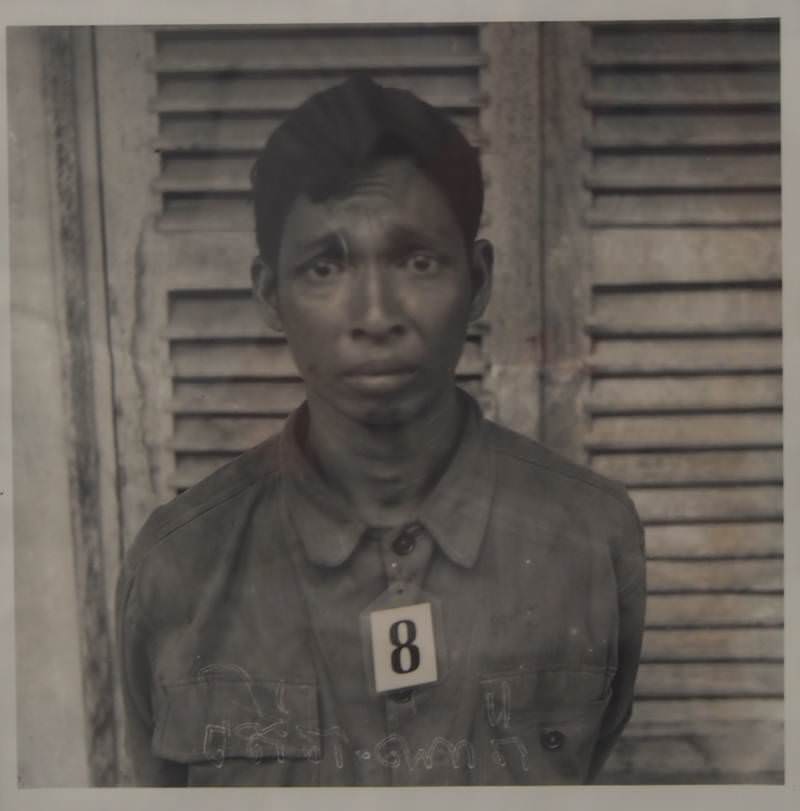
#2 A terrified prisoner inside the Tuol Sleng prison where nearly 20,000 people locked in Tuol Sleng, only seven survived.
A rigid stare meets the camera, framed by worn wooden shutters and a plain, buttoned shirt that offers no protection from what comes next. A small tag marked “8” hangs at the chest, reducing a living person to an entry in a prison system built on fear and paperwork. The expression is the detail that…
-
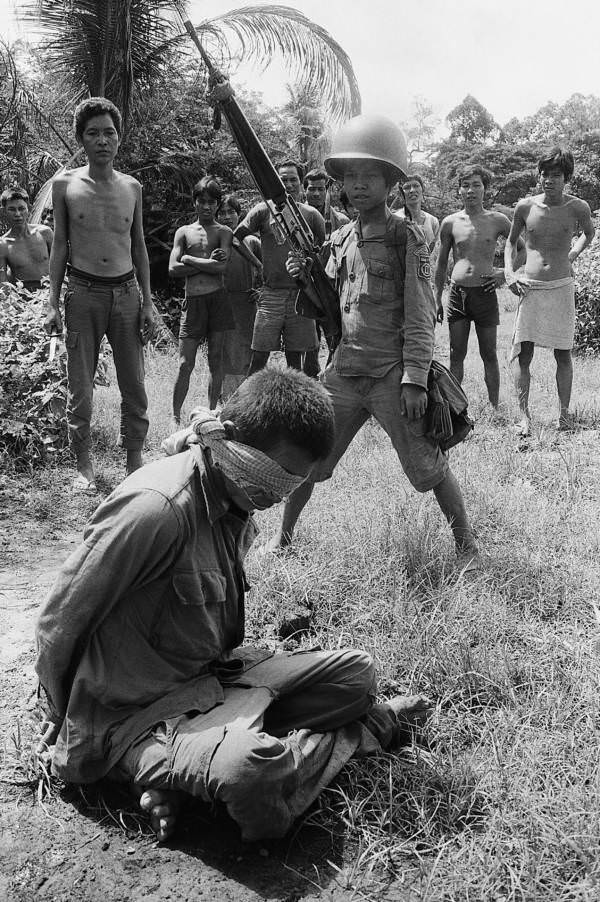
#18 A child soldier stands over a blindfolded soldier, Angkor Chey, Cambodia. 1973.
Under the hard light of rural Cambodia, a child in a military uniform and helmet stands with a rifle held upright, his small frame made stark by the weapon’s length. In the foreground, a blindfolded soldier sits on the ground with hands bound behind his back, shoulders slumped and head lowered in a posture of…
-
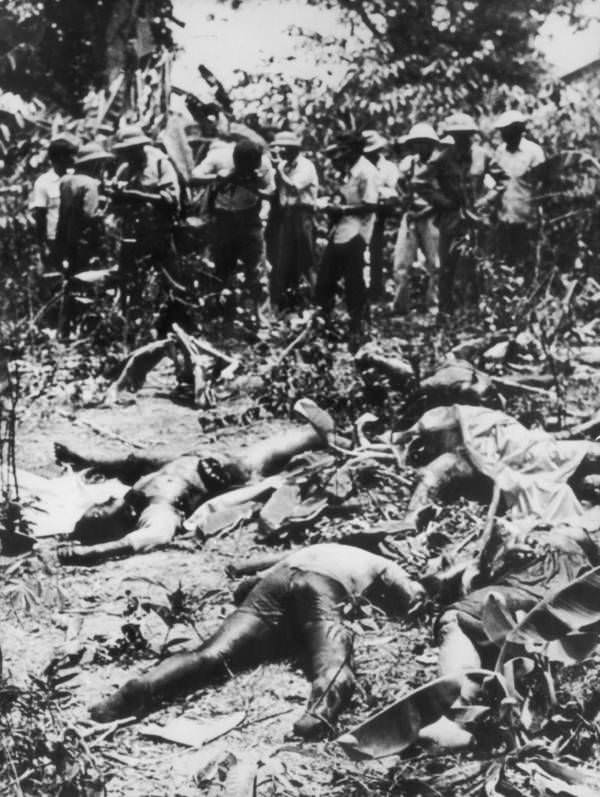
#34 A field of people massacred by the Khmer Rouge, My Duc, Vietnam. 1978.
Under a canopy of trees in My Duc, Vietnam, the ground is littered with bodies, turning an ordinary field into a stark record of mass violence. In the background, a cluster of onlookers stands close together, their pale hats and shirts catching the light as they face the devastation at their feet. The contrast between…
-
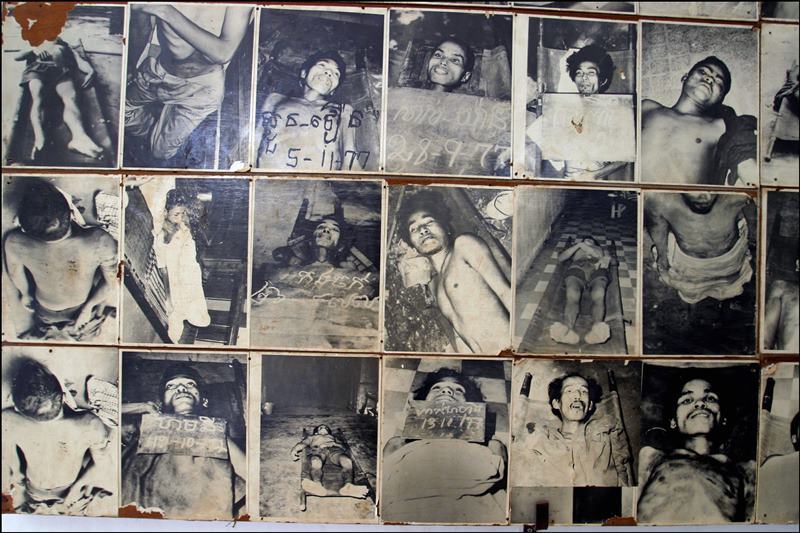
#50 Brutally killed prisoners.
Across a wall of pasted prints, the viewer confronts a grim mosaic of bodies photographed after death—men laid out on floors, torsos exposed, faces frozen, some marked with handwritten numbers or notes. The repetition is part of the impact: frame after frame reduces individual lives to evidence, while the uneven lighting, scuffed edges, and curling…
-

#13 The Ministry of Finance in the Rue de Rivoli in ruins after the Paris Commune, during the Franco-Prussian War.
Along the Rue de Rivoli, the Ministry of Finance stands as a gutted shell, its elegant arcade of arches still recognizable even as upper floors have been torn open to the sky. Window shutters hang askew, balconies sit over empty rooms, and broken stone cascades into the street in a jagged slope of rubble. The…
-
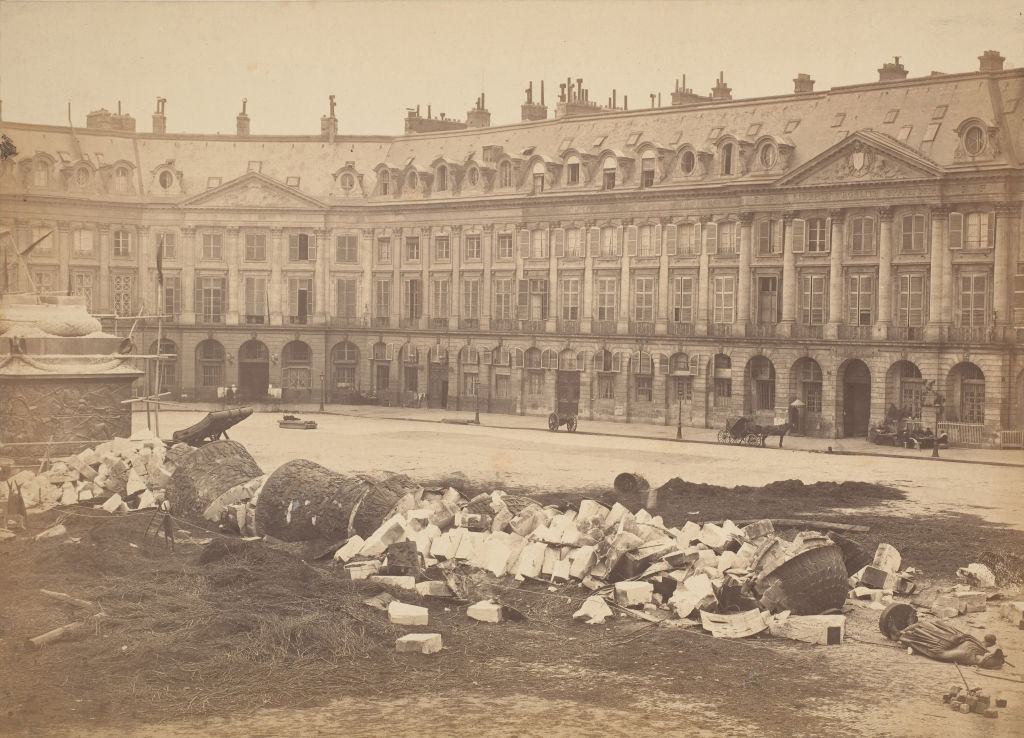
#29 The Vendôme Column after being torn down by the Communards, 1871.
Across the open sweep of the Place Vendôme, the aftermath is unmistakable: the famous column lies in broken sections amid scattered masonry, its carved bronze reliefs and heavy drum-like pieces reduced to debris. The grand façades around the square remain upright and orderly, making the ruin in the foreground feel even more dramatic—a sudden tear…
-
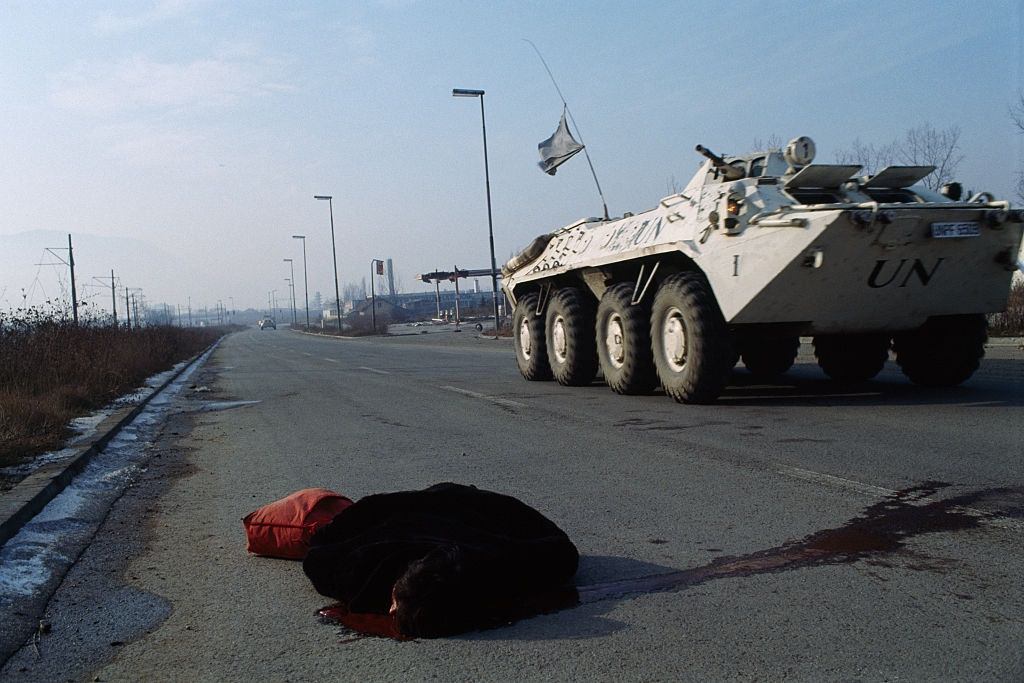
#3 Corpse of a woman lies in the road next to a United Nations medical vehicle.
A broad, empty roadway stretches into the distance, its winter light and long shadows lending a chilling stillness to the scene. In the foreground lies the body of a woman, curled on the asphalt beside a red bag, with a dark stain marking the violence that has intruded on an otherwise ordinary piece of infrastructure.…
-
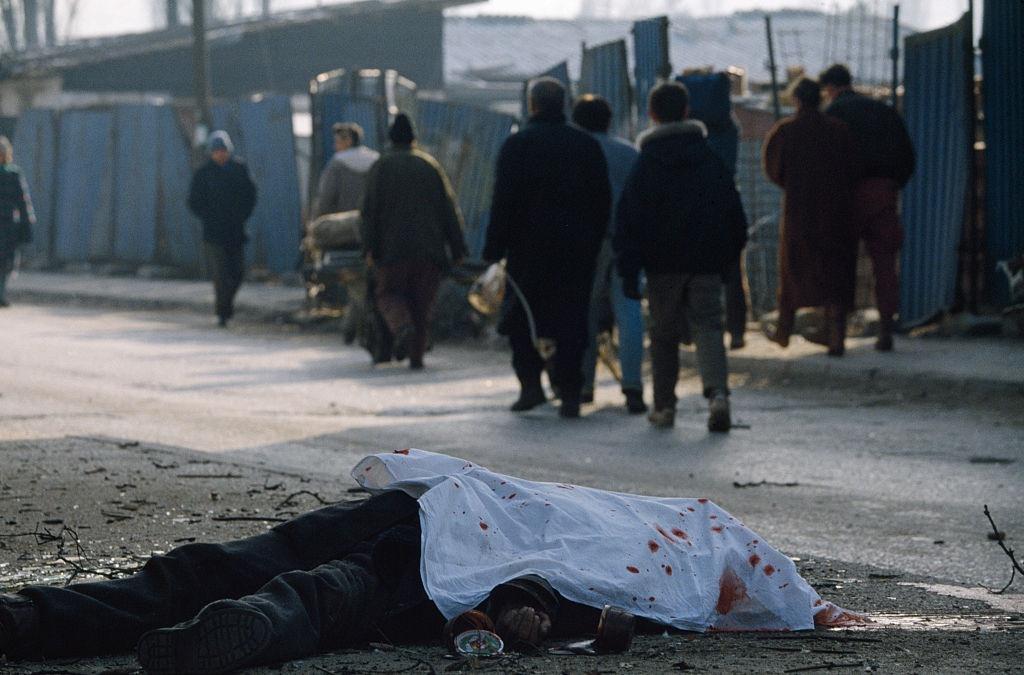
#19 Sarajevo inhabitants suffer both from the war and the very cold weather, 1992.
On a cold Sarajevo street in 1992, the war’s immediacy lies in the foreground: a body covered with a stained sheet, half on broken pavement, while daily movement continues in the distance. Bundled figures walk away under low winter light, their heavy coats and hunched shoulders suggesting temperatures as unforgiving as the conflict itself. Corrugated…
-
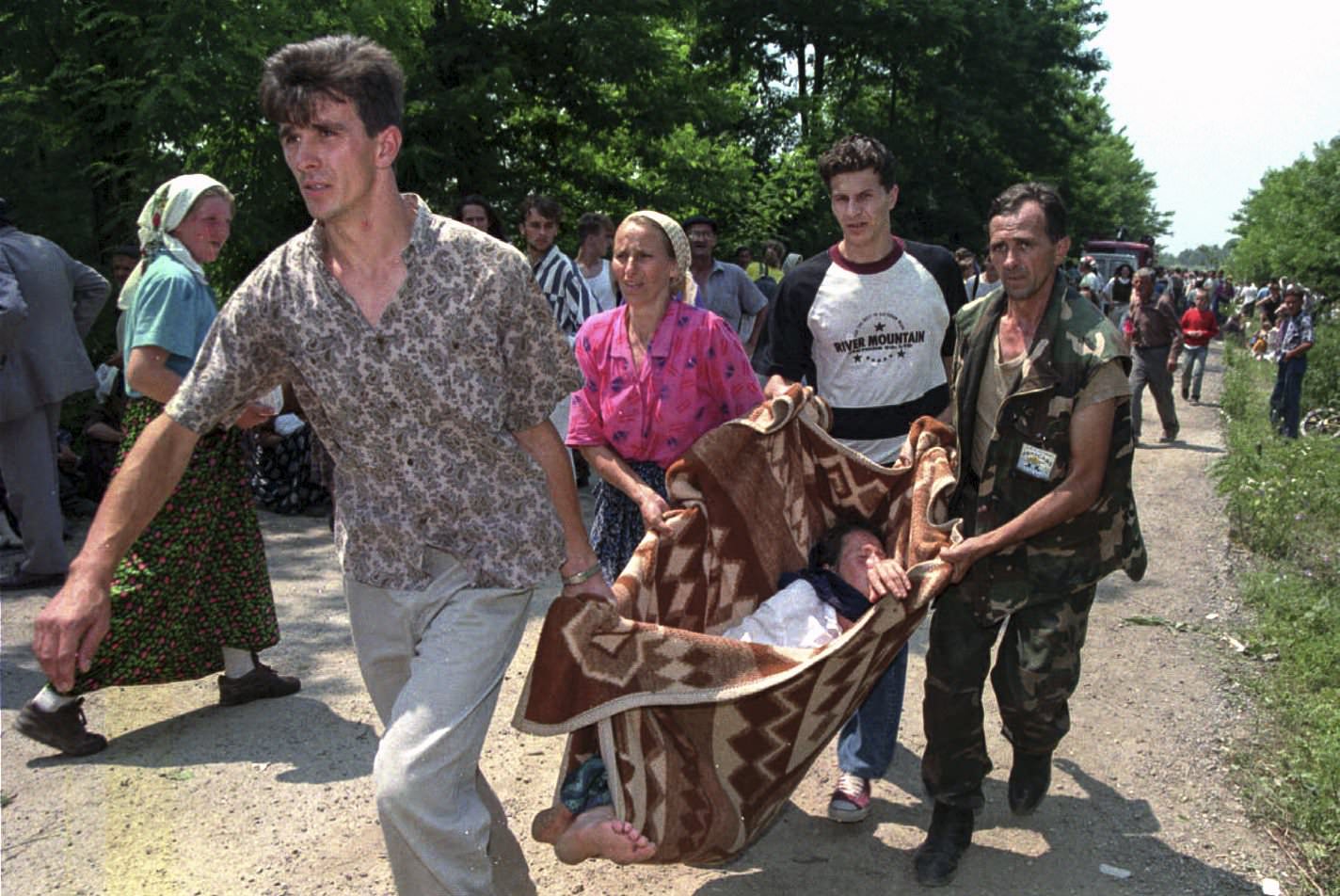
#35 Refugees and a Bosnian government soldier carry a sick woman on a makeshift stretcher to a hospital inside a U.N. base outside Tuzla, July 13, 1995.
Dust rises from a narrow road lined with summer trees as a small group moves with urgency, gripping the corners of a patterned blanket used as a makeshift stretcher. A sick woman lies cradled in the fabric, her bare feet visible, while refugees and a Bosnian government soldier keep pace through a crowd that stretches…