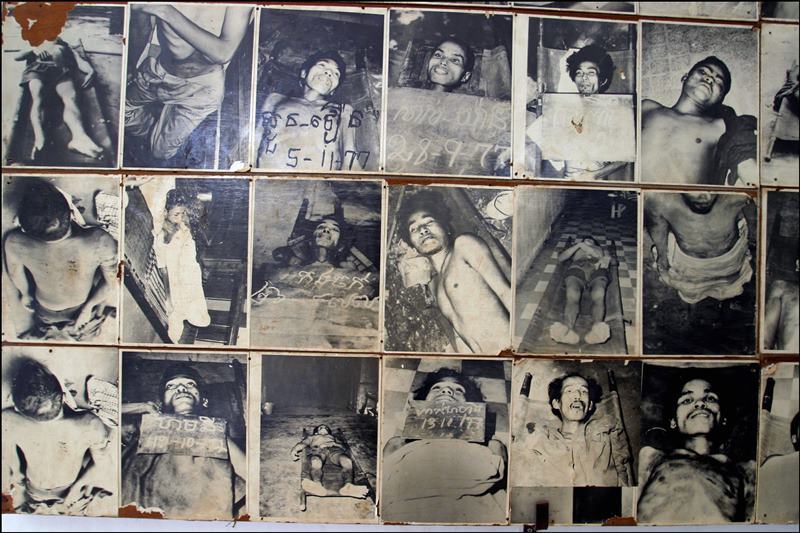
Across a wall of pasted prints, the viewer confronts a grim mosaic of bodies photographed after death—men laid out on floors, torsos exposed, faces frozen, some marked with handwritten numbers or notes. The repetition is part of the impact: frame after frame reduces individual lives to evidence, while the uneven lighting, scuffed edges, and curling paper hint at hurried documentation and rough handling. Even without captions, the arrangement reads like an archive assembled in crisis, meant to record, to count, and to insist that these deaths be seen.
Violence sits just beneath the surface of each small photograph, suggested by bruising, binding, and the stark stillness of those who can no longer speak for themselves. The title, “Brutally killed prisoners,” pushes the viewer to consider custody and power—what it means when people who were already confined end up cataloged as corpses. In a civil-war context, such images often circulate as proof and propaganda at once, serving investigators, fueling retaliation, and shaping public memory of atrocity.
For readers of this post, the photo is less a single moment than a window into how civil wars document their darkest chapters: through makeshift forensic imagery, handwritten identifiers, and mass presentation. It invites careful attention to what is visible—poses, markings, and the crude method of display—while also underscoring what is absent: names, stories, and accountability. Those searching for civil war history, prisoner killings, wartime atrocities, or human rights evidence will find here a stark reminder of how conflict turns people into records, and why preserving such records remains unsettlingly necessary.