Category: Civil Wars
Explore the human side of civil wars through authentic historical photographs. Witness the struggles, courage, and consequences of divided nations.
These images document key events and personal moments that shaped political and social transformations around the world.
-
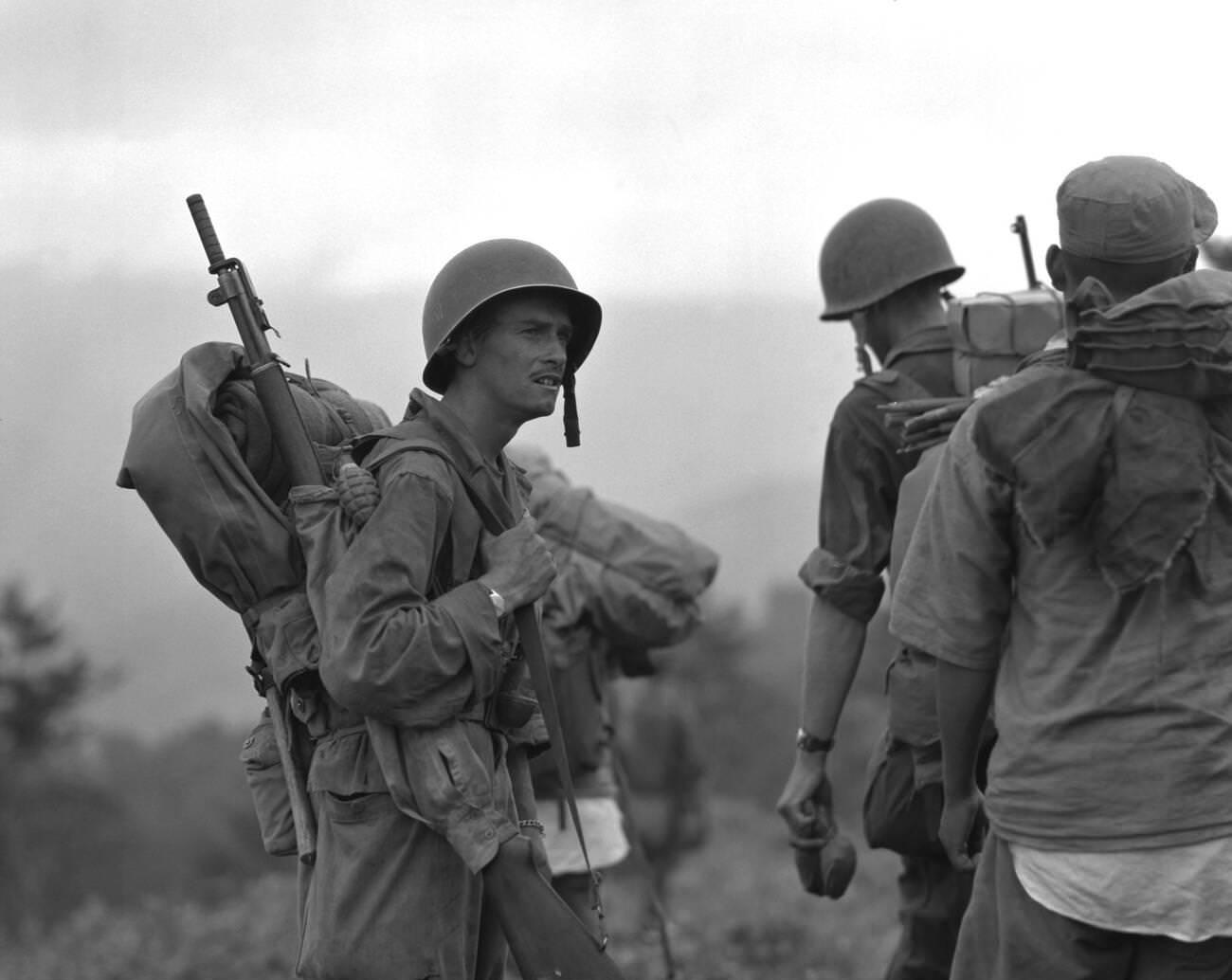
#5 A French soldier equipped by the Americans during the Korean War, 1950s.
A French infantryman moves through the Korean landscape with an American-style steel helmet low on his brow and a heavy field pack riding high on his shoulders. The long rifle slung behind him, the layered straps, and the utilitarian cut of his clothing speak to a war fought on foot, where every march meant weight,…
-
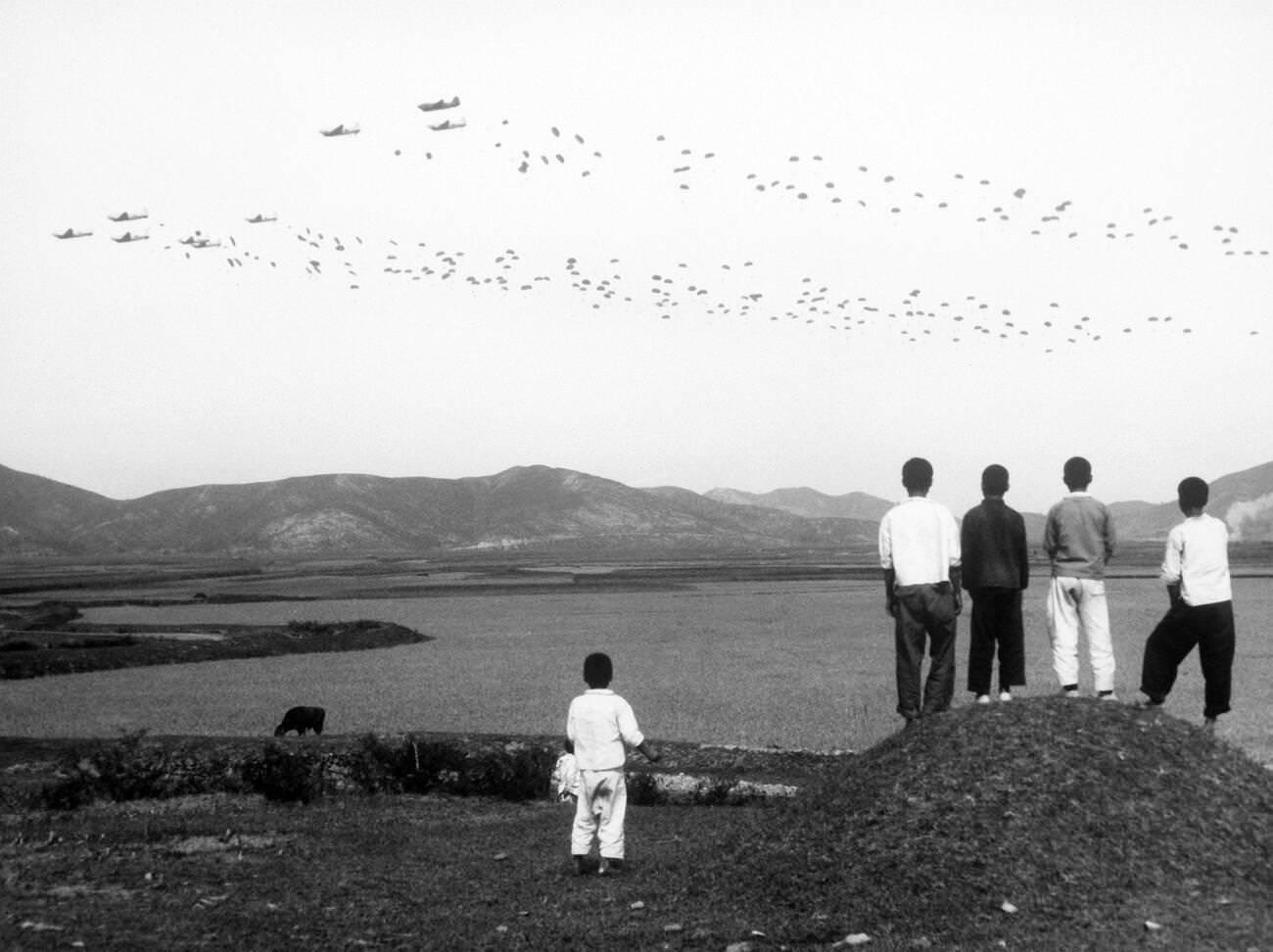
#21 Korean War, Children Watch Paratroopers, 1950s.
Across a quiet stretch of fields and low hills, a small group of children stands on a rise, their backs to the camera as they stare into a sky suddenly crowded with aircraft. Dark specks bloom into drifting canopies as paratroopers descend in waves, turning the open horizon into a moving pattern of dots and…
-
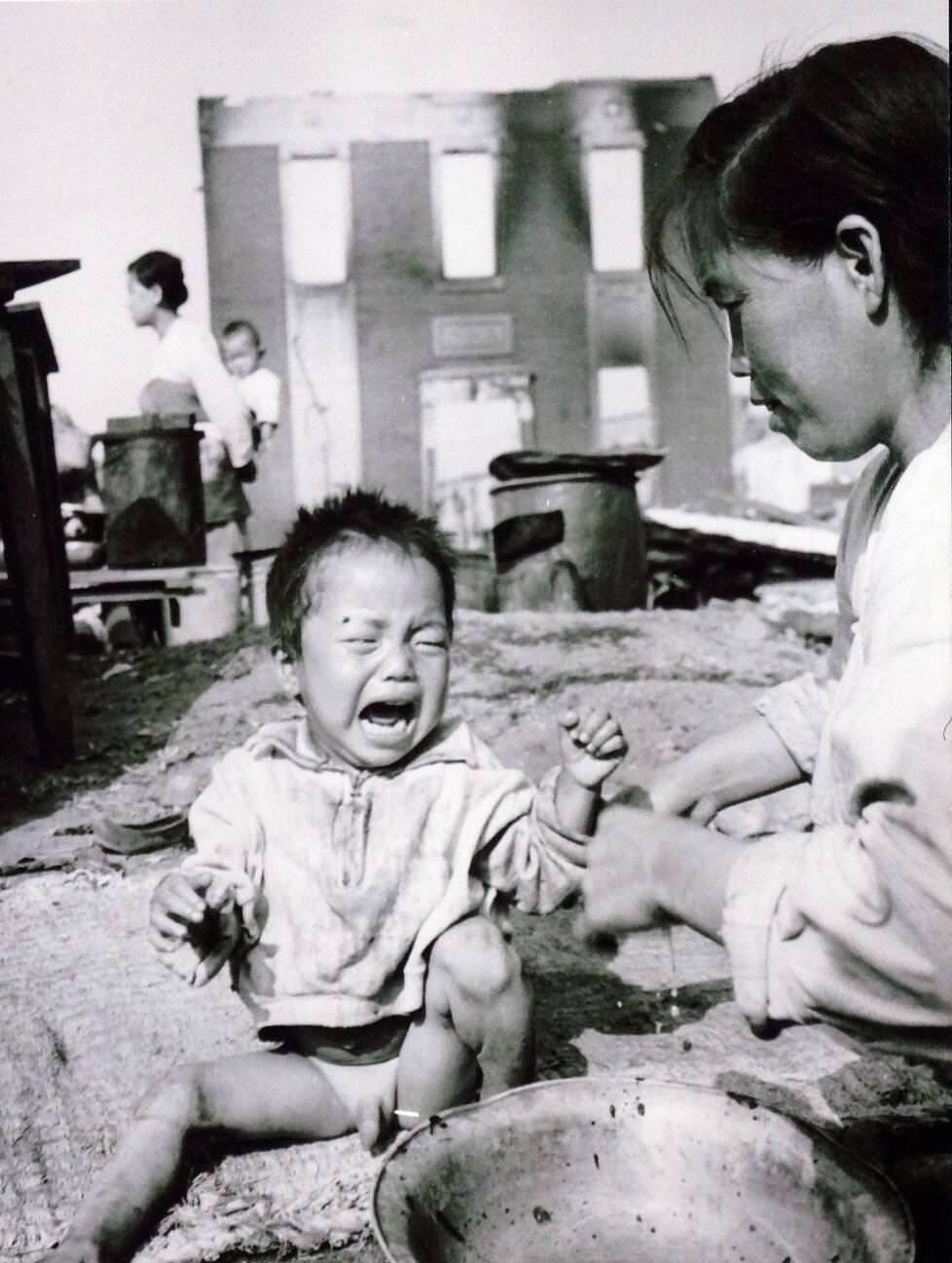
#37 The Korean War started five years after the independence of Korea from Japanese occupation, 1950s.
A small child sits on the bare ground, mouth open in a cry that feels louder than the frame itself, while an adult beside him turns in close with hands poised to soothe or tend to him. Behind them, the hard lines of damaged buildings and scattered household containers hint at a life interrupted, where…
-
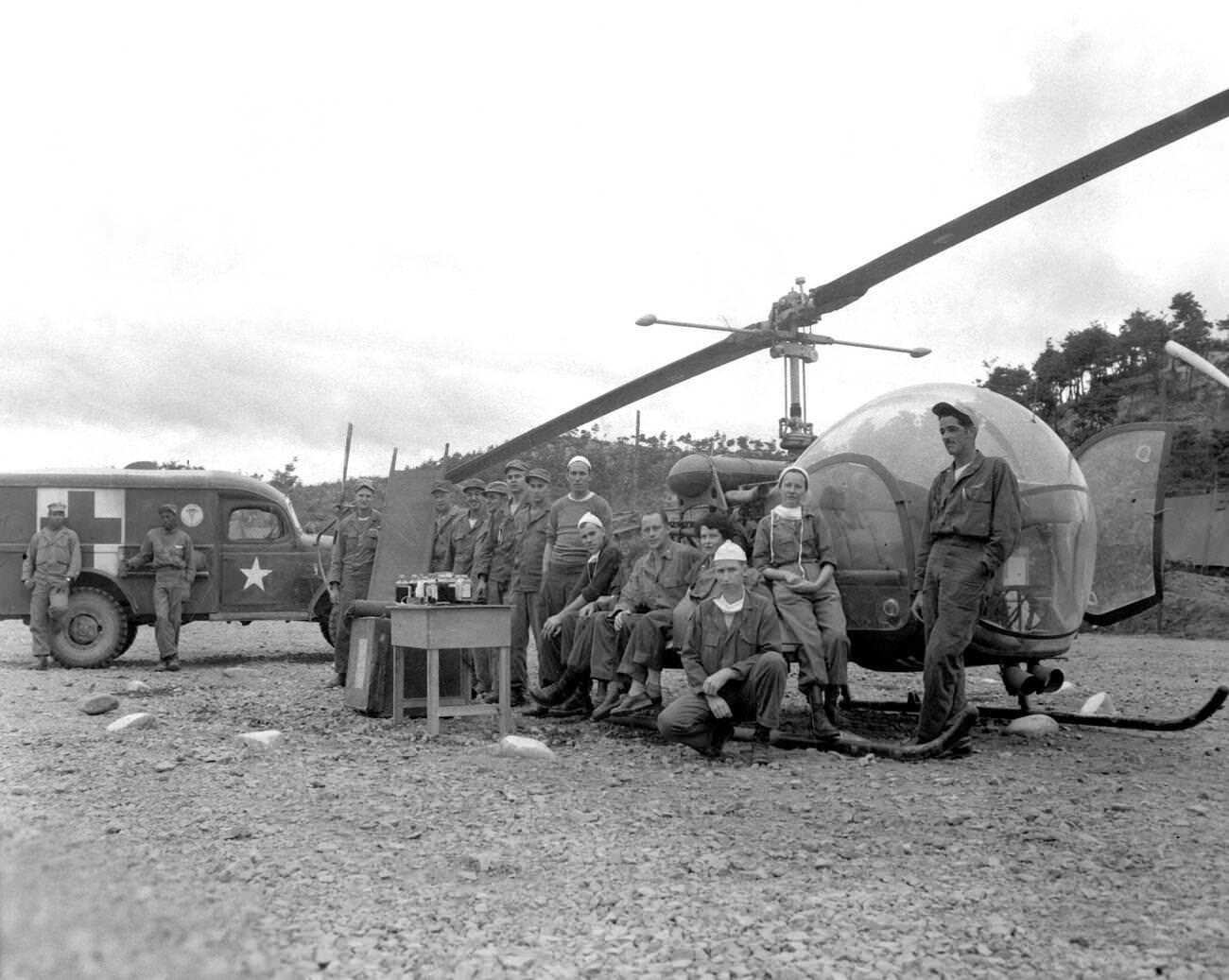
#53 U.S. Army doctors and crew pose in front of a Bell helicopter, 1951.
Beneath the long rotor blade of a Bell helicopter, a mixed group of U.S. Army medical personnel and aircrew gathers for a posed moment in 1951, their uniforms and workwear hinting at a day that has already been busy. The aircraft’s bubble canopy and exposed landing skids place the scene firmly in the early era…
-

#69 Seoul is the capital and largest metropolis of South Korea. A megacity with a population of more than 10 million, it is the largest city proper in the developed world. The Seoul Capital Area, which includes the surrounding Incheon metropolis and Gyeonggi province, is the world’s second largest metropolitan area, 1950s.
Under the curve of a traditional tiled roof, three men sit close to a rough wooden wall, their white garments and weathered faces rendered in sharp contrast. A woven tray piled with produce rests at the edge of the frame, while bundles of straw sandals hang like inventory along the boards—small clues that place this…
-
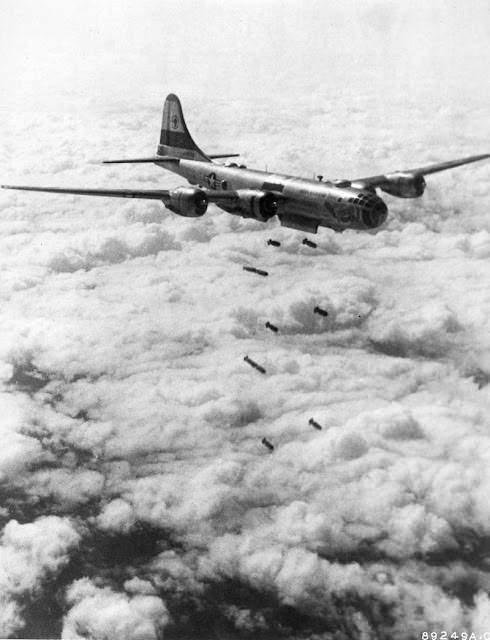
#85 The KPAF shot down some 16 B-29 Superfortress bombers, 1950s.
High above a thick blanket of clouds, a B-29 Superfortress cruises with its bomb bay doors open, releasing a staggered string of ordnance that falls toward an unseen target. The aircraft’s long wings, clustered engines, and glazed nose define the heavy-bomber silhouette that dominated strategic air power in the mid‑20th century. Even without ground details,…
-
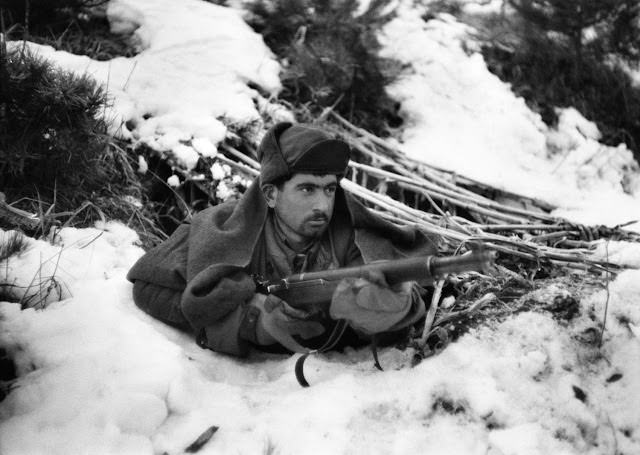
#101 Turkish Army soldier on duty in Korea, 1951.
Low in a snowy hollow, a Turkish Army soldier lies pressed to the ground with his rifle braced forward, using the slope and tangled branches as cover. The winter terrain dominates the frame—hard-packed snow, rough vegetation, and a makeshift screen of sticks—while his heavy uniform and cap signal the practical realities of staying alive and…
-
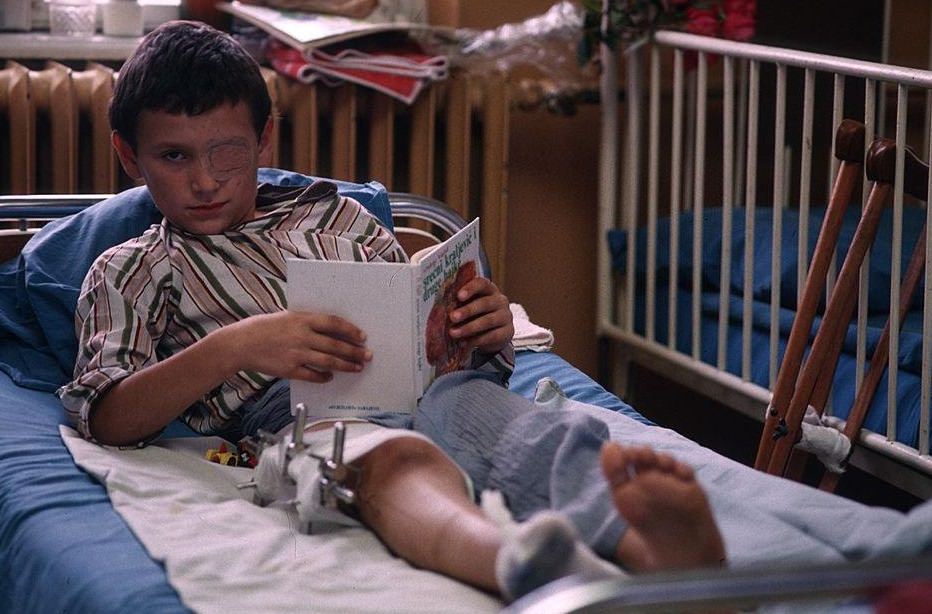
#1 A child lies in a hospital bed December 1, 1994 in Sarajevo, Bosnia-Herzegovina.
Under the harsh light of a ward in Sarajevo on December 1, 1994, a child lies propped against blue bedding, gripping a book as if it can anchor the day. One eye is bruised and swollen, and the guarded stare meets the camera with a mix of fatigue and defiance. A leg is held in…
-
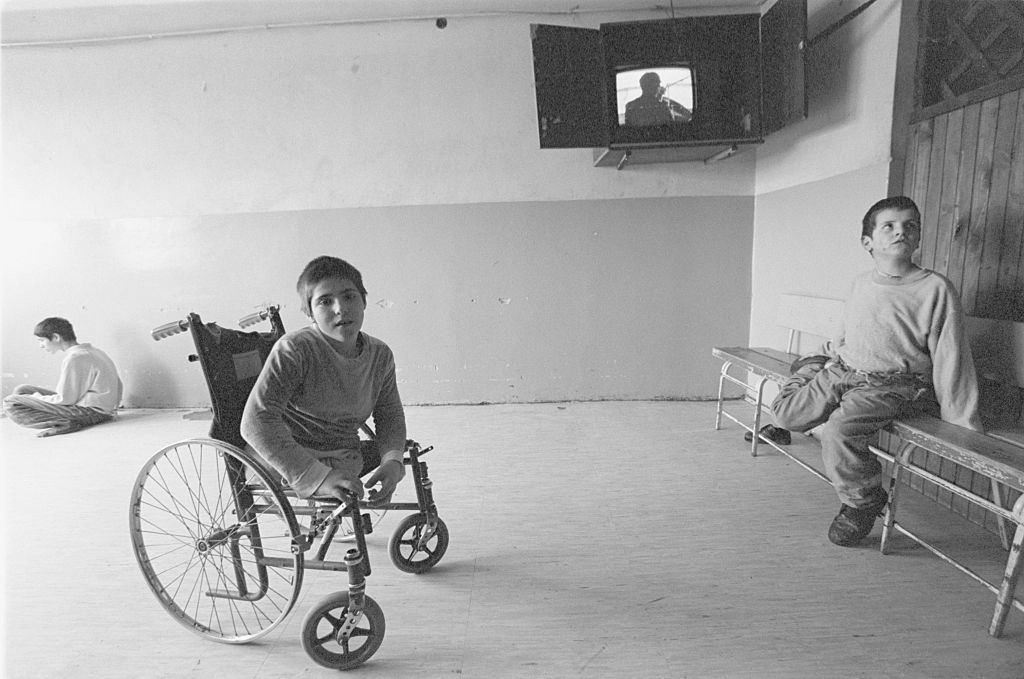
#17 The television room in the psychiatric clinic.
High on the wall, a small television set glows like a distant window, while the room below stretches out in spare, institutional quiet. Benches line the right side, a plain cot sits nearby, and the scuffed floor emphasizes how much of the space is meant to be watched and waited through rather than lived in.…
-
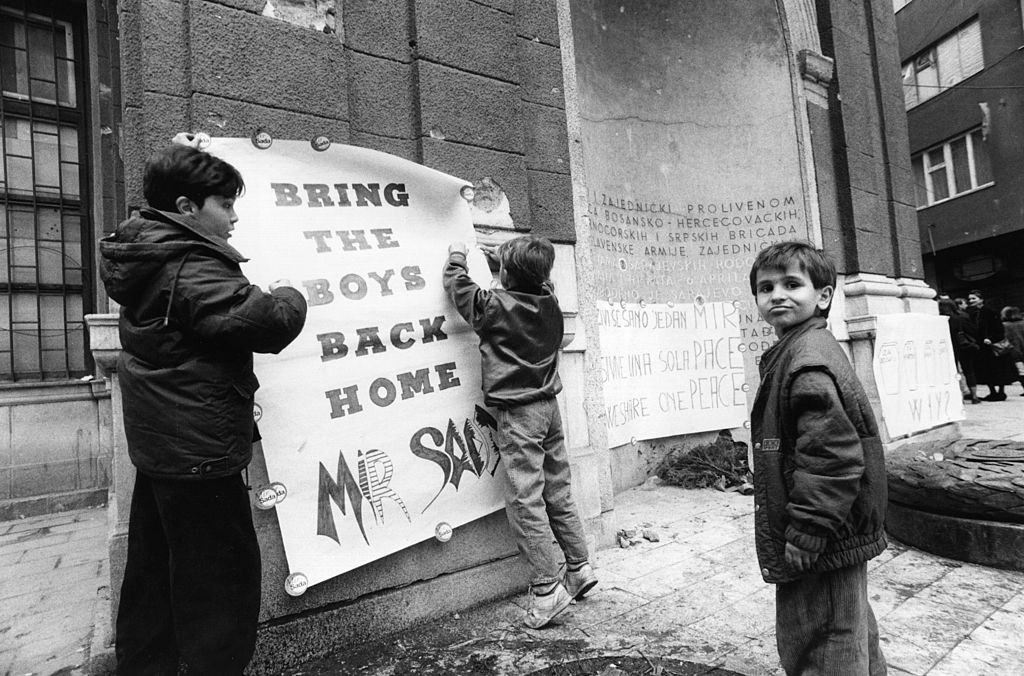
#33 Boys putting up a poster saying ‘Bring the boys back home’ as part of a peace demonstration in Sarajevo, 1994.
Against the rough stone of a Sarajevo street in 1994, three boys work with quick, careful hands to fix a poster in place—its message, “Bring the boys back home,” printed in large block letters that refuse to be ignored. One child presses the paper flat while another reaches up to secure it, and a third…