Category: Colorization
See history come to life with colorized photographs of the past. From wars to daily life, these restored images bridge time with emotion and realism.
Each colorized photo revives forgotten stories and gives a fresh perspective on iconic historical moments.
-
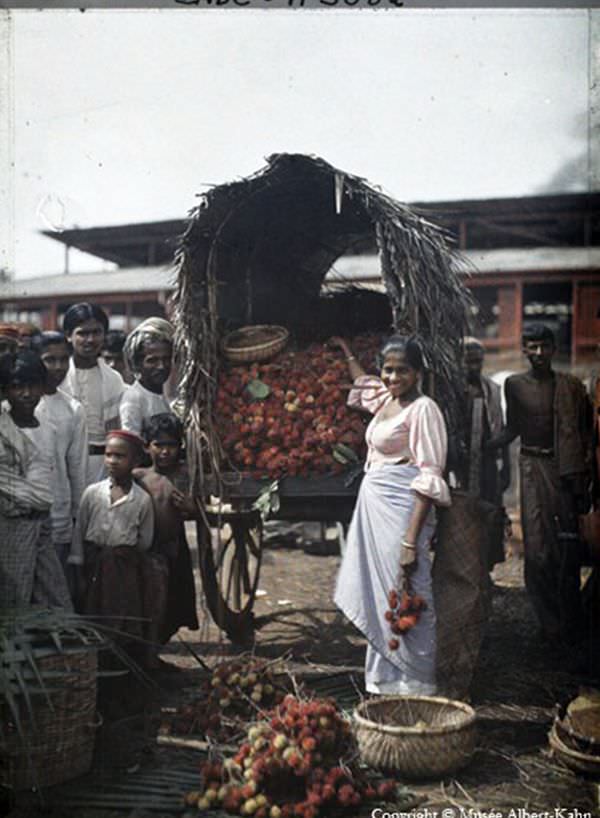
#53 Sri Lanka, 1900s
A burst of color spills from an open, palm-thatch-covered cart, piled high with rambutan—those bright, spiky fruits that instantly evoke Sri Lanka’s tropical abundance in the 1900s. Around it, a small crowd gathers with an easy familiarity, as if pausing mid-errand to watch the selling and sorting. Woven baskets on the ground hint at the…
-
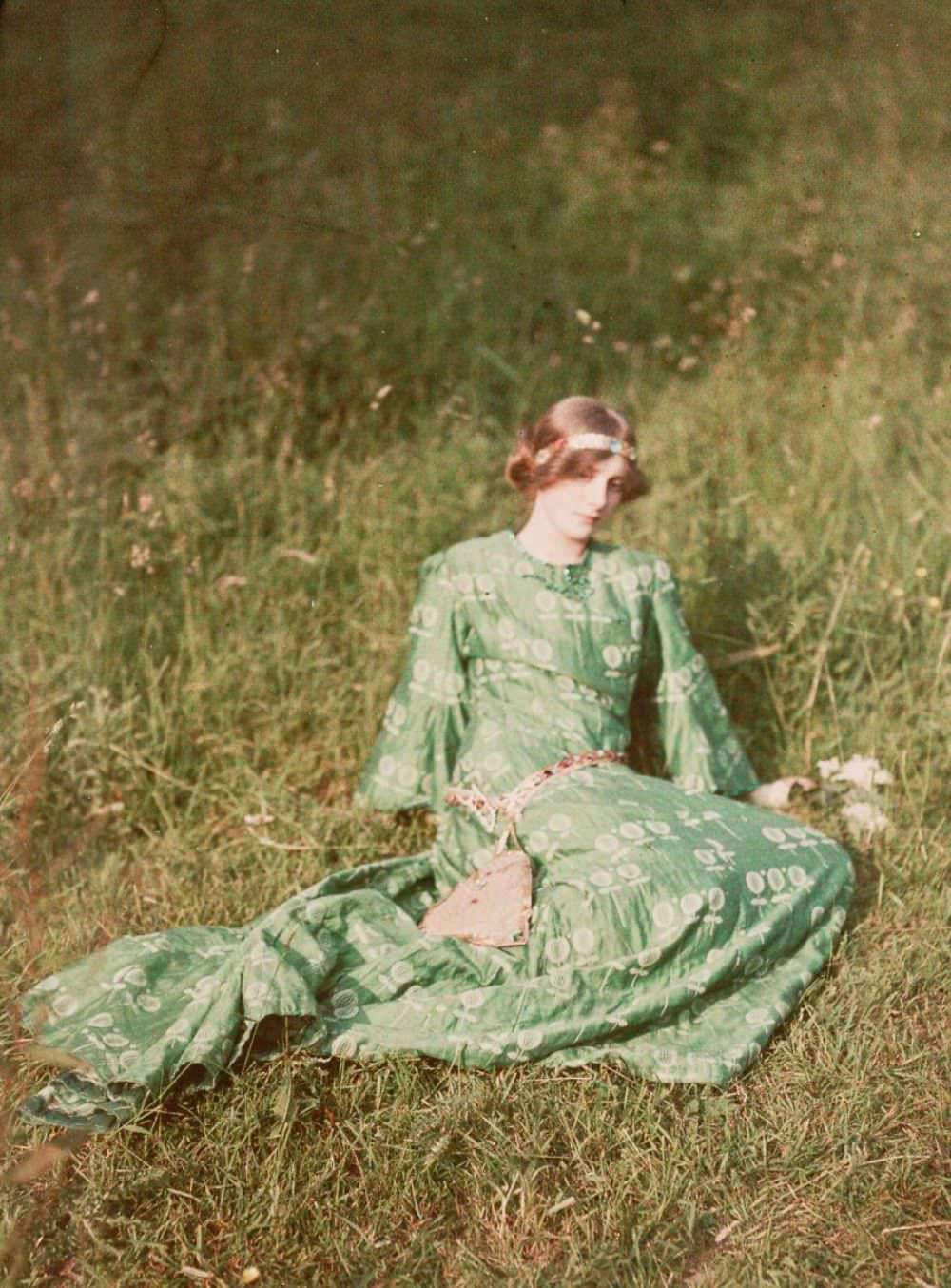
#69 Daydreams, 1909
Soft afternoon light settles over a grassy slope where a young woman reclines, half-turned toward the camera yet seemingly far away in thought. The colorization draws the eye to her flowing green dress, patterned with pale motifs that ripple across the fabric like leaves in a breeze. A small handbag rests in her lap, and…
-
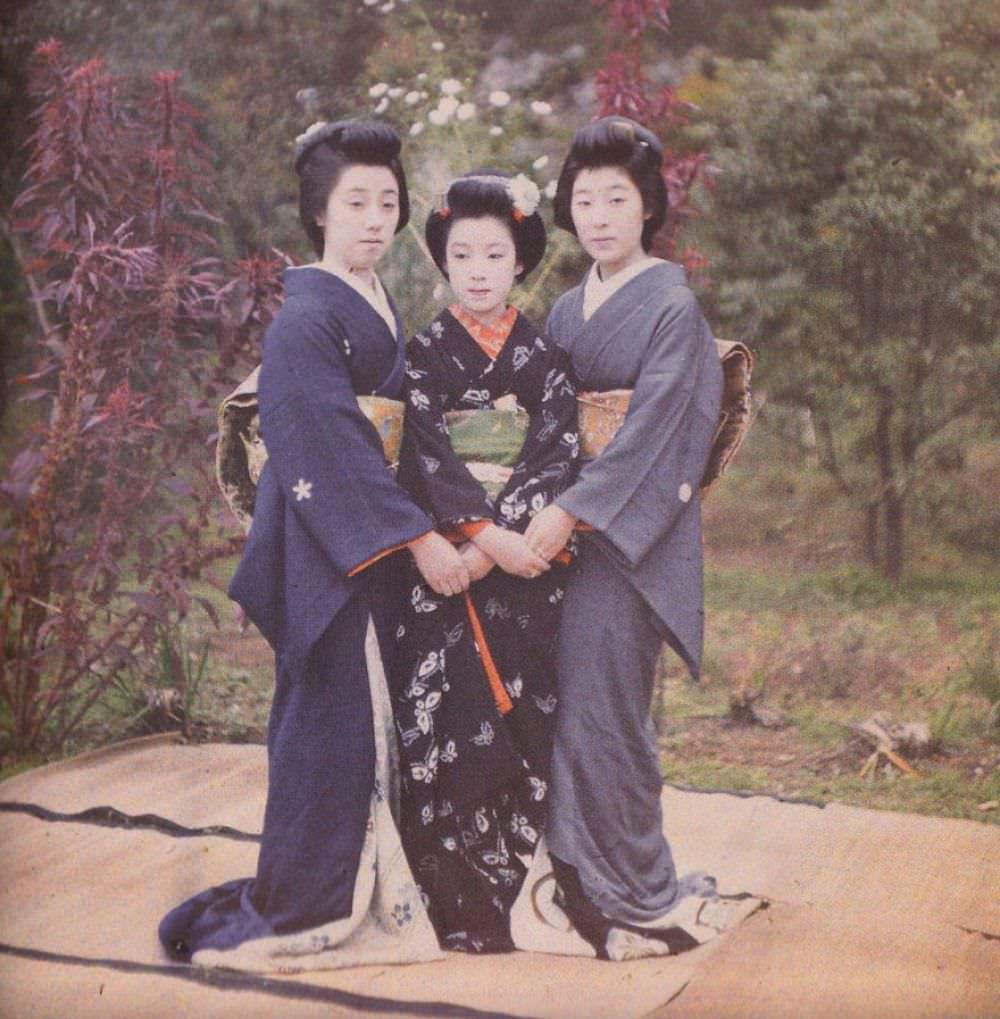
#85 Three women in Japan, Kyoto, 1912
Soft color and careful posing bring three women into close focus in Kyoto in 1912, their hands lightly joined as if to anchor the moment. The kimono fabrics create a quiet harmony—deep indigo and slate tones framing a darker patterned robe at the center, with obi sashes adding restrained contrast. Their coiffed hair and composed…
-
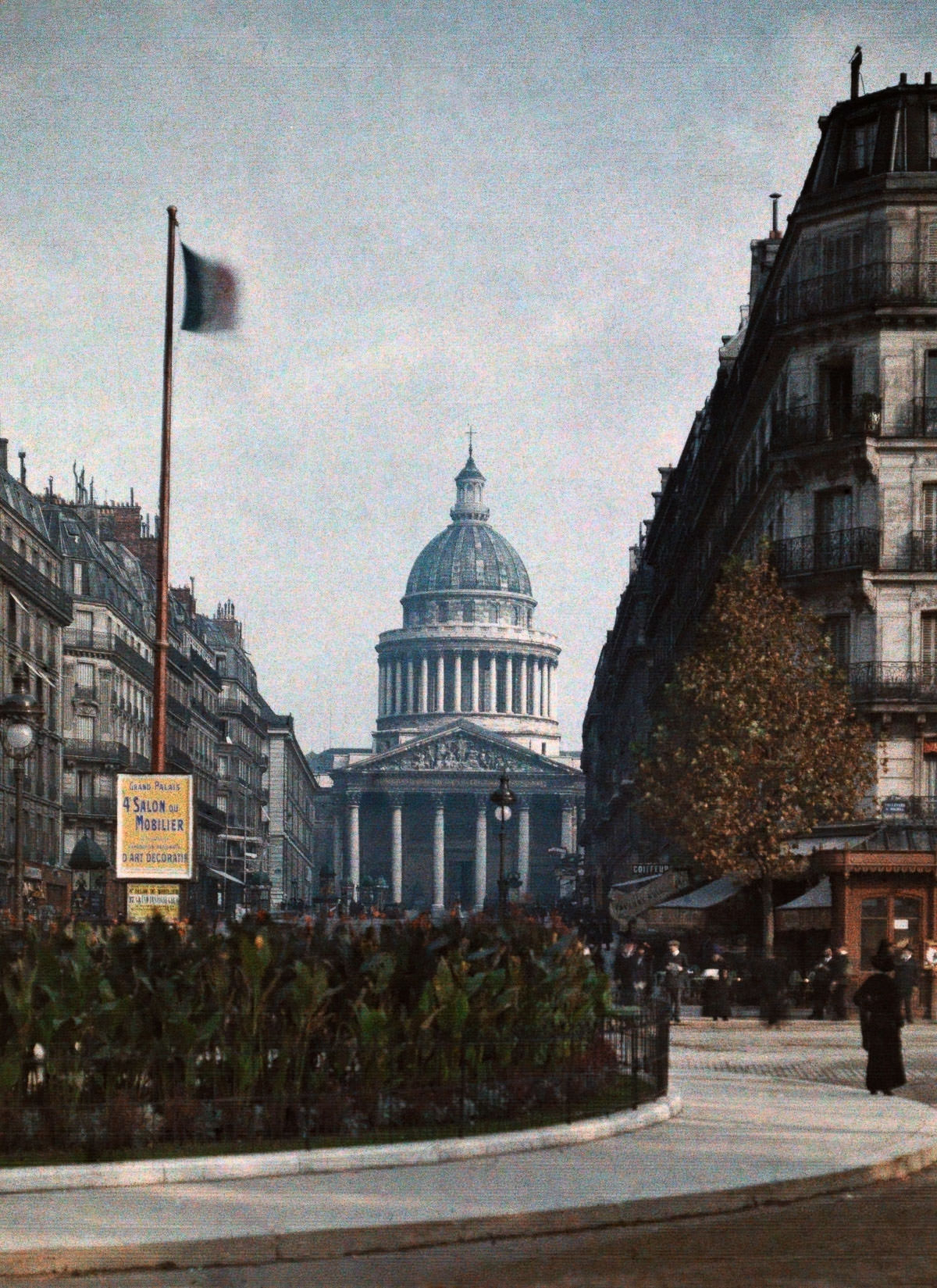
#101 Paris, 1920s
A broad Parisian boulevard leads the eye straight to the great dome and colonnade of the Panthéon, rising above a canyon of Haussmann-style façades. In the foreground, clipped plantings ring a small traffic island while pedestrians in dark coats drift along the pavements, giving the scene its everyday rhythm. The soft, slightly muted tones of…
-
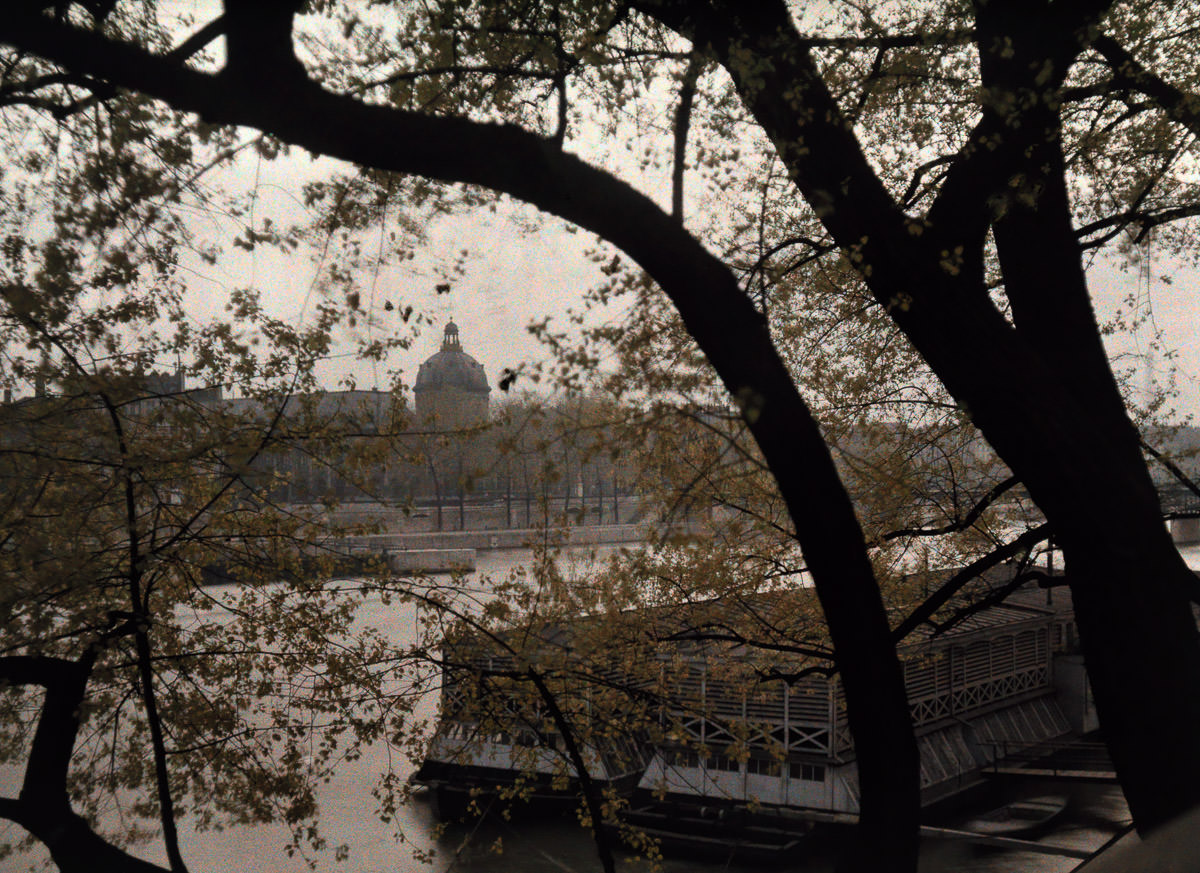
#117 Paris, 1920s
Beneath a canopy of spring leaves, the Seine drifts through Paris with a hushed, early-morning calm that feels unmistakably 1920s. Dark branches cut across the view like ink strokes, framing distant rooftops and a domed landmark softened by mist and city haze. The colorization adds a gentle palette—muted greens and warm browns—that makes the scene…
-
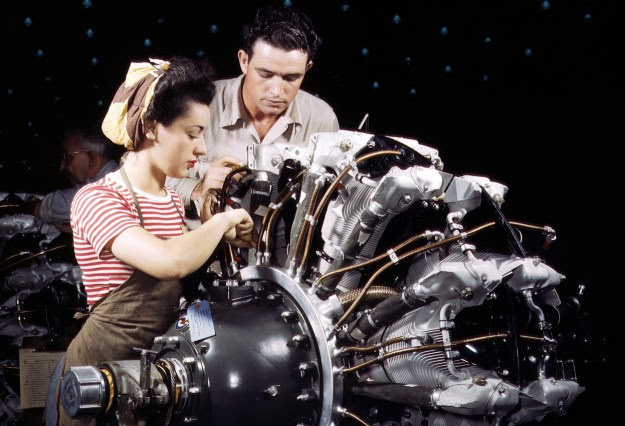
#12 Women are trained as engine mechanics at the Douglas Aircraft Company in Long Beach, California, 1942.
Workshop light glints off a radial aircraft engine as a trainee in overalls leans in with practiced care, her hands busy among bolts, wiring, and the curved metal of the cowling. Beside her, an instructor watches closely, guiding the work with the calm attention that turns unfamiliar machinery into routine skill. The colorization draws the…
-
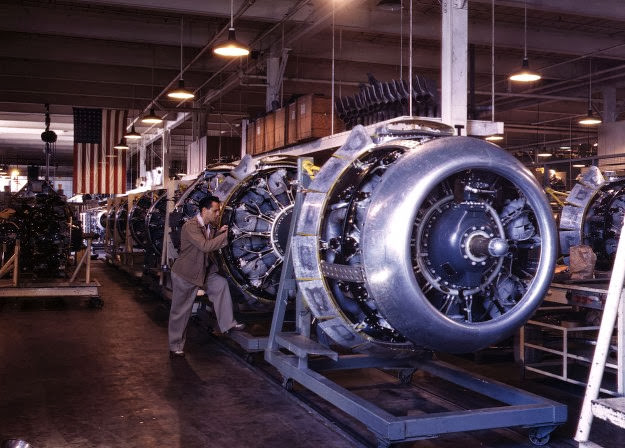
#28 Cowling and control rods are added to B-25 bomber motors at North American Aviation, Inglewood, California, 1942.
Along a factory aisle at North American Aviation in Inglewood, rows of B-25 bomber engines sit cradled on heavy metal stands, their radial cylinders and wiring laid bare under bright shop lights. A worker leans in close to the nearest powerplant, the kind of careful, hands-on attention that defined wartime aircraft production as components moved…
-
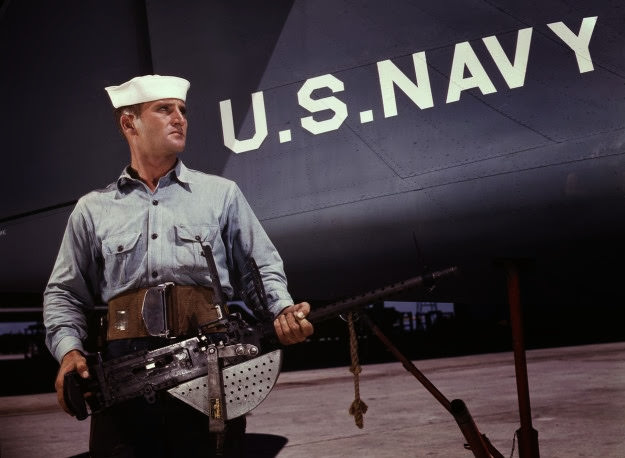
#44 J.D. Estes at the Naval Air Base, Corpus Christi, Texas, 1942.
Bold “U.S. NAVY” lettering looms across the dark fuselage behind J.D. Estes, anchoring this 1942 scene at the Naval Air Base in Corpus Christi, Texas. In the foreground he stands in a sailor’s cap and work shirt, set against the hard geometry of a wartime flight line. The colorization adds immediacy—sunlit skin tones, worn fabric,…
-
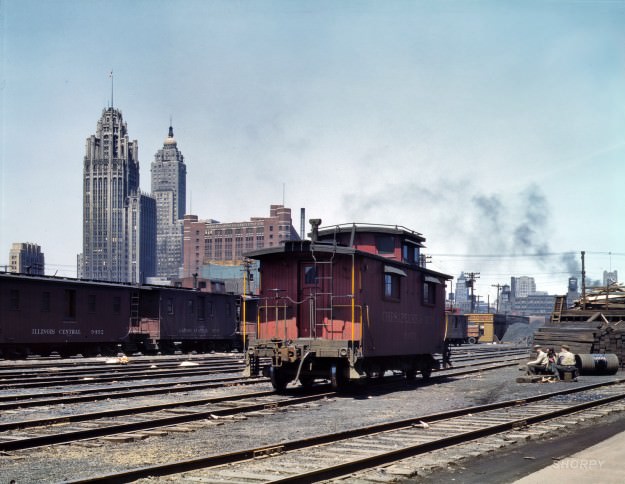
#15 Chicago, April 1943. “General view of part of the South Water street freight depot of the Illinois Central Railroad. Chesapeake & Ohio R.R. caboose.” 4×5 Kodachrome transparency by Jack Delano for the OWI.
Rail lines spread across the foreground like a fan, leading the eye into Chicago’s busy South Water Street freight depot in April 1943. A weathered caboose sits on the nearest track, its warm, rusty reds and browns standing out against pale ballast and the cool haze of smoke drifting over the yard. In the distance,…
-
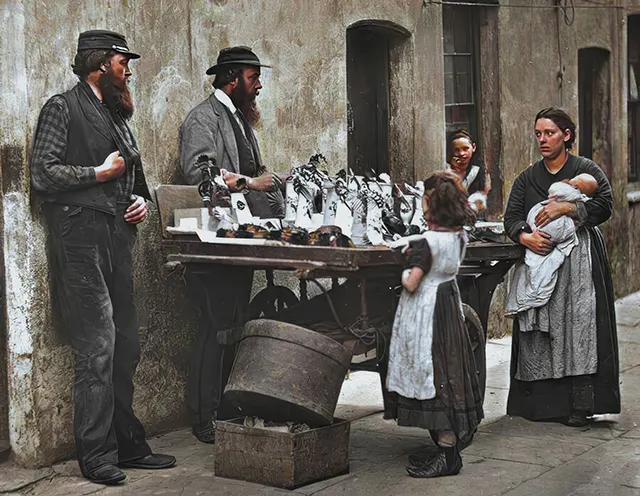
#8 Street vendors selling “fancy” goods, 1890s.
Against a worn plaster wall and a narrow doorway, a small street stall becomes a stage for everyday commerce in the 1890s. Two vendors in workworn coats and brimmed caps stand behind a rough table, their “fancy” goods arranged in neat rows to catch the eye. The colorization brings out textures you can almost feel—dusty…