Category: Colorization
See history come to life with colorized photographs of the past. From wars to daily life, these restored images bridge time with emotion and realism.
Each colorized photo revives forgotten stories and gives a fresh perspective on iconic historical moments.
-
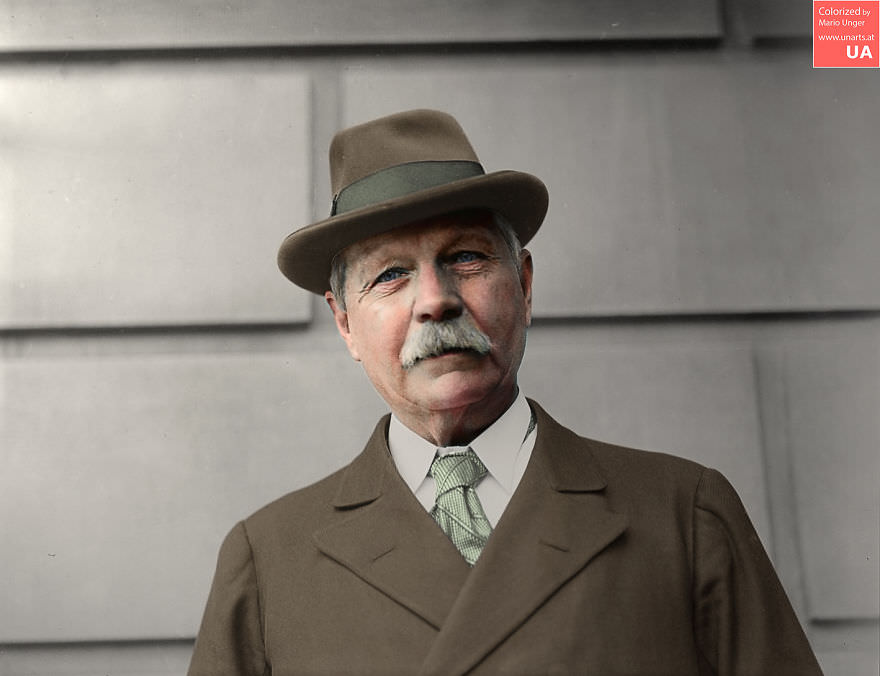
#20 Arthur Conan Doyle, 1922
Seen here in 1922, Arthur Conan Doyle meets the camera with a steady, unhurried gaze, the brim of a felt hat casting a soft shadow over his brow. The colorization draws attention to small details that often disappear in monochrome—clear blue eyes, a neatly kept moustache, and the warm, earthy tones of a tailored overcoat…
-
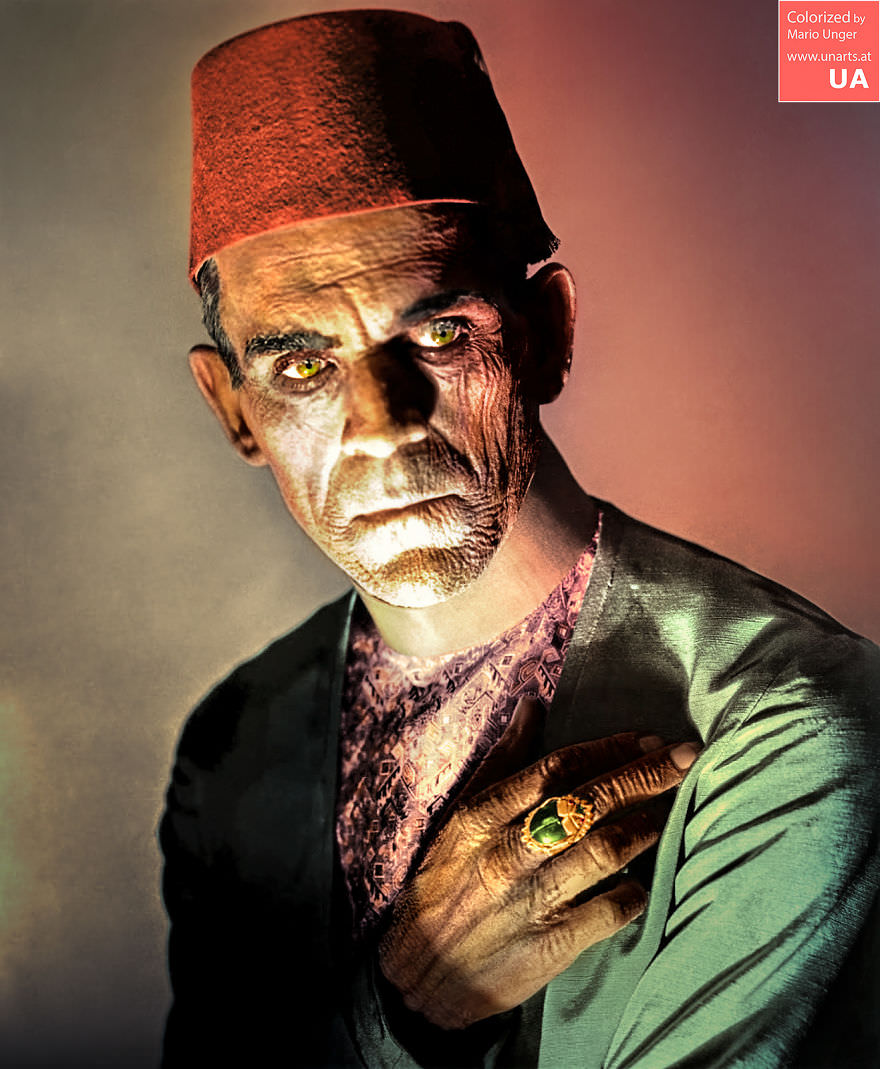
#36 Boris Karloff, 1932
Boris Karloff faces the camera with a steady, unsettling calm, his head tipped slightly as if inviting the viewer closer while still holding them at bay. A fez sits high on his head, and the lighting carves deep shadows across his cheekbones and brow, emphasizing the actor’s famously expressive features. His hand is drawn to…
-
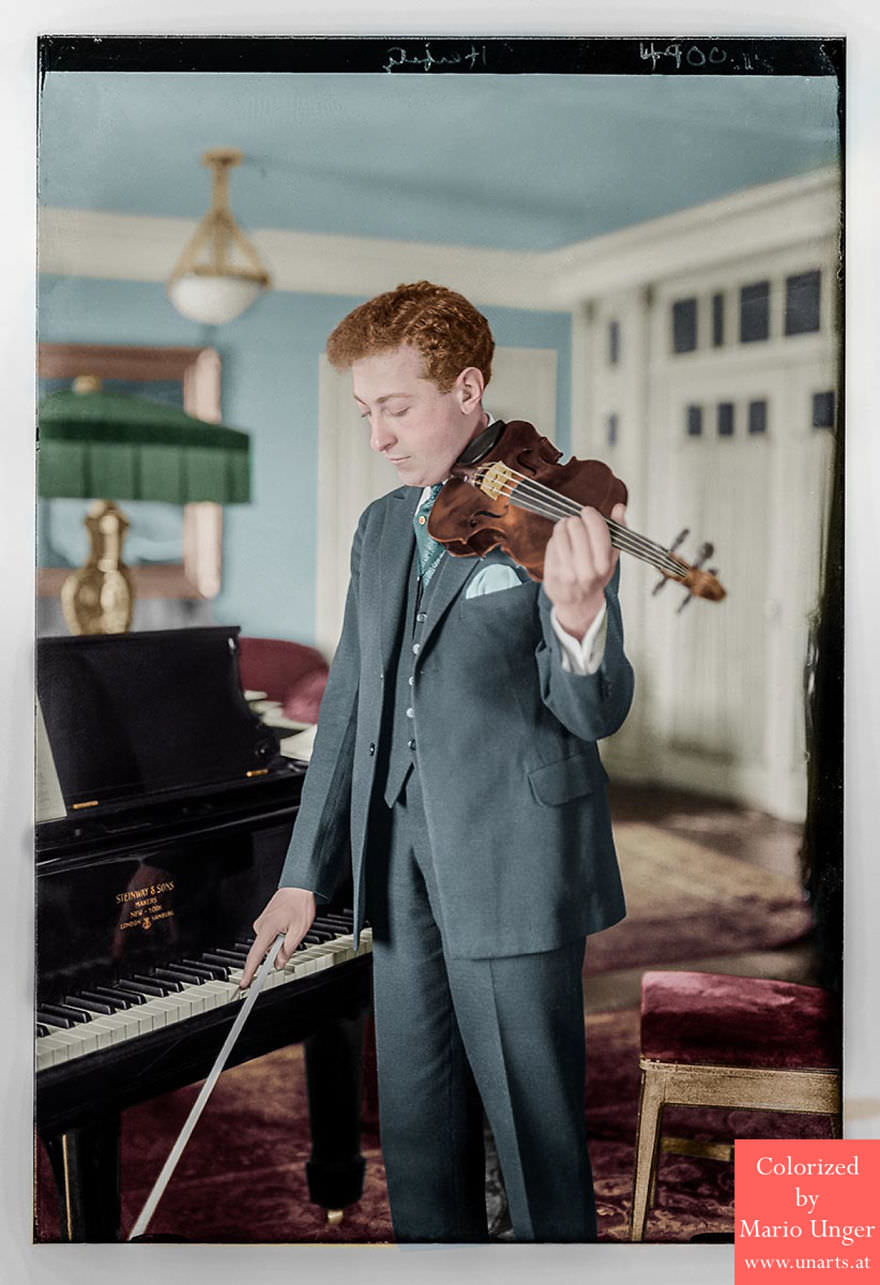
#52 Jascha Heifetz, 1920
Poised between practice and performance, Jascha Heifetz stands in a well-kept interior with his violin tucked beneath his chin, eyes lowered in concentration. A grand piano sits close at hand, its open keys catching the light as if ready to answer the next phrase. The tailored suit, neatly folded pocket square, and calm posture suggest…
-
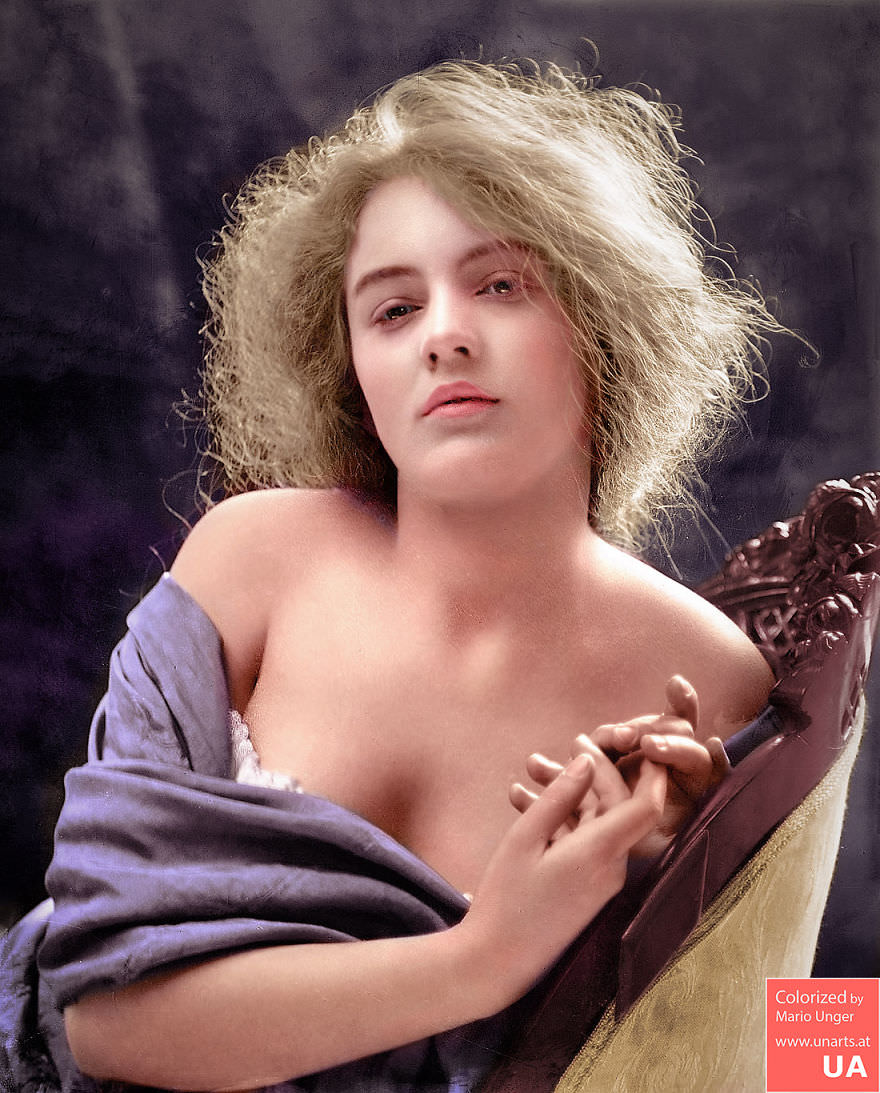
#68 Evelyn Nesbit, 1900
Evelyn Nesbit appears in a softly staged studio portrait that feels at once intimate and carefully composed, a hallmark of turn-of-the-century celebrity photography. The colorization brings forward the gentle warmth of skin tones, the pale sweep of hair, and the muted drape of fabric slipped from the shoulders, turning what might have been a distant…
-
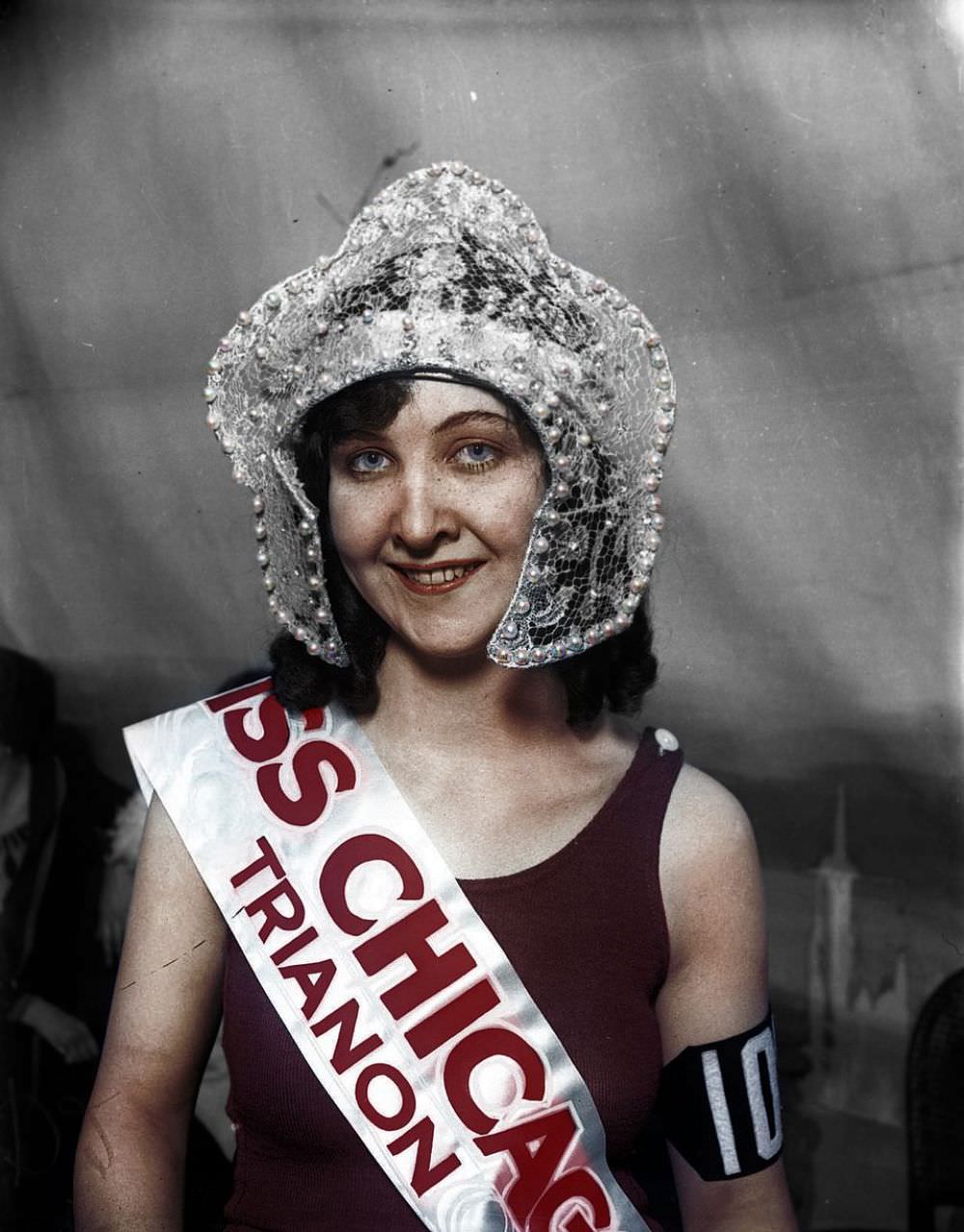
#12 Mae Greene, 18, was chosen as Miss Chicago 1926 out of 4,000 rivals at the Trianon Ballroom.
Mae Greene, only 18, faces the camera with an easy smile beneath an ornate lace-and-pearl headdress, her “Miss Chicago” sash cutting boldly across a dark sleeveless dress. A numbered armband marks her as a contestant, while the softly blurred backdrop keeps attention on her expression and the careful details of her attire. The colorization adds…
-
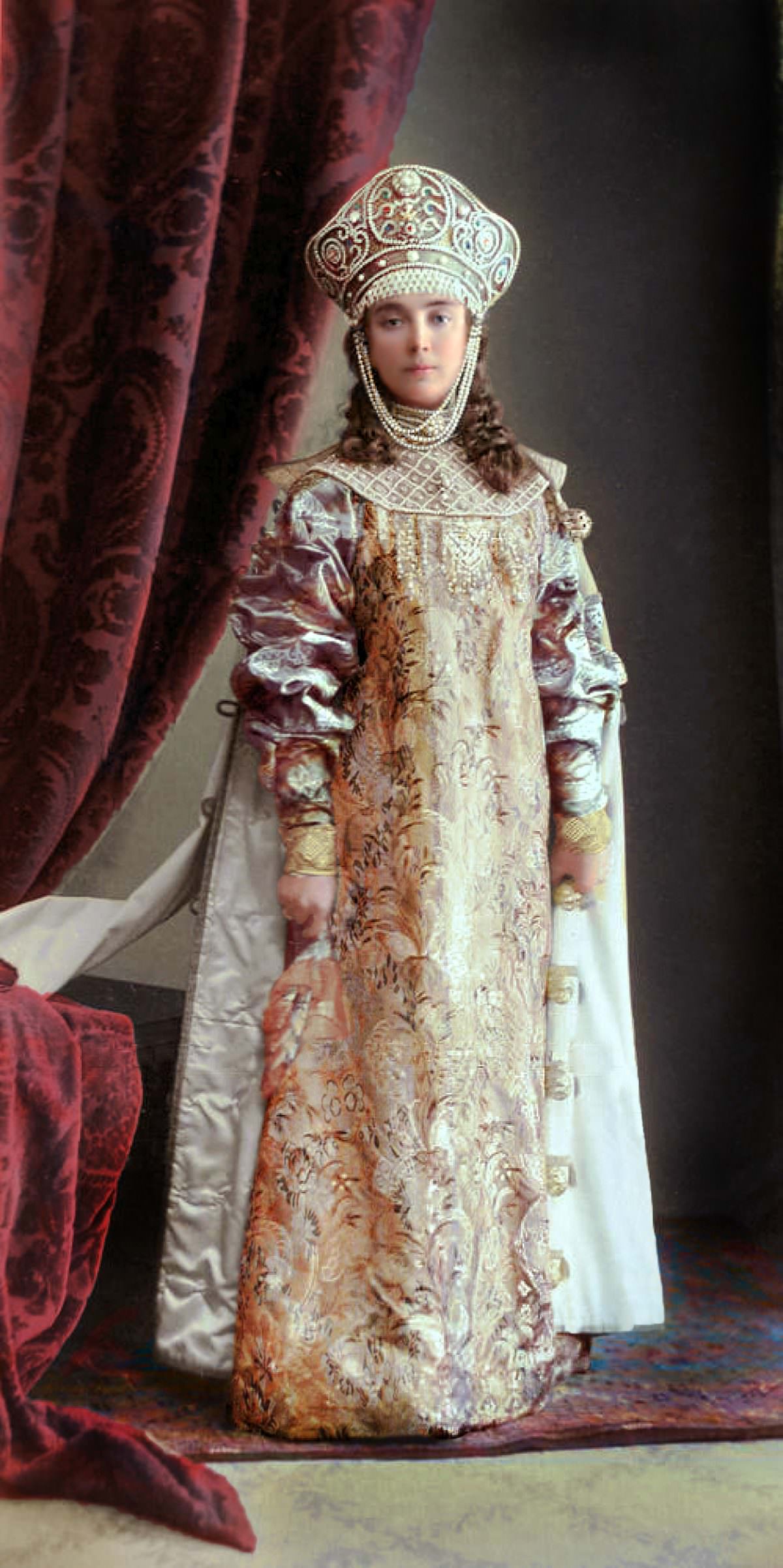
#16 Princess Elisabeth Obolensky, Bridesmaid to Her Ma
Wrapped in shimmering brocade and framed by heavy velvet drapery, Princess Elisabeth Obolensky stands with the composed stillness of a formal court portrait. The colorization draws the eye to the ornate kokoshnik-style headdress, studded with bright details and edged with strands that fall alongside her face like ceremonial jewelry. Even without added context, the pose…
-
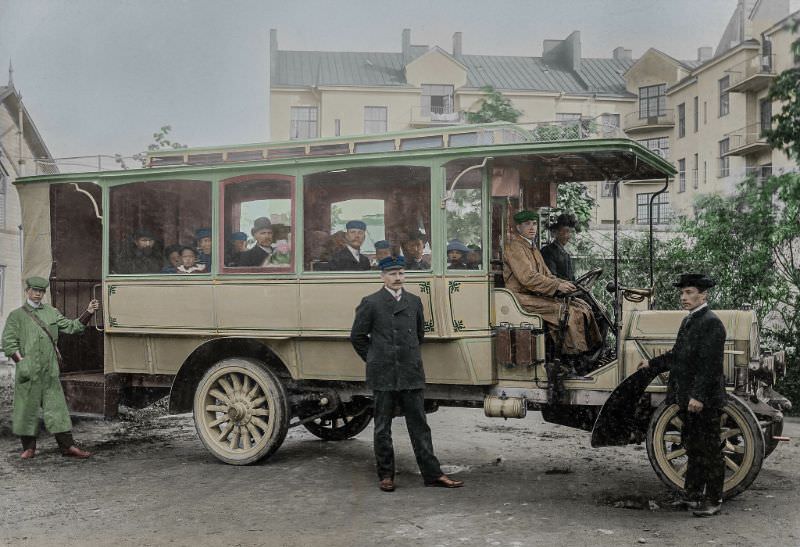
#7 A local bus in Helsinki, 1900s
Painted in soft greens and cream, a local bus pauses on a rough street in Helsinki, offering a vivid glimpse of everyday travel in the 1900s. Passengers sit close behind tall windows, some looking out with quiet curiosity while others blend into the dim interior. The colorization brings out the contrast between polished bodywork and…
-
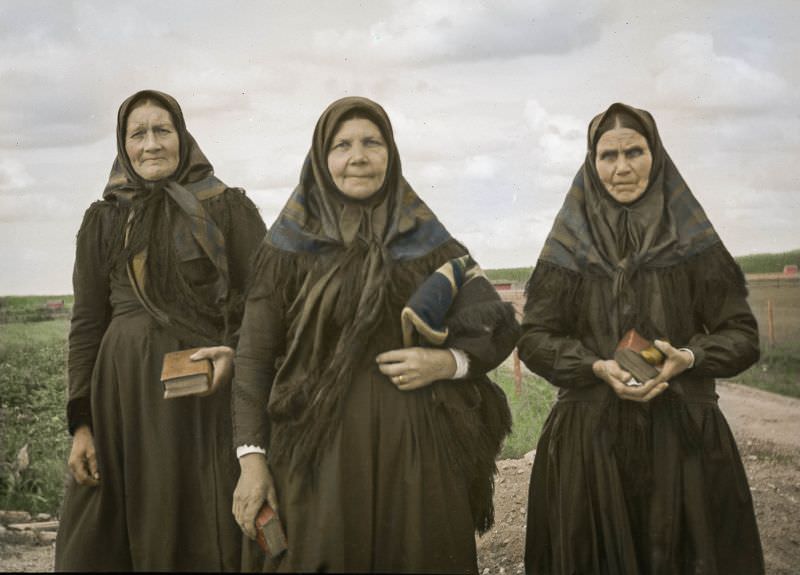
#23 Three ladies from Dagsmark in the Swedish-speaking area of Ostrothnia in Finland, 1935
Against an open sky and the flat fields of Ostrobothnia, three women from Dagsmark stand close together, their dark shawls and long dresses forming a quiet line across the landscape. The colorization brings out the muted tones of wool and cloth, emphasizing practical layers meant for wind and work rather than display. Each face meets…
-
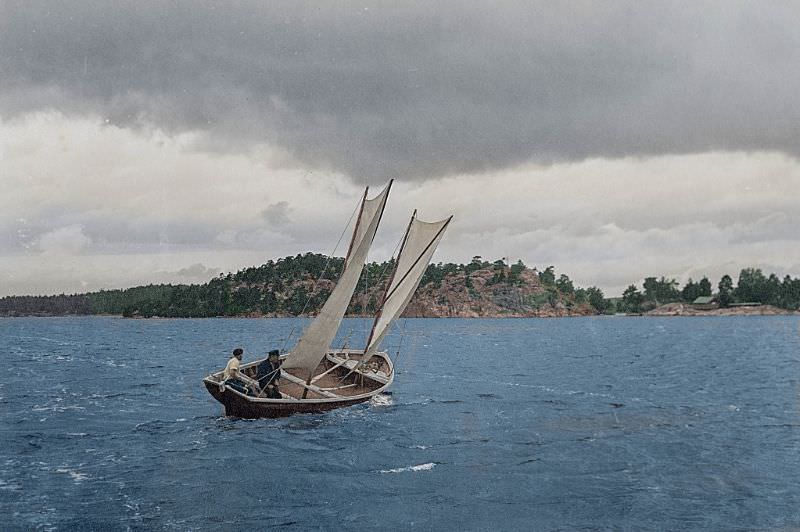
#39 A traditional fishing boat in the Finnish archipelago in 1932
Against a low ceiling of gray cloud, a small traditional fishing boat rides the choppy blue water of the Finnish archipelago in 1932, its two pale sails pulling steadily toward a line of rocky, pine-topped islands. The hull sits close to the surface, built for working rather than display, and the sea’s texture—short waves and…
-
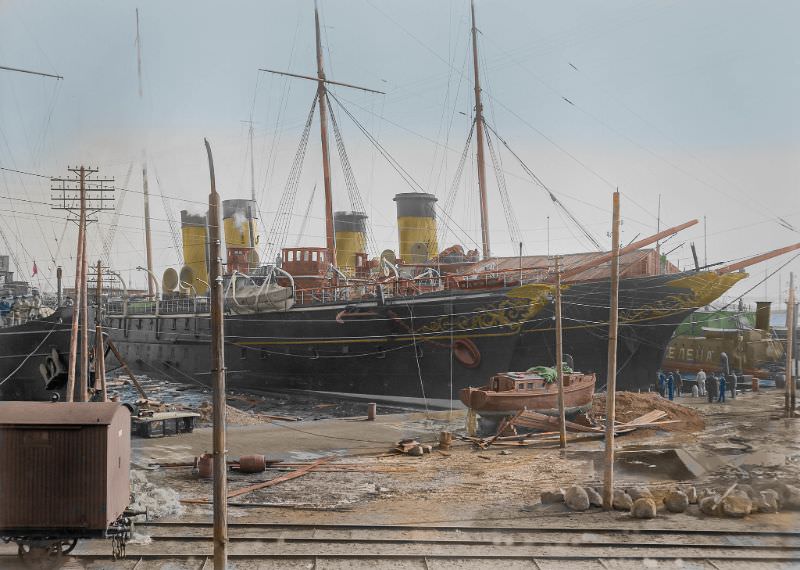
#55 The two former Imperial Yachts, “Polar Star” (in front) and “Standart” together in Helsinki, 1900s.
Moored close together in Helsinki, the former Imperial yachts “Polar Star” and “Standart” dominate the harbor scene with their tall masts, twin funnels, and long, dark hulls. The colorization brings out fine details that can be easy to miss in monochrome—golden trim along the bow, the warm tones of deck structures, and the pale winter…