Category: Cover Art
Dive into a gallery of vintage cover art from books, magazines, and albums. Discover how graphic design and illustration reflected the moods of their times.
These covers capture the essence of cultural evolution — from bold propaganda to elegant minimalism.
-
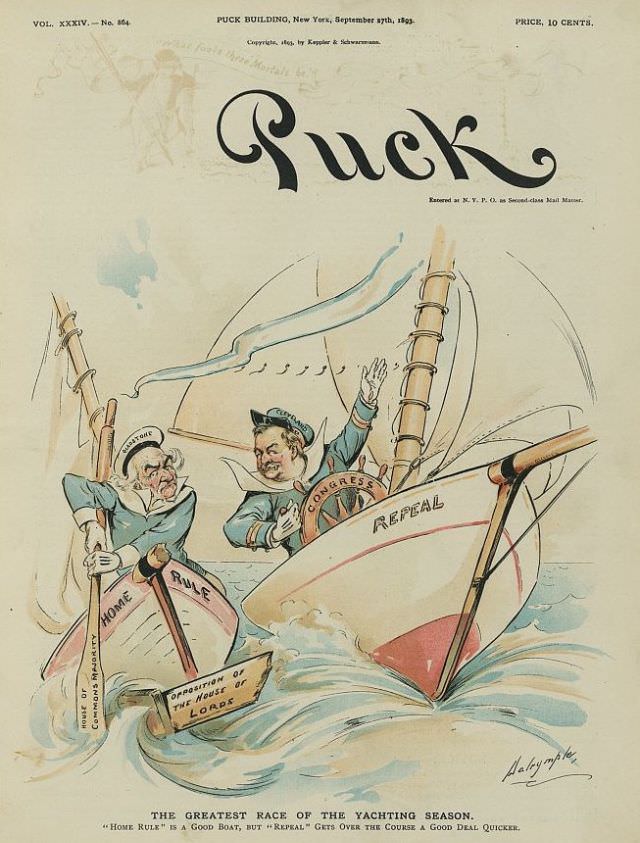
#31 Puck magazine cover, September 27, 1893
Bold lettering spells “Puck” across the top of this September 27, 1893 cover, a reminder that the magazine’s brand of political humor was meant to be recognized at a glance on a crowded newsstand. The masthead text situates the issue in New York and advertises a 10-cent price, while the illustration below delivers the real…
-
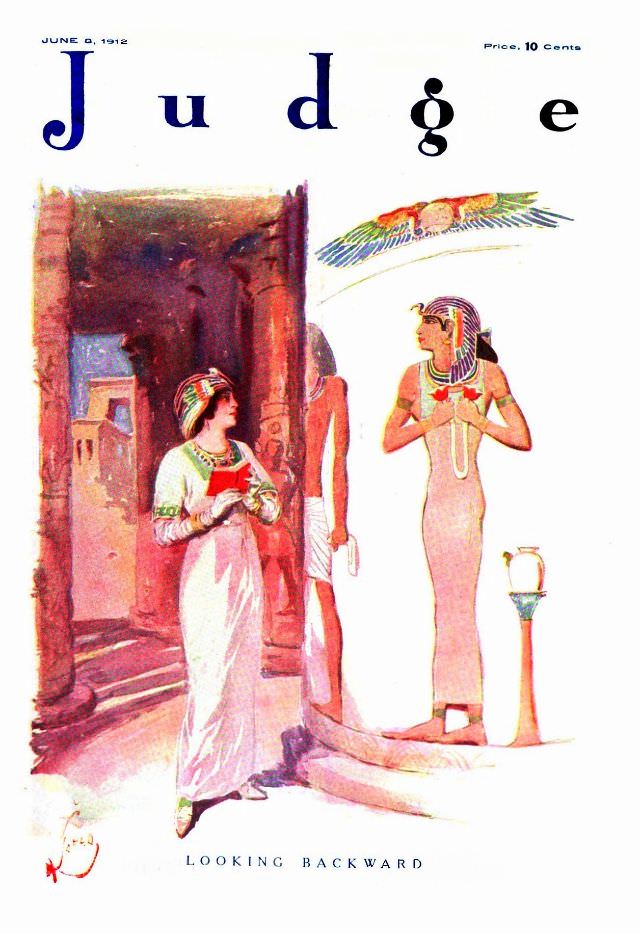
#3 Judge magazine, June 8, 1912
June 8, 1912 appears at the top of this Judge magazine cover, where tall lettering and clean white space frame a richly colored scene titled “Looking Backward.” The artwork leans into an ancient Egyptian revival mood, with stylized figures in long robes posed among monumental columns and stepped architecture. A winged sun disc hovers overhead,…
-
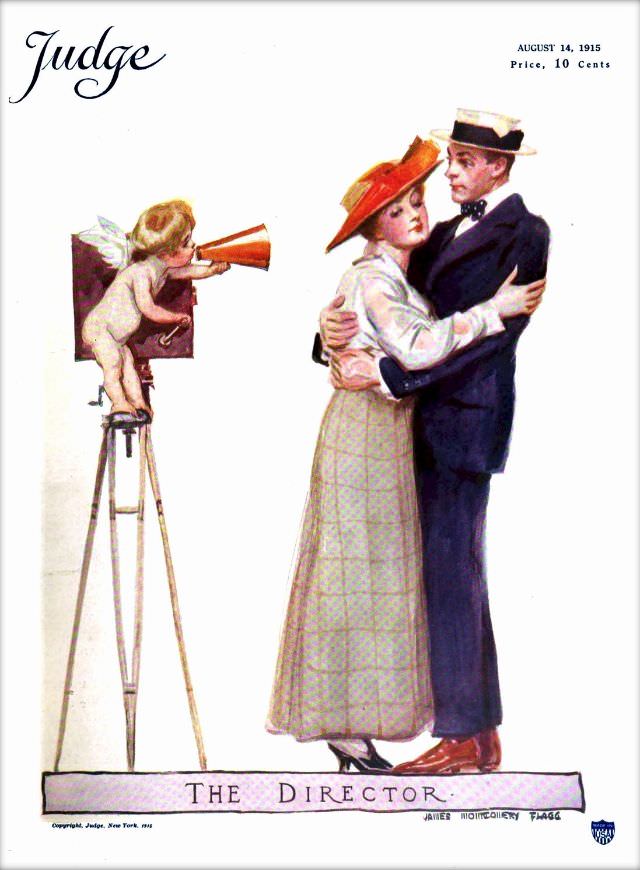
#19 Judge magazine, August 14, 1915
Judge magazine’s August 14, 1915 cover turns a simple embrace into a sly stage scene, titled “The Director.” At center, a well-dressed couple—she in a wide-brimmed hat and patterned skirt, he in a dark suit and boater—hold their pose as if waiting for a cue. The clean white background and crisp color drawing leave nowhere…
-
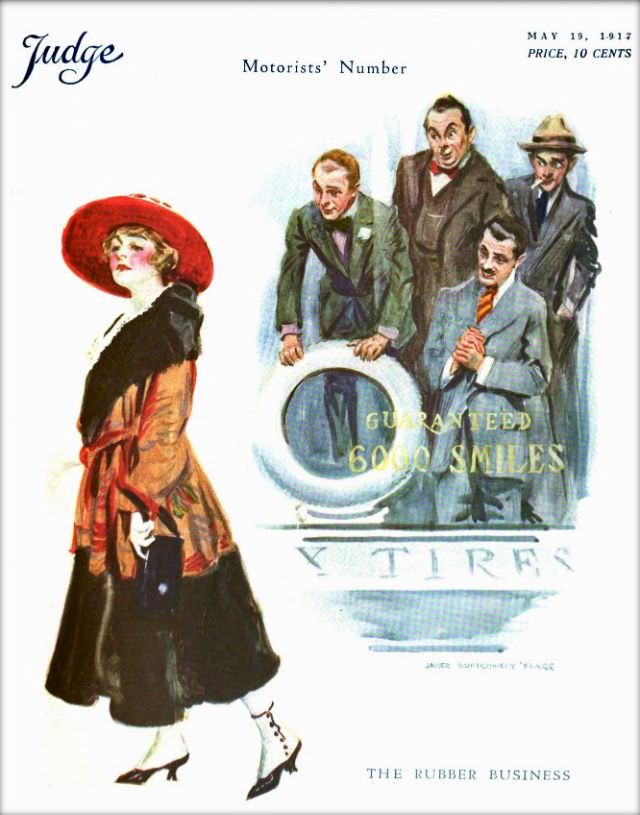
#35 Judge magazine, May 19, 1917
Judge’s May 19, 1917 cover leans into the “Motorists’ Number” theme with a witty, advertisement-like tableau that feels instantly modern. A fashionable woman in a wide red hat strides past, her confident silhouette set against the pale background, while a cluster of suited men hovers near an oversized tire. The composition balances elegance and commerce,…
-
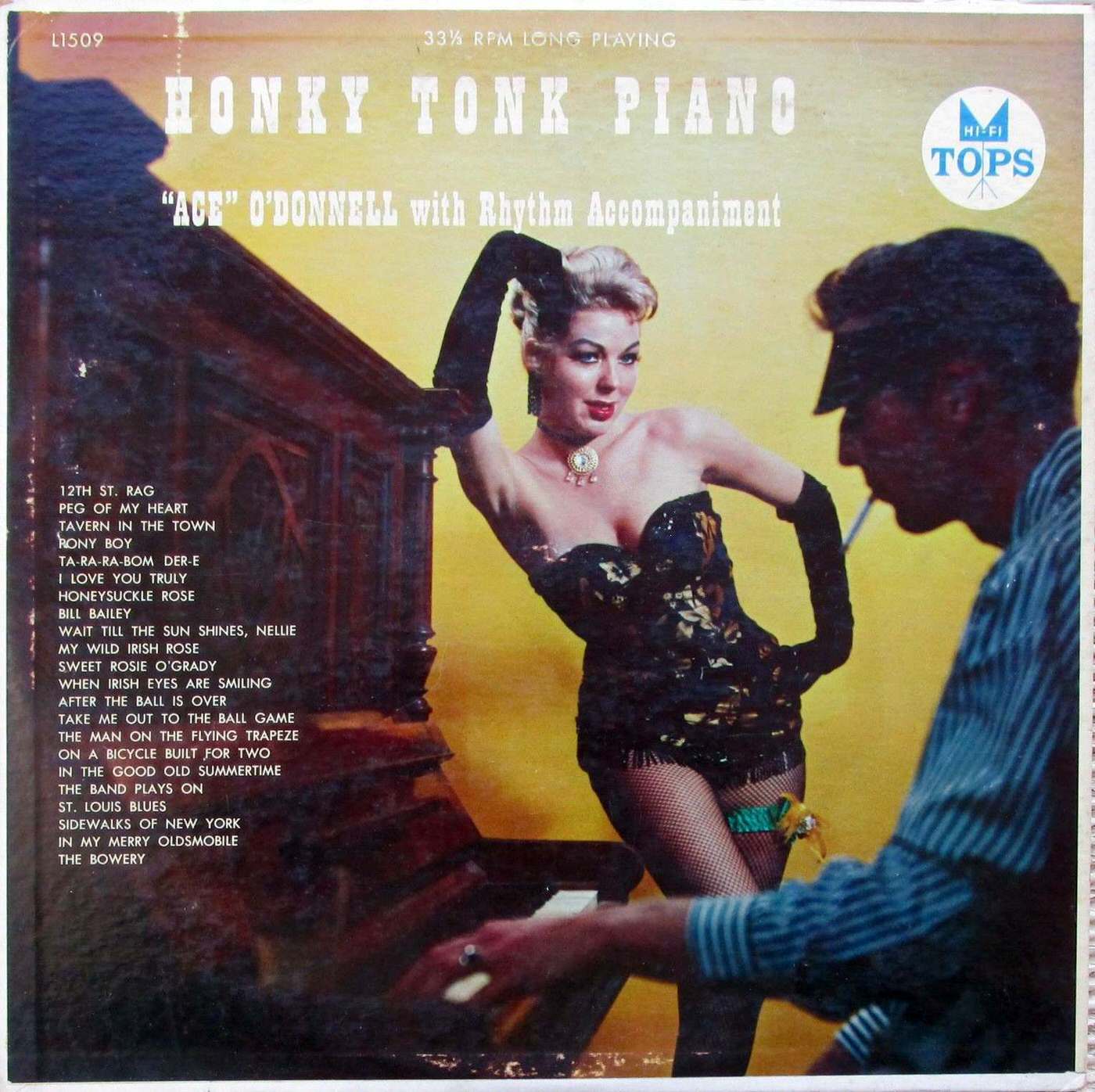
#10 Pianos, Pin-Ups, and Party Tunes: Exploring the Wild World of Honky-Tonk Records #10 Cover Art
Neon-yellow space, a scuffed upright piano, and a pin-up pose do most of the talking on this “HONKY TONK PIANO” LP cover, credited to “Ace” O’Donnell with Rhythm Accompaniment. The design leans hard into nightclub fantasy: satin, sequins, long gloves, and fishnets arranged like a spotlight, while the pianist sits in shadow at the keys.…
-
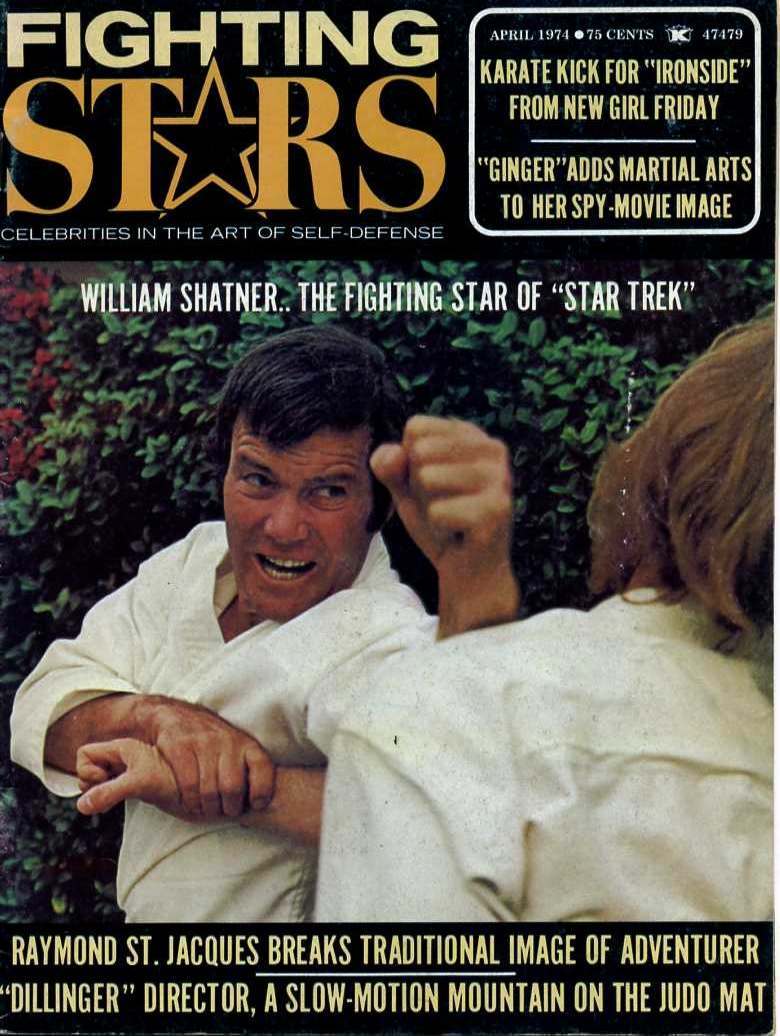
#6 Everybody Was Kung Fu Fighting: Exploring the Heyday of Martial Arts Mags in the 1970s and 1980s #6 Cov
Bold gold lettering shouts “Fighting Stars” across a glossy cover that wears its era proudly: April 1974, 75 cents, and a promise of “celebrities in the art of self-defense.” The layout is busy in that unmistakable magazine-rack way, mixing big-type headlines with teaser blurbs that hint at television tie-ins and spy-movie glamour. Even before you…
-

#10 Blood, Masks, and Glory: A Visual Tour Through Lucha Libre Magazine Covers of the 1970s #10 Cover Art
Red and teal collide behind a masked luchador who reaches outward as if summoning the crowd, his open hand frozen mid-gesture. The design reads like classic 1970s lucha libre magazine cover art: bold color fields, dramatic contrast, and a central figure posed as both athlete and icon. Even without a visible arena, the cropped composition…
-
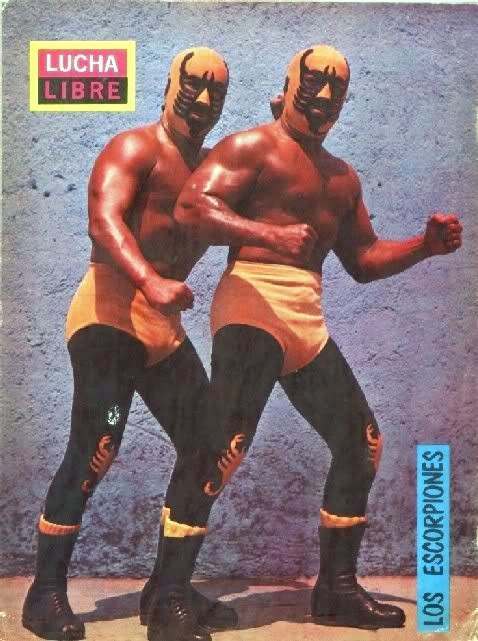
#26 Blood, Masks, and Glory: A Visual Tour Through Lucha Libre Magazine Covers of the 1970s #26 Cover Art
Neon color and theatrical menace collide on this 1970s-style Lucha Libre magazine cover, where two masked wrestlers pose in matching gear against a stark studio backdrop. The bold “LUCHA LIBRE” masthead anchors the composition, while the duo’s squared shoulders and raised fists sell the promise of combat before a single hold is thrown. It’s cover…
-
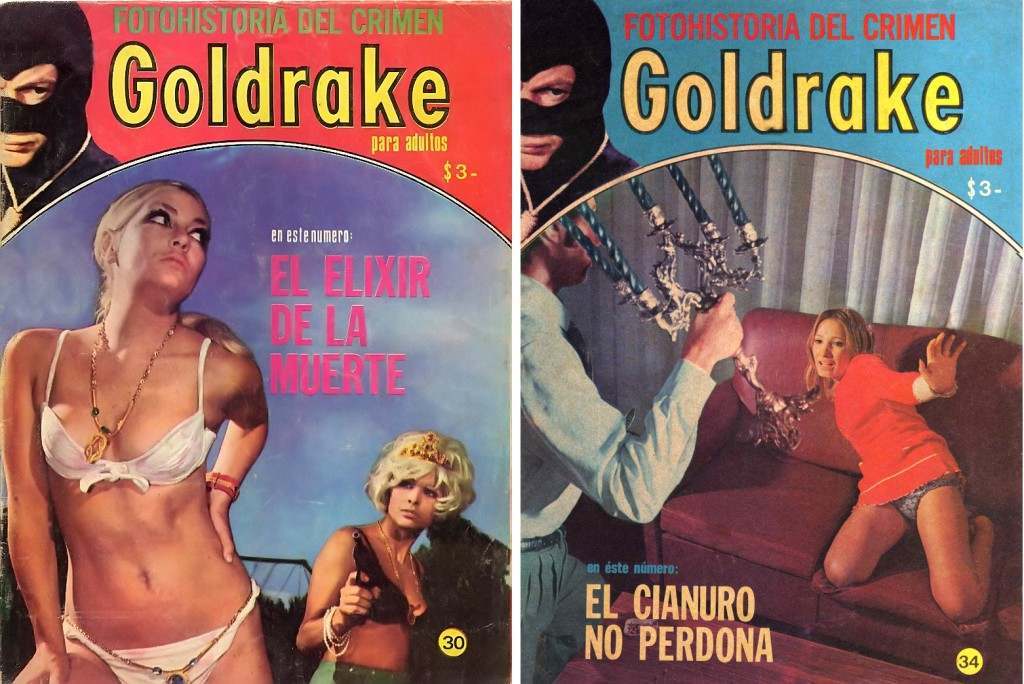
#4 The World of Spanish and Italian Crime Comics (Fotonovelas) from the 1960s-70s: Stories Told with Sensational Photogr
Bright pulp color and bold lettering pull you straight into the lurid world of *Fotohistoria del Crimen* and its recurring banner title, “Goldrake,” a crime fotonovela “para adultos.” These cover designs lean on the era’s magazine-stand theater—large, sensational type, dramatic posing, and a promise of danger—making them perfect examples of Spanish-language crime comics that told…
-
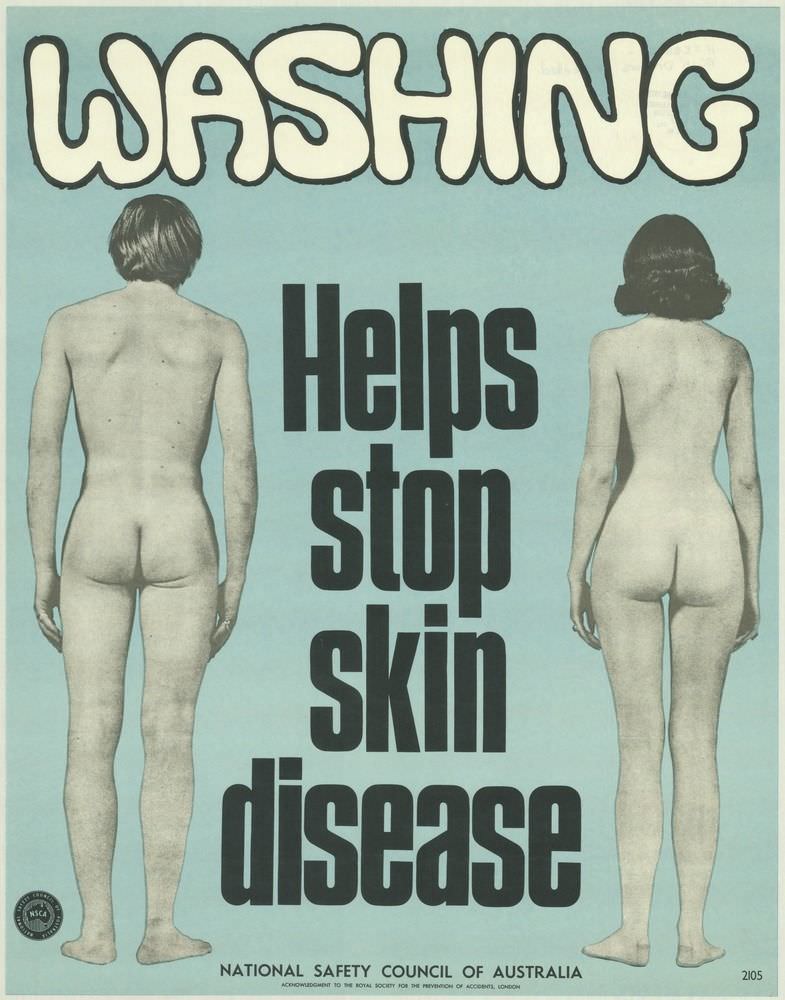
#8 National Safety Council of Australia Posters from the 1970s: Visual Messages for Keeping People Safe and Well
Bold, bubble-like lettering spelling “WASHING” crowns a stark public health message: “Helps stop skin disease.” Set against a flat, pale blue field, two unclothed figures are shown from behind at either side, turning the human body into a straightforward reminder of hygiene and prevention rather than a scene with narrative distraction.