Category: Inventions
Explore the fascinating evolution of technology through historic inventions that changed the world. From early aviation to bizarre gadgets — creativity knows no bounds.
Each photo celebrates human innovation and the spirit of discovery that pushed civilization forward.
-

#12 Skiway: The Flying Trams in Mount Hood, Oregon in the 1950s #12 Inventions
Rising above the parking lot on Mount Hood, Oregon, a small tram car hangs from a web of cables like something borrowed from a science‑fair dream and made real. Mid‑century cars crowd the foreground, people in jackets and hats pause to watch, and the mountain’s snowy mass sits quietly behind it all—an everyday outing framed…
-

#13 Cooling Fan for Noodles
An ingenious bit of everyday engineering sits at the center of “Cooling Fan for Noodles,” where chopsticks double as a tool mount and a small electric fan is poised to blow across a steaming tangle lifted from the bowl. Wires, a compact battery pack, and a clipped-on frame turn a simple meal into a miniature…
-
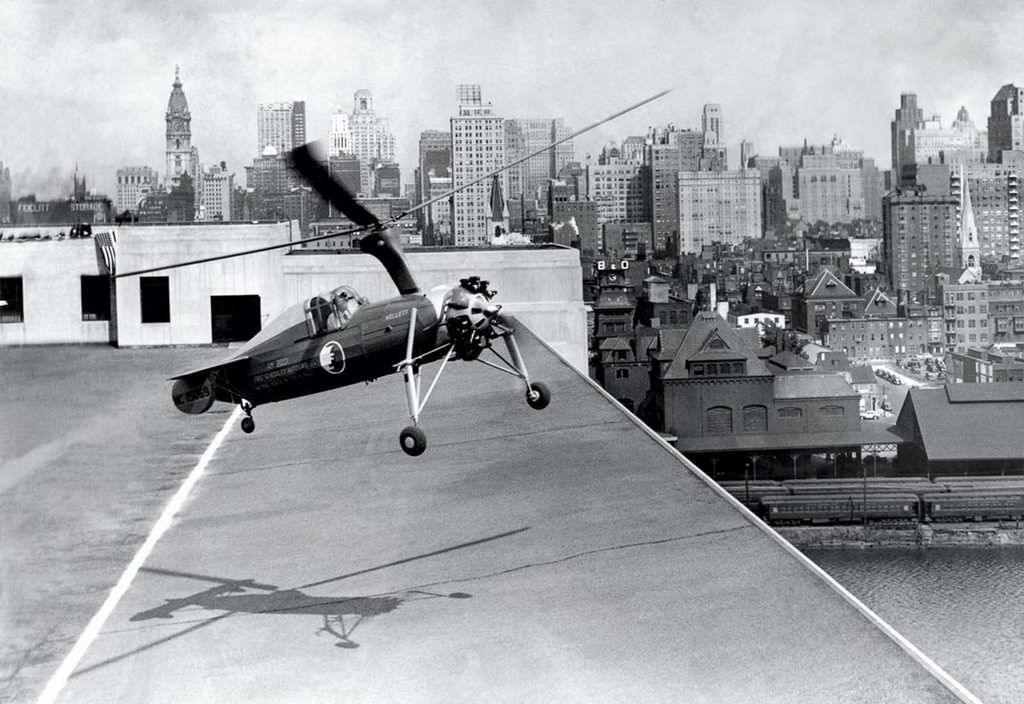
#9 An autogyro takes off from a rooftop in Philadelphia. 1930.
High above Philadelphia’s streets, an autogyro lifts away from a flat rooftop, its rotor a dark blur against a hazy skyline. The aircraft’s spindly landing gear and compact fuselage look almost improvised, yet the moment feels carefully staged—an experiment in making the city itself a runway. In the background, dense blocks of buildings and distinctive…
-

#12 Demo tent, 1985.
Canvas walls and a neatly cut doorway frame the scene in “Demo tent, 1985,” drawing the eye through a sequence of openings like a hallway made of fabric. The pale interior feels utilitarian and clean, with stitched seams and reinforced edges that hint at careful design rather than casual camping. Beyond the final flap, sunlit…
-
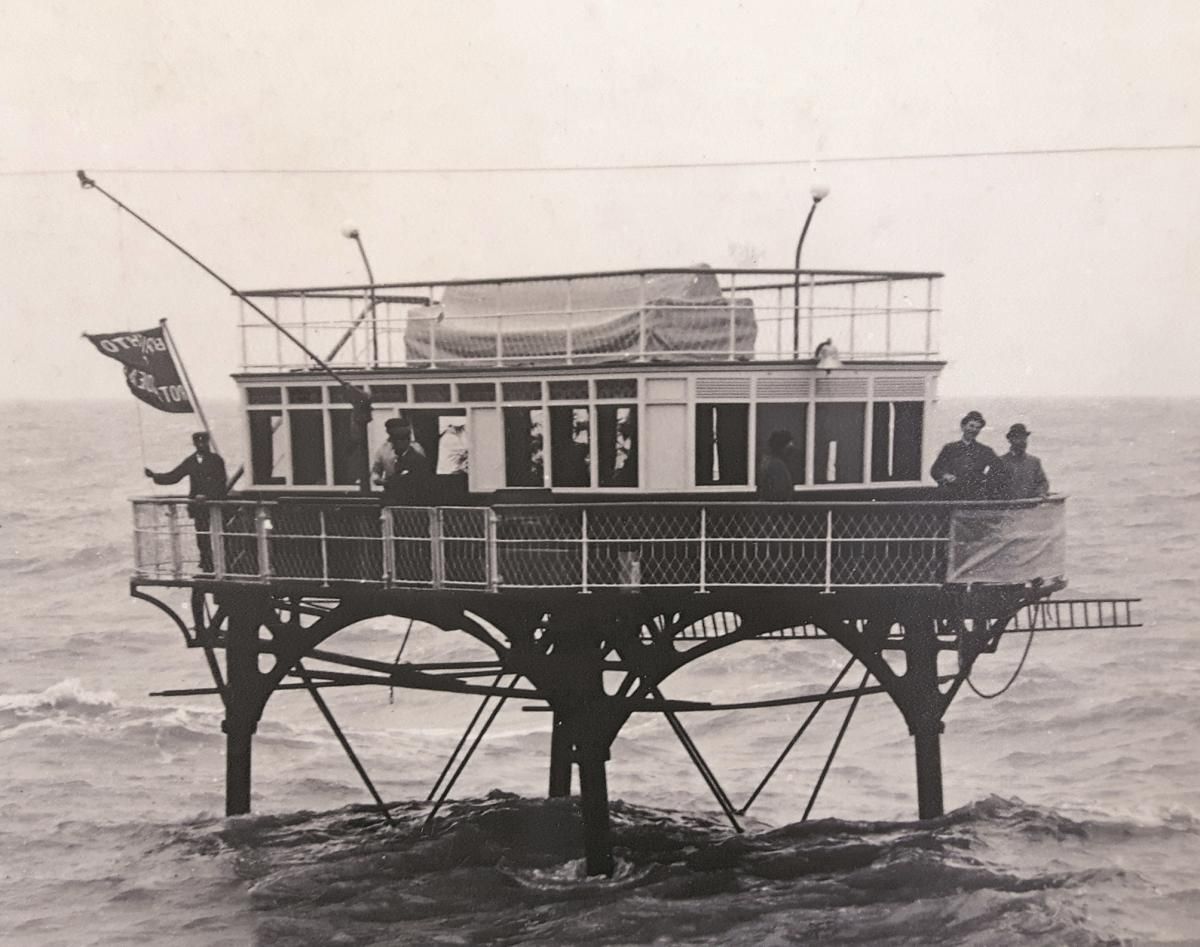
#7 Daddy Long-Legs Railway Of Brighton: A Weird But Interesting Seaside Electric Train Invented In 1896 #7
Rising above the surf on spindly iron legs, the Daddy Long-Legs Railway looks less like a train and more like a seaside contraption from a Victorian engineer’s dream. The car resembles a small tram cabin with a railed upper deck, while waves churn beneath its elevated frame, emphasizing just how daring the idea was. A…
-

#3 July 25, 1929
July 25, 1929 places us on a breezy shoreline where a large flying boat skims low over open water, its broad wingspan cutting a clean line against the pale sky. The aircraft’s multiple propellers and boat-like hull signal an era when engineers were still negotiating the boundary between sea travel and flight, building machines meant…
-
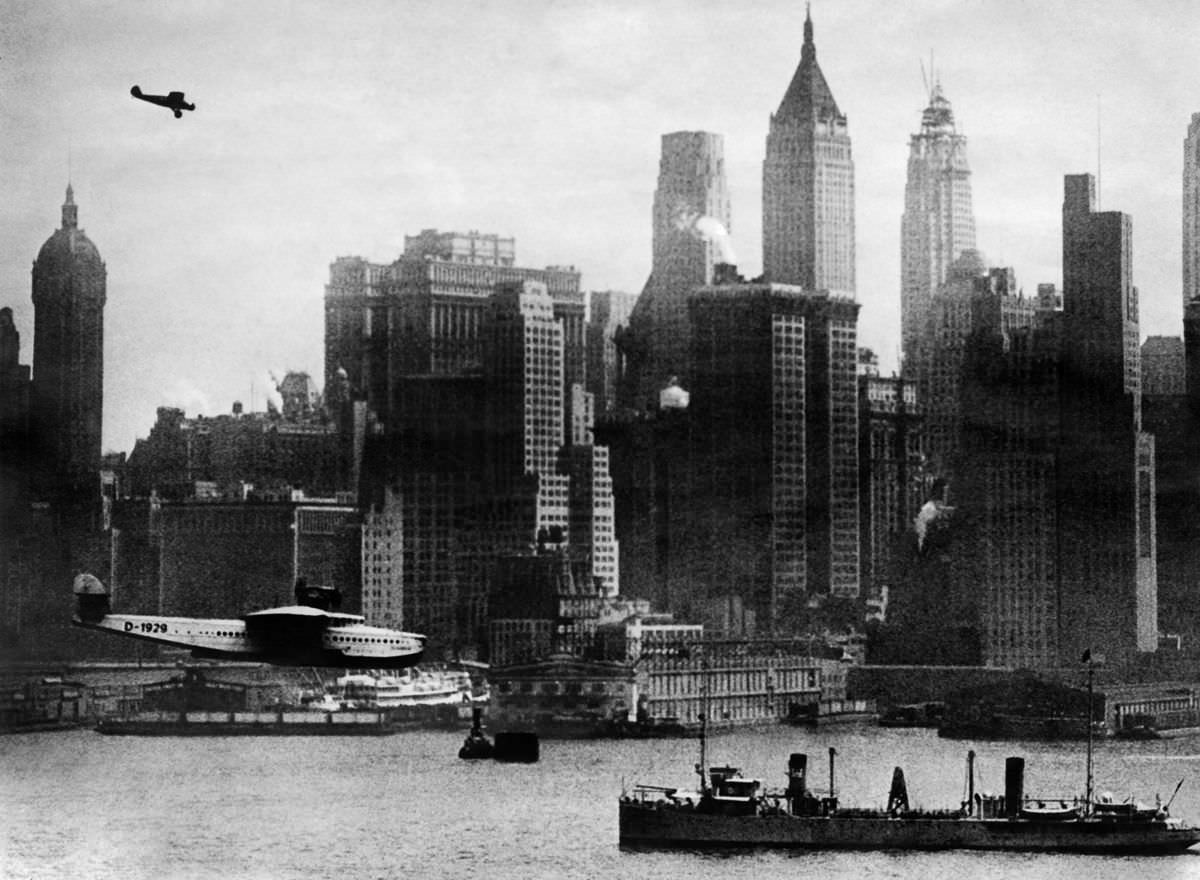
#19 The Dornier Do-X comes in for a landing on the Hudson River,Sept. 1, 1931
Against a jagged skyline of early-1930s skyscrapers, the Dornier Do-X glides low over the Hudson River, its broad hull and high wingline reading more like a ship than an airplane. A smaller aircraft circles higher above, emphasizing the Do-X’s scale as it comes in to land on the water. The scene is both airy and…
-

#4 Whiskey Flavored Toothpaste: The Ridiculous Reason To Brush Your Teeth, From 1950s #4 Inventions
Steel gears and a well-worn press dominate the frame as gloved hands guide toothpaste tubes through a factory machine, the kind of behind-the-scenes moment advertisers rarely showed. The “LIFE” watermark hints at mid-century magazine photojournalism, when industrial processes and consumer goods were treated as symbols of modern progress. Even without a smiling model, the scene…
-

#4 In the wire room, telegraphers record messages received by Western Union and Postal Telegraph from Times correspondents across the United States and abroad.
Inside the wire room, the work of turning distant events into readable news unfolds at a steady, practiced pace. Telegraphers sit at sturdy desks behind a partition, their eyes fixed on pages and their hands moving between keys and paper as messages arrive from Times correspondents. The atmosphere feels both quiet and urgent—an office built…
-
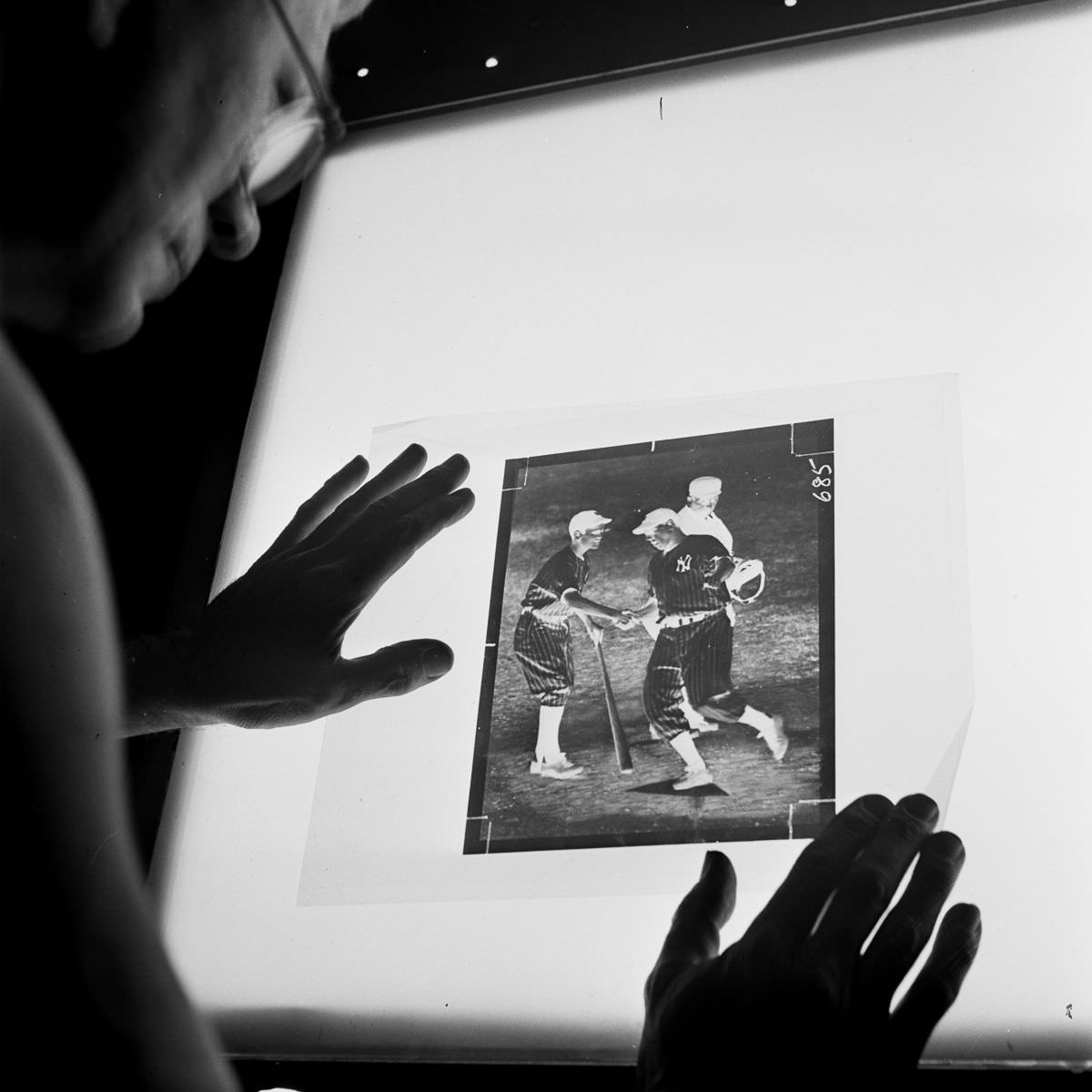
#20 A darkroom technician inspects the dots on the screen of a strip negative before it is transferred to a zinc plate.
Under the glow of a light table, a darkroom technician leans in close, hands braced at the edges of a strip negative as if to steady both the film and the moment it contains. The scene on the negative—an action-filled sports frame with players mid-motion—feels almost secondary to the real subject here: the careful inspection…