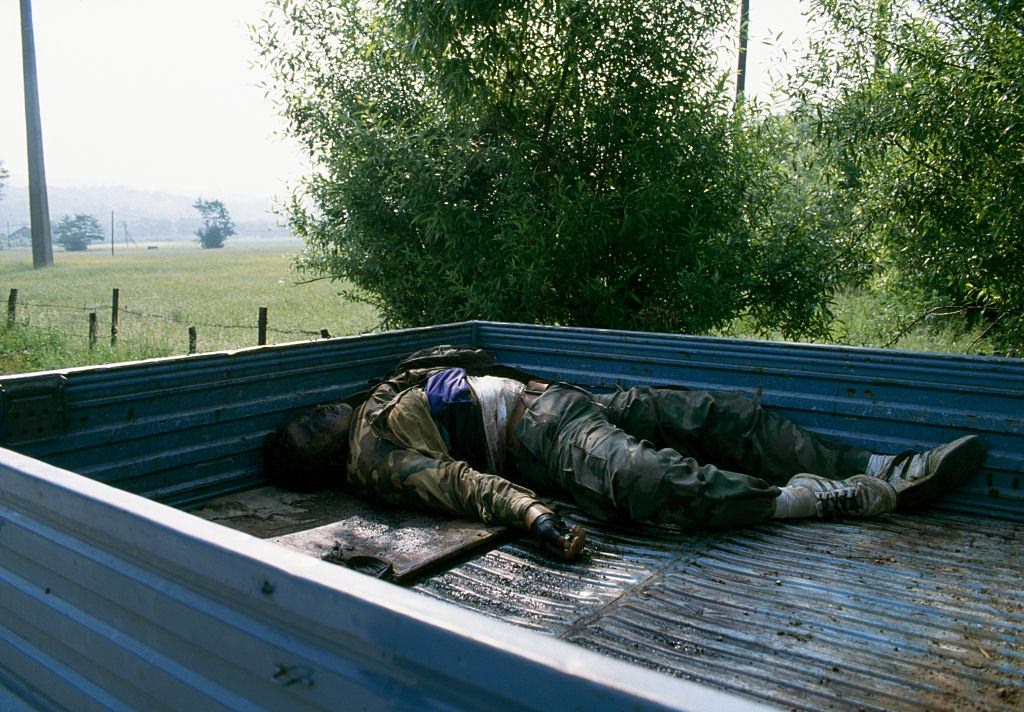
Morning light falls across the ribbed metal bed of a pickup truck in Vitez, where a Bosnian soldier’s body lies stretched out in fatigues and boots. The setting beyond the tailgate feels almost pastoral—fields, fence posts, and trees—yet the still figure turns that quiet landscape into a scene of wartime reckoning. Without ceremony or protection from view, the truck becomes an improvised hearse, exposing how quickly ordinary vehicles were pressed into service during the Yugoslavian Civil War.
What stands out is the blunt contrast between the calm countryside and the raw mechanics of loss: corrugated steel, scattered grit, and a human life reduced to a burden that must be moved. No crowds or flags appear in frame, only the practical urgency of transport, suggesting a moment between violence and burial when grief is deferred by necessity. The anonymity of the roadside and the lack of visible medical or formal military presence underscore the instability that marked many communities in Bosnia and Herzegovina during the conflict.
For readers exploring civil wars, Balkan history, and the Yugoslav wars, this photograph offers an unfiltered glimpse into how war infiltrated daily routines in places like Vitez. It invites reflection on the human cost behind familiar headlines—territory, ceasefires, and factions—by focusing on one body and one truck on an otherwise ordinary day. As a historical record, it preserves not only an event but also the atmosphere of a society forced to navigate death in public spaces, with whatever tools were at hand.