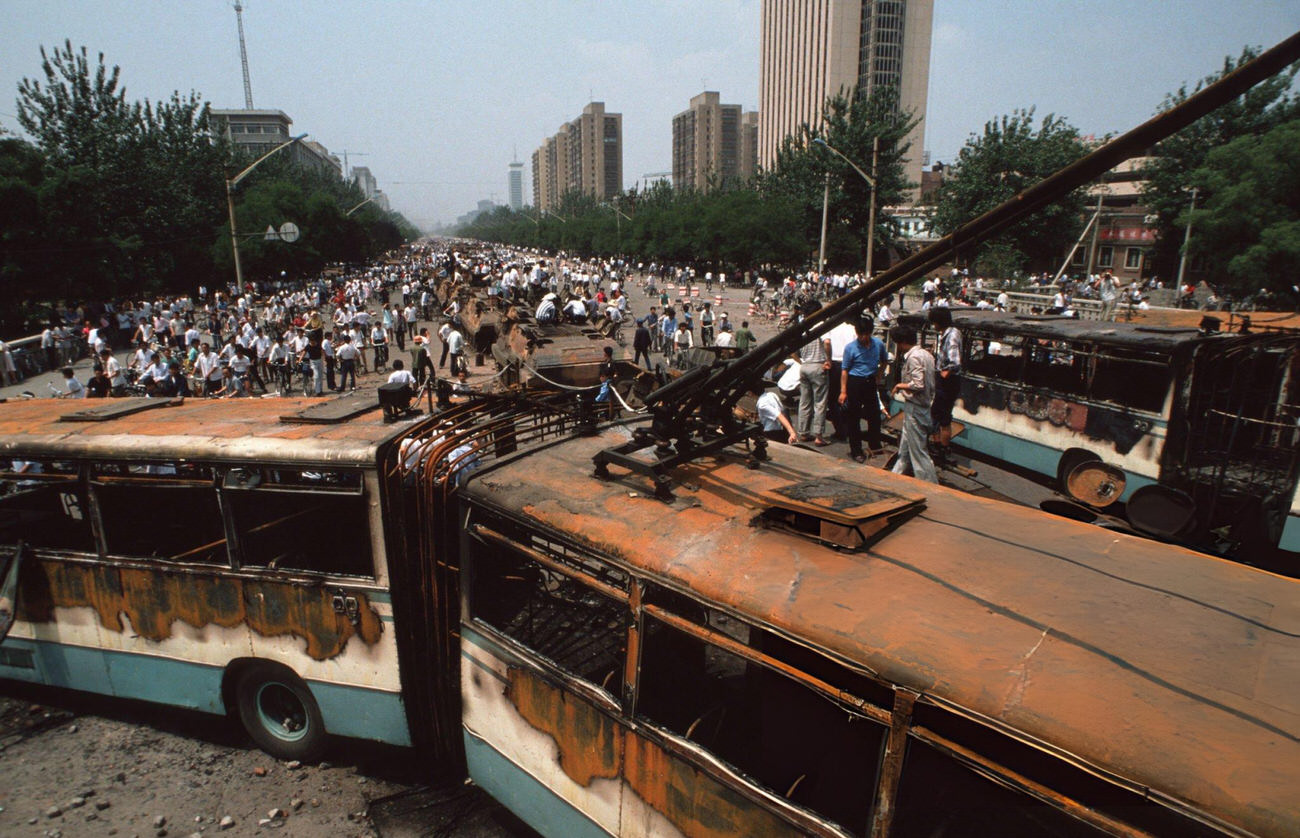
Charred bus shells dominate the foreground, their windows blown out and frames scorched, while a tangle of bent poles and cables slants across the wreckage. Behind this ruined barrier, a long boulevard stretches into a hazy distance between rows of trees and tall apartment blocks, turning an ordinary city artery into a corridor of aftermath. The title’s reference to Chinese Army trucks and vehicles underscores the scale of destruction hinted at among the crowd and debris.
Crowds of onlookers line both sides of the street and spill into the roadway, some perched close to the burned buses as if trying to read the scene like evidence. The mood feels unsettled rather than celebratory—people gather in clusters, pausing, pointing, and staring, drawn by the shock of disabled public transport and damaged military vehicles. In this single frame, everyday life and public crisis collide, capturing the uneasy moment when citizens confront the visible residue of confrontation.
Posted under “Civil Wars,” the photograph works as a stark reminder of how political turmoil imprints itself on infrastructure: transit vehicles become barricades, streets become stages, and smoke-blackened metal becomes a public record. For readers searching for 1989 history, China unrest imagery, or documentary photographs of destroyed buses and military trucks, the scene offers a visceral entry point without needing captions to explain the tension. What lingers most is the contrast between the stillness of wrecked machines and the restless human presence that surrounds them.