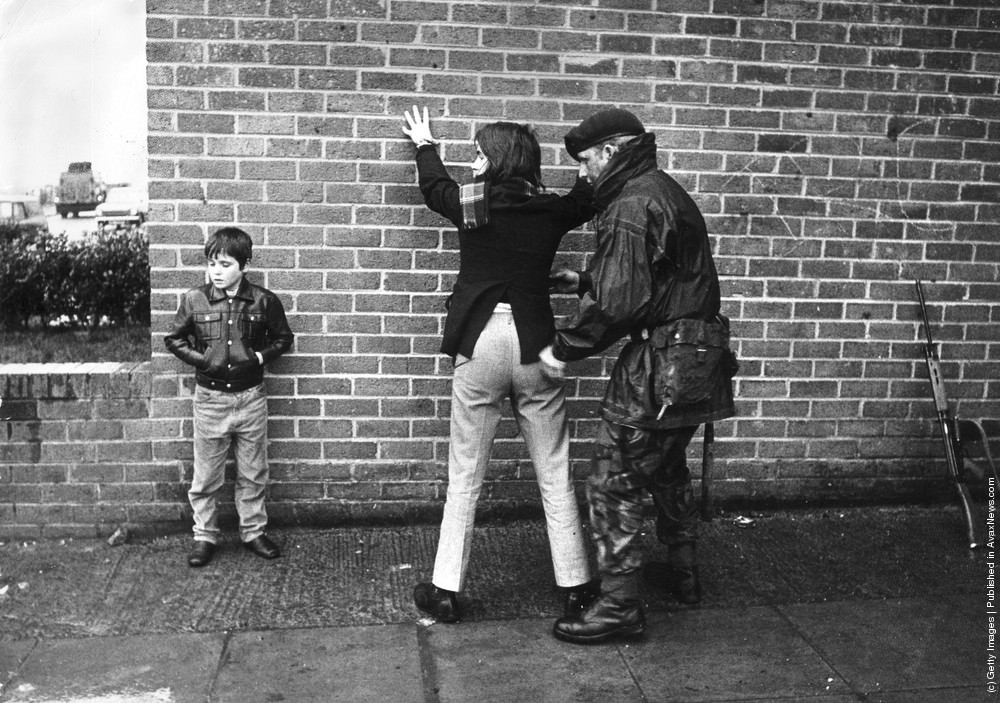
Against a plain brick wall in Belfast, a teenager stands with arms raised while a British soldier conducts a search, his posture practical and alert. The soldier’s heavy outerwear, boots, and nearby rifle hint at a city where routine movement could be treated as a security concern. Off to the side, a younger child watches, hands in pockets, turning a tense public moment into something almost domestic in its ordinariness.
Set in 1971, the scene lands in the early, volatile years of the Troubles, when military patrols, checkpoints, and stop-and-search practices became part of daily life for many neighborhoods. The teenager’s turned face and the soldier’s methodical hands speak to the unequal power of the encounter, while the blank expanse of masonry offers no escape from scrutiny. It’s a stark reminder that conflict is often experienced not only through headline events, but through repeated small confrontations on familiar streets.
For readers exploring civil wars, insurgency, and state security in Northern Ireland, this photograph offers a grounded window into how political violence reshapes ordinary interactions. It invites questions about fear, control, and the normalisation of emergency measures—especially when the subjects are young. As a historical image of Belfast in 1971, it remains an unsettling, valuable document of lived experience during a deeply divided era.