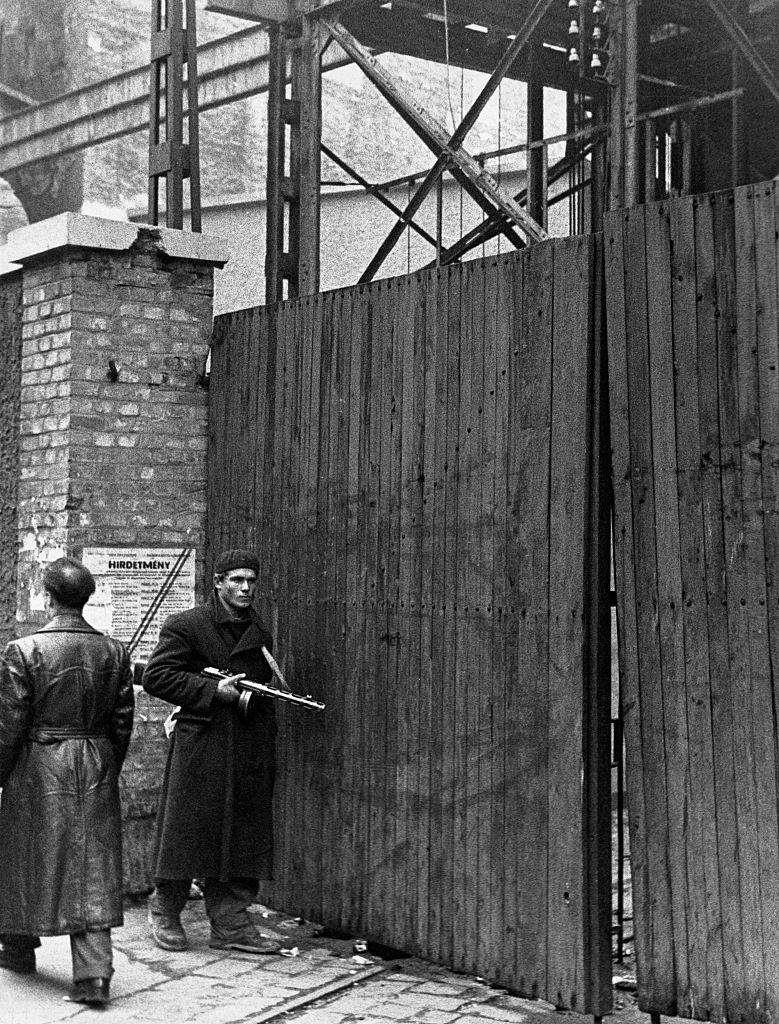
Heavy wooden gates dominate the frame, their rough planks and iron fastenings turning an ordinary factory entrance into a barricade. A worker stands sentry in a long coat and cap, gripping a firearm with the wary stillness of someone expecting trouble, while another figure in a leather coat walks past with his back turned. Above the gate, exposed steel beams and industrial framework loom overhead, underscoring how the everyday world of labor had been pulled into the tense street politics of Hungary’s 1956 anti-communist revolution.
On the brick wall beside the entrance, a posted notice with Hungarian text hints at orders, announcements, or improvised rules—paper authority beside armed authority. The guard’s stance is both defensive and declarative: the strike is not just a stoppage of work, but a claim over the workplace itself, protected by workers who had suddenly become organizers, lookouts, and, when necessary, fighters. In this moment, the factory reads like a frontline, where control of gates and corridors mattered as much as speeches and slogans.
Civil wars and revolutions often reveal themselves in such small, practical scenes—doors locked, shifts interrupted, routines replaced by vigilance. The photograph’s stark textures—brick, timber, metal, and winter clothing—create a grounded portrait of working-class resistance and the fragile order of a city in upheaval. For readers searching the history of the Hungarian Revolution of 1956, striking factories, and workers’ self-defense, this image offers a vivid reminder that the drama of national revolt was lived out at street level, one guarded entrance at a time.