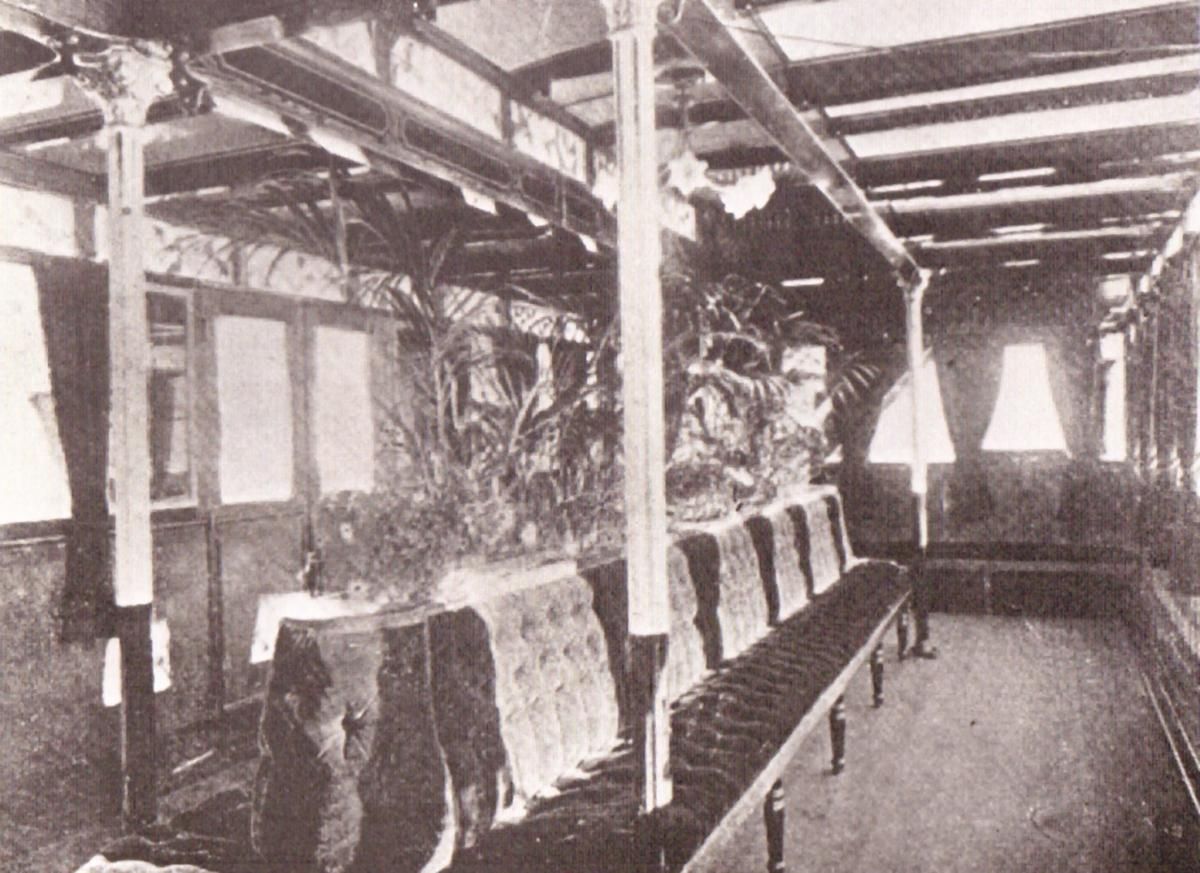
Step inside the curious world of Brighton’s “Daddy Long-Legs” Railway and the sea air almost seems to follow you into the carriage. The photo looks down a narrow interior lined with a long row of seats, where patterned upholstery and tidy spacing suggest an experience meant to feel more like a proper seaside outing than a rough industrial ride. Lamps hang in a neat rhythm, and the ceiling beams and posts create a strong, almost ship-like sense of structure.
What makes the scene so striking is how domesticated it feels for an electric train that was anything but ordinary. Potted plants and decorative touches soften the hard edges of early transport design, hinting at the showmanship that often accompanied late-Victorian inventions. Even without the shoreline in view, the arrangement speaks to a vehicle built to impress passengers—part engineering experiment, part attraction.
Brighton’s experimental seaside railway has long fascinated historians because it embodied a moment when electricity, leisure travel, and bold public infrastructure collided. Details like the lighting, the seating, and the carefully managed interior space help ground the “weird but interesting” reputation of the Daddy Long-Legs in something tangible: a real, functioning passenger environment. For anyone exploring Victorian engineering, early electric railways, or Brighton history, this photograph offers a rare, intimate look at invention as it was meant to be lived in—not just admired from afar.