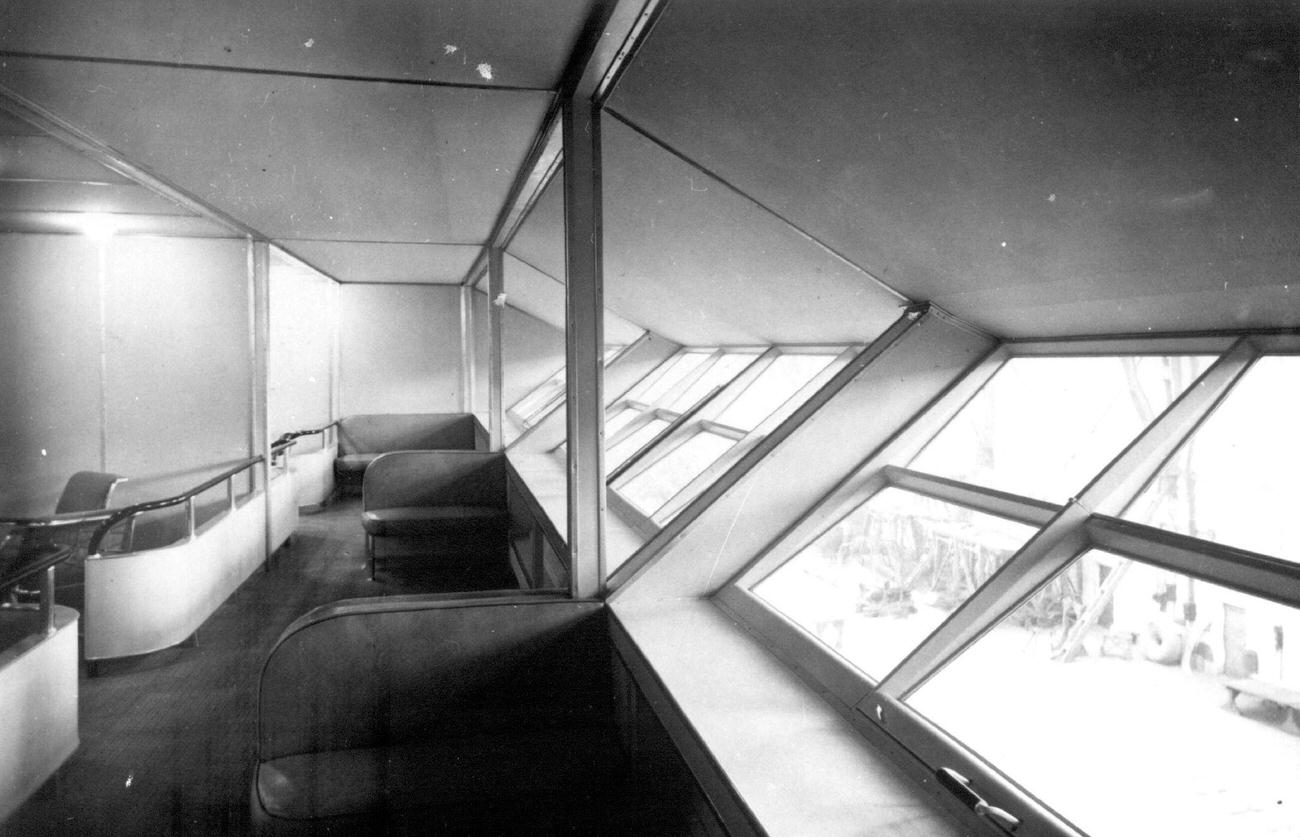
Step inside the German dirigible Hindenburg and the first thing that strikes you is how modern the passenger space feels: a long, clean-lined lounge with upholstered seating, polished surfaces, and a bright run of angled windows. The design reads like an Art Deco interior adapted for flight, where straight geometry and light tones keep the room airy despite the narrow footprint. Rather than rough industrial scaffolding, the atmosphere suggests a floating hotel—calm, ordered, and deliberately comfortable.
Along the starboard side, those broad panes tilt outward to pull daylight across the cabin, turning the sky and the ground below into part of the décor. Low partitions and carefully arranged benches create intimate pockets for conversation while still preserving a communal promenade feel, a feature that would have appealed to travelers drawn to the romance of airship travel. Even in a still photograph, the cabin’s quiet efficiency hints at routines of crossing, sightseeing, and waiting—travel measured in hours and vistas instead of turbulence.
For a post filed under “Inventions,” this interior offers a compelling look at how early aviation technology wasn’t only about engines and lift, but also about making the experience believable to paying passengers. The Hindenburg’s passenger quarters reflect an era when designers tried to translate ocean-liner luxury into the air, balancing weight, space, and spectacle. As a piece of aviation history, the photo invites readers to consider the dirigible not just as a machine, but as a carefully staged environment meant to make the impossible feel ordinary.