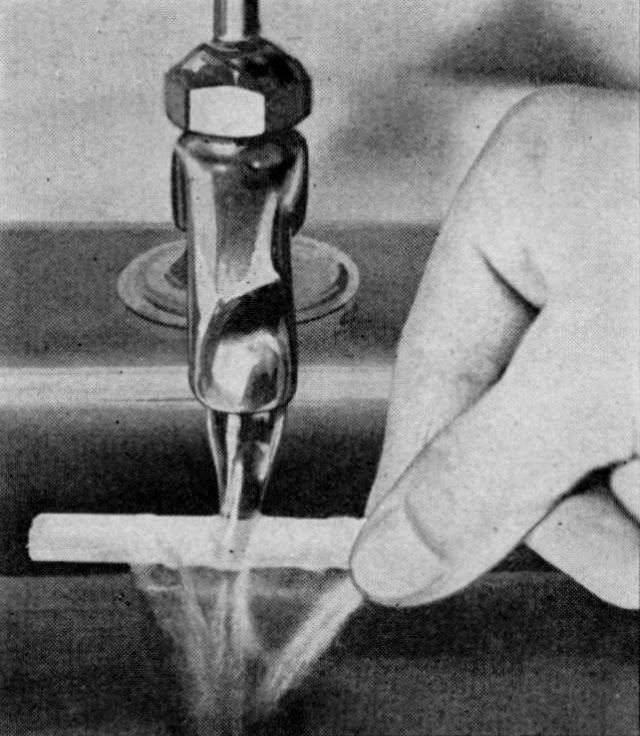
Under a running faucet, a hand holds what looks like a cigarette wrapped in a clear, slick sheath, inviting the viewer to judge the claim the hard way: by soaking it. The close crop keeps the focus on the practical problem being solved—how to keep tobacco dry when weather, damp pockets, or outdoor work would normally ruin it. Even without a wider setting, the message reads like a 1930s product demonstration, built around proof rather than promises.
The title, “New Cigarette Put Up in Waterproof Paper, 1933,” points to the era’s fascination with everyday inventions and packaging breakthroughs. Waterproof paper and moisture-resistant wrappers were part of a broader push to make consumer goods more portable and reliable, especially for people on the move. In an age when advertising leaned heavily on modern materials and “scientific” testing, a simple stream of water becomes the persuasive centerpiece.
As a historical photo, it’s also a small window into how cigarettes were marketed through convenience and durability as much as through taste. The stark contrast of metal fixture, flowing water, and transparent wrapping turns a humble object into a kind of laboratory specimen. For readers interested in 1930s inventions, vintage advertising, or the history of packaging, this image neatly captures the moment when waterproofing moved from industrial use into everyday consumer life.