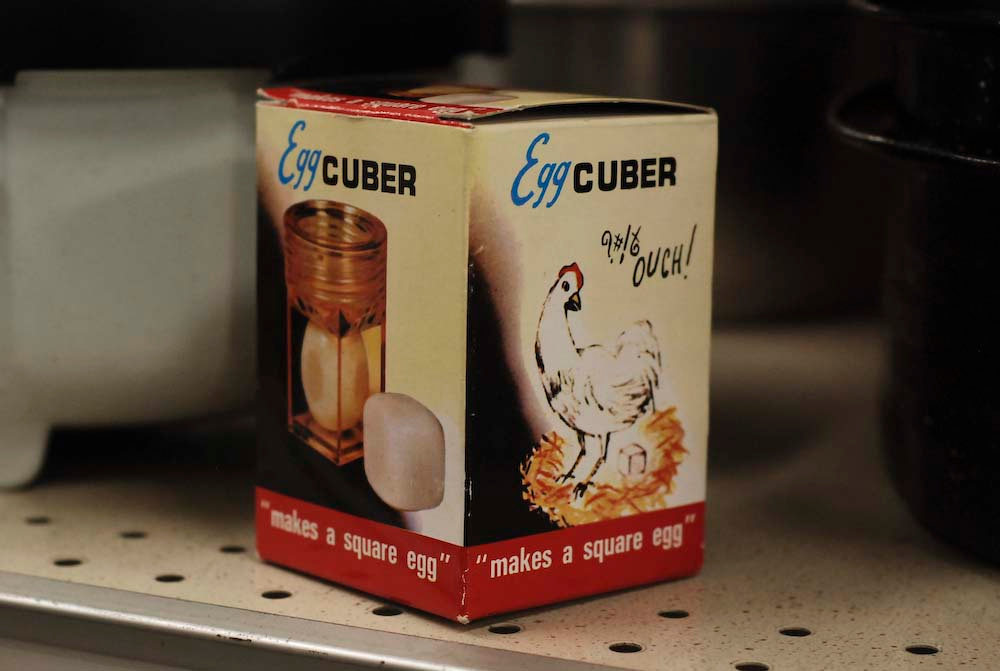
Tucked on a store shelf, the Egg Cuber box sells a delightfully odd promise in bold lettering: “makes a square egg.” The packaging leans into whimsy—complete with a cartoon chicken and a theatrical “Ouch!”—as if the product itself is a punchline you can bring home. Even without a price tag or a visible brand name, the design language screams retro kitchen novelty, the kind meant to catch your eye during a casual browse.
On the front panel, an illustration suggests the device’s simple trick: a hard-boiled egg pressed into a rigid mold until it conforms to a neat cube. That small act of domestic alchemy hints at the era’s fascination with clever gadgets and conversation-starting “inventions,” especially those aimed at entertaining guests or dressing up lunchbox fare. The result is less culinary breakthrough than party prop—perfect for salads, sandwiches, and the eternal human urge to make ordinary food look extraordinary.
The Curious Case of the 1970s Egg Cuber invites a closer look at how novelty products were marketed, photographed, and remembered, long after their practical value faded. With its bright typography and straightforward claim, the Egg Cuber becomes a miniature time capsule of consumer culture: optimism, humor, and just enough pseudo-science to sound plausible. For readers hunting nostalgia, quirky inventions, or vintage kitchen gadgets, this image captures the squarest kind of ingenuity—one that turns a humble egg into a talking point.