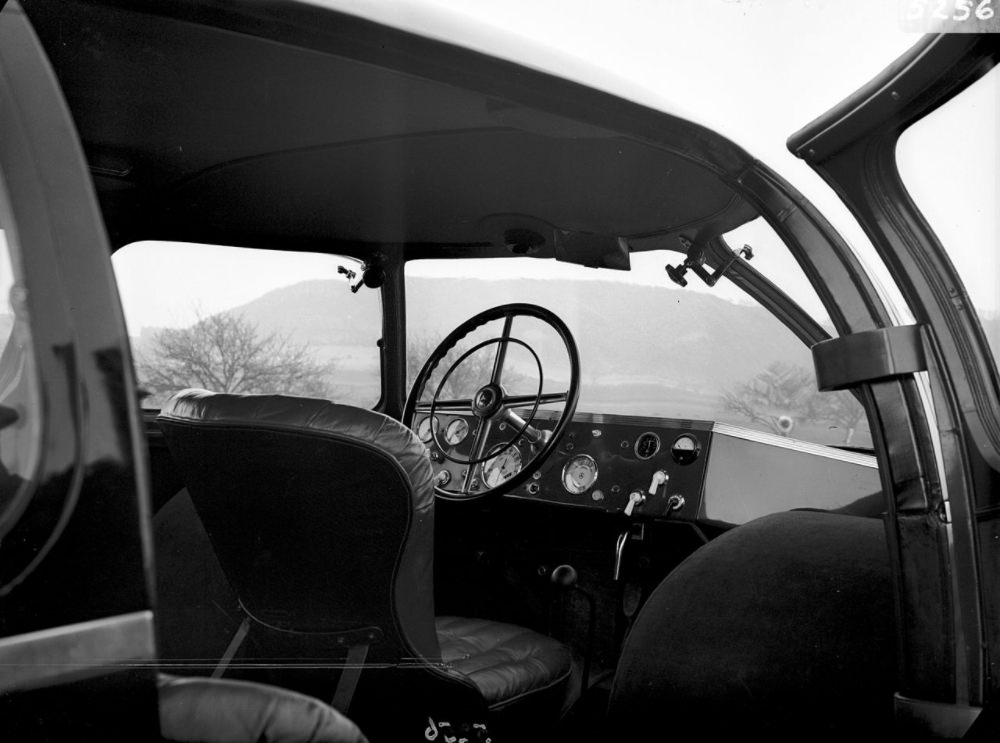
Peer through the open door and you’re greeted by a cockpit that feels more like an aircraft cabin than a conventional late-1930s automobile: a thin, oversized steering wheel, a cluster of round gauges, and a clean, functional dashboard arranged for the driver’s quick glance. The seating appears simple and practical, while the tall glazing and curved roofline hint at the unusual body that made the 1939 Schlörwagen so memorable. Even in this interior view, the theme is clear—engineering choices made in service of efficiency rather than style.
Outside the windows, a soft landscape sits in the distance, but the real story is the machine’s promise of ultra-aerodynamic travel, an ambition that pushed German designers toward streamlined forms that looked startlingly modern. The Schlörwagen has become a touchstone in discussions of automotive aerodynamics, because it pursued low drag with a single-mindedness that sidelined familiar proportions and conventional looks. That tension—between radical science and everyday expectations—helps explain why such ideas could be celebrated in prototypes yet struggle to become practical production cars.
Collectors and historians still return to photographs like this to decode how experimental vehicles were meant to be used, not merely admired: where the driver’s hands would fall, how instruments were prioritized, and what compromises were accepted in the name of speed and economy. For readers searching for “Schlörwagen 1939,” “streamlined car,” or “ultra-aerodynamic German prototype,” the image offers a tangible link to an era when wind-tunnel thinking began reshaping transportation. It’s a reminder that some of the most influential inventions are the ones that never quite made it to the showroom, but left their ideas behind.