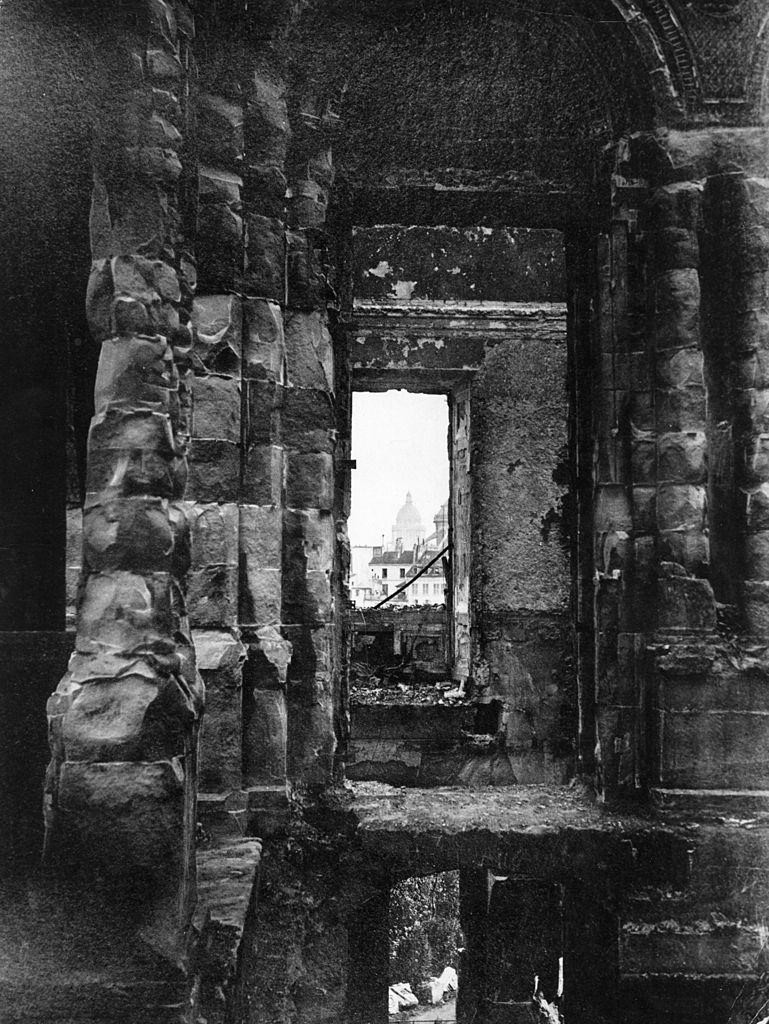
Charred marble and heavy shadow dominate the colonnade of the Tuileries Palace, where once-polished stone now bears the bruises of fire and violence. The camera lingers on blistered surfaces and broken masonry, turning architectural grandeur into a study of ruin. Even without a crowd, the scene feels crowded with aftermath—soot, rubble, and the silence left behind when a symbol of power is abruptly emptied.
Through a rectangular opening, the view draws the eye outward to distant rooftops and a pale dome beyond, a calm horizon framed by devastation. That contrast makes the photograph more than an architectural record; it reads like a visual footnote to civil wars, when the struggle for authority spilled into streets and palaces alike. The colonnade becomes a corridor between two worlds: the scorched interior of a former royal residence and the living city continuing on the other side.
Details in the stonework—arches, thick pillars, and the stark geometry of the doorway—offer a rare, ground-level glimpse into what remained of the Tuileries in 1871. For readers interested in Paris history, the Paris Commune era, or the fate of monumental buildings during conflict, this image provides an arresting starting point. It invites reflection on how quickly cultural landmarks can be transformed, and how photographs preserve not only what was built, but what was lost.