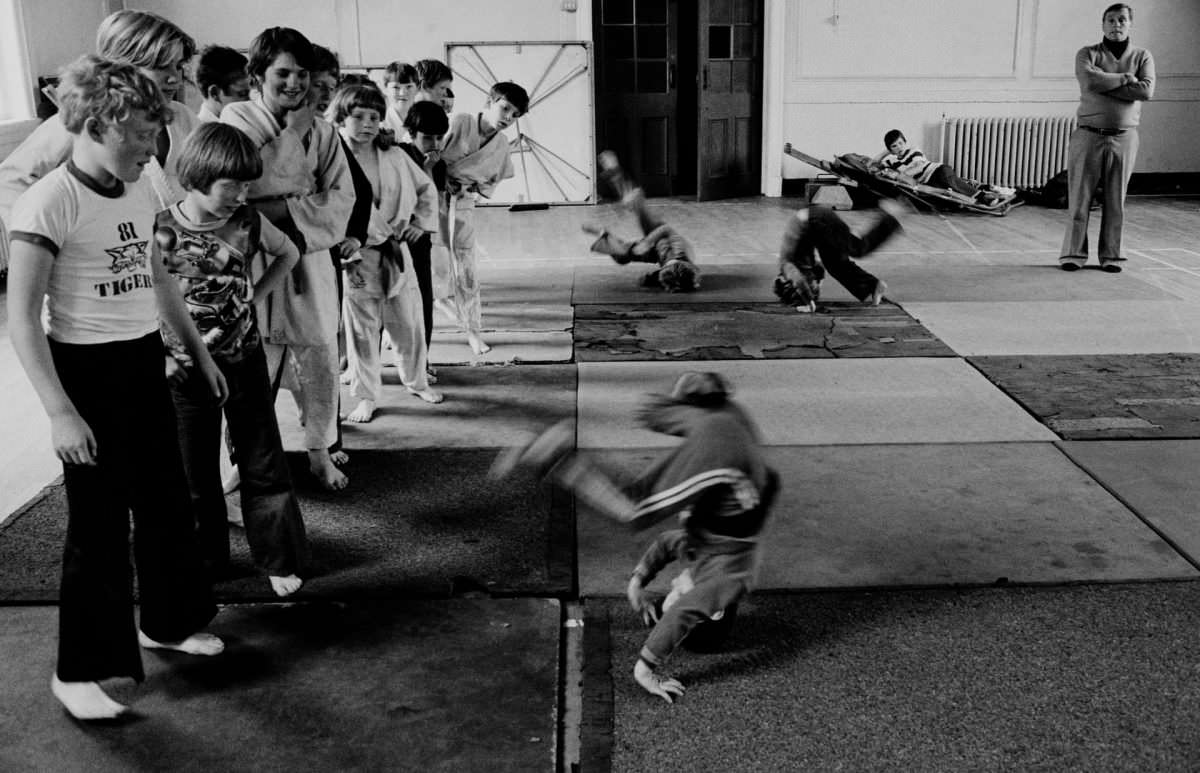
Energy ripples across the matted floor as a line of boys waits its turn, watching classmates tumble and flip in a local gym in Catholic Derry. Bare feet, borrowed-looking uniforms, and a mix of T‑shirts and martial arts jackets place the scene firmly in everyday 1970s youth culture, where discipline was learned alongside play. In the background, an adult instructor stands with arms folded, the quiet anchor to the blur of motion in the foreground.
The room itself tells a story: plain walls, high windows, and stacked equipment pushed to the side so the mats can take over. Several children lean forward with the particular focus of beginners—half excitement, half nerves—studying technique as much as testing courage. The camera catches movement as streaks and smudges, a reminder that training is not a pose but a practice, repeated until it becomes instinct.
Set against the wider backdrop hinted at by the post’s “Civil Wars” note, this 1978 moment highlights a different kind of preparation—community, structure, and confidence built inside four walls. For readers searching Derry history, Northern Ireland social life, or the rise of martial arts clubs in local gyms, the photograph offers an intimate glimpse of how ordinary afternoons could still be shaped by routine and ambition. It’s a small scene with a big resonance: children learning control, resilience, and camaraderie one fall at a time.