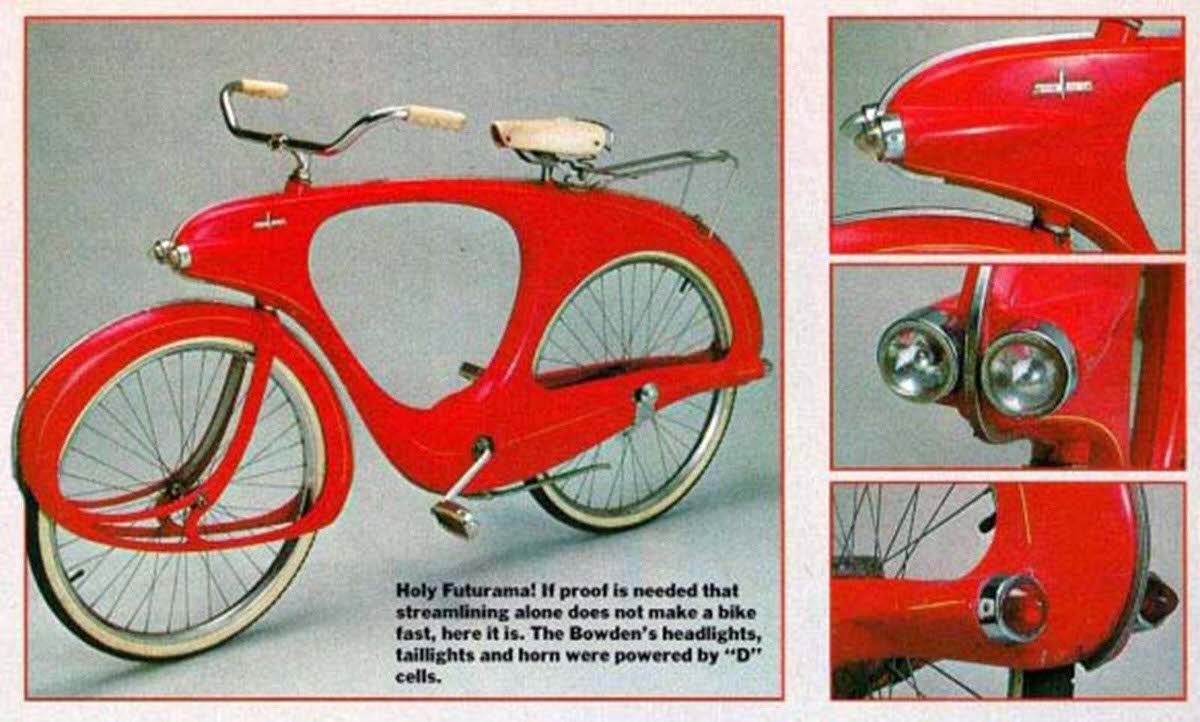
Few inventions wear their optimism as loudly as the Spacelander, a Bowden bicycle wrapped in glossy, jet-age bodywork that makes an ordinary two-wheeler look like a road-going rocket. The sweeping frame encloses much of the bike’s structure, with an open cutout for mounting and a long, sculpted nose that leans hard into the era’s love of streamlining. Even at a glance, it’s clear the designers wanted riders to feel they were stepping into the future, not just pedaling down the street.
Details in the photo underline how much “futuristic bicycle” meant styling plus gadgetry: a prominent headlight cluster up front, additional lights and a horn, and smooth panels that hide the mechanical clutter most bikes put on display. The riding position looks conventional—handlebars, saddle, pedals—yet the shell turns those familiar parts into something closer to a small vehicle than a simple bicycle. That blend of bicycle basics with car-like cues is exactly what makes the Spacelander such a memorable piece of mid-century industrial design.
Yet the title’s “failed badly” rings true for many ambitious inventions where form outruns function. Streamlining doesn’t automatically translate to speed or practicality, and adding bulky bodywork can complicate maintenance, weight, and everyday usability—problems that flashy photos can’t conceal. As a result, Bowden’s Spacelander endures less as a triumphant breakthrough and more as a fascinating detour in cycling history, a reminder that the road to innovation is paved with beautiful misfires.