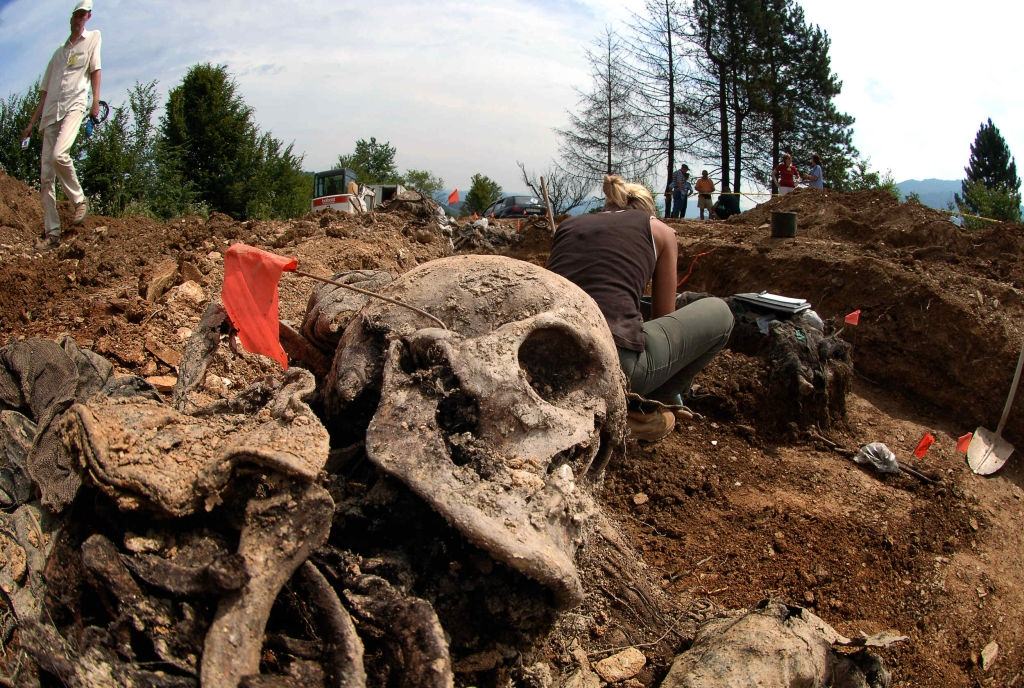
A human skull dominates the foreground of this unsettling scene, half-buried in churned earth while small red flags punctuate the excavation trench like warnings. Nearby, a forensic specialist works close to the ground, surrounded by tools and notes, as other figures stand at the rim of the site under a wide, bright sky. The contrast between the calm landscape and the exposed remains underscores the brutal legacy of civil wars and mass violence.
In the village of Budak—described in the title as only a short distance from a memorial center for massacre victims—the work shown here is both scientific and deeply moral. Forensic experts painstakingly recover fragments, document positions, and preserve evidence so that the dead can be identified and the circumstances of their deaths can be investigated. Each careful movement suggests procedure: mapping, photographing, bagging, and safeguarding what time and soil tried to erase.
Viewed today, the photograph speaks to the long aftermath of atrocity, when truth is excavated one layer at a time and grief takes a material form in dirt and bone. It also reflects the role of forensic archaeology and human rights investigations in post-conflict justice, where mass grave exhumations can support prosecutions, historical record, and dignified reburial. For readers searching terms like “mass grave,” “forensic experts,” “civil wars,” and “memorial center,” this image offers a stark entry point into how communities confront violence after the fighting ends.